Choose 100% apple juice if you want an apple-juice drink without listed sweeteners, but do not take ‘no added sugar’ to mean sugar-free: the Tesco, Copella and Tropicana juices described below declare 15–16.7g sugars per 150ml. If lower declared sugar matters more, compare juice drinks by their fruit content and ingredients, since some contain sweeteners; for children, the NHS recommends no more than 150ml of fruit juice and smoothies combined each day, kept to mealtimes.
Who is this for?
The useful choice depends on whether you are prioritising apple-juice ingredients, lower declared sugar or a portion that is easy to measure.
Families planning children’s drinks
If apple juice is part of a school-holiday snack plan, serving time and quantity matter alongside the label. The NHS recommends keeping fruit juice and smoothies to a combined 150ml a day and offering them at mealtimes.
Shoppers avoiding sweeteners
A no-added-sugar claim does not tell you whether a juice drink contains a sweetener. Compare the ingredients of 100% juices, unsweetened blends and drinks listing sucralose.
Families choosing cartons for outings
An individual carton gives you a stated pack volume, but sizes vary. Check the volume, sugars per carton, fruit content and ingredients rather than relying on the front-of-pack claim alone.
What should you check?
Start with the kind of drink you want, then compare the ingredients, sugar figure and pack volume against the portion you plan to serve.
100% apple juice
Choose it when: You want apple juice rather than a diluted juice drink and prefer no listed sweetener.
Bear in mind: No added sugar does not remove the fruit sugars; check the serving size against NHS juice guidance.
Apple-based blend without sweeteners
Choose it when: You are open to a drink containing other fruit or water but want to avoid listed sweeteners.
Bear in mind: A blend is not apple-only juice, so read its fruit ingredients and sugar figure.
Juice drink with a sweetener
Choose it when: A lower declared sugar figure or an individual carton matters more to you than 100% fruit juice.
Bear in mind: Some no-added-sugar drinks contain sucralose and a smaller proportion of fruit juice.
| Priority |
What to check |
Your needs |
| Sugar wording |
Read ‘no added sugar’ separately from the total sugars figure. Compare sugars for the amount you intend to pour; NHS guidance treats sugars in fruit juice as free sugars. |
I want to know how much sugar is in the serving, even when the pack says no sugar was added. |
| Ingredients |
Check whether the drink is 100% apple juice, a fruit blend or a juice drink. Look for the stated fruit percentages and any sweetener in the ingredients. |
If I am avoiding sweeteners, I need to check the ingredients rather than assume every no-added-sugar drink is unsweetened. |
| Serving size |
Check the carton or can volume and the nutrition figure per serving. The NHS recommends no more than 150ml of fruit juice and smoothies combined a day for children and adults, at mealtimes. |
A pack I can carry is useful, but I do not want its full volume to become the serving by default. |
| Storage |
Check whether the pack needs chilling and follow its after-opening instructions. A larger bottle is practical only if it can be used within its stated period. |
For an outing or a quieter day at home, I want a format that fits when and how much we will actually serve. |
Common buying mistakes
-
Treating ‘no added sugar’ as ‘low sugar’
Copella Cloudy Apple and Tropicana Pressed Apple each declare 15g sugars per 150ml, while Tesco Pure Apple Juice declares 16.7g, according to their respective product information. The NHS includes fruit-juice sugars among free sugars.
Compare the labelled sugars for the portion you will serve, and count fruit juice and smoothies together against the NHS 150ml daily guidance.
-
Overlooking a sweetener in a juice drink
ASDA Apple & Pear Juice Drink and Tesco No Added Sugar Apple Juice Drink list sucralose. Their ingredients also distinguish them from 100% apple juice.
If avoiding sweeteners matters to you, read the ingredient list as well as the sugar figure and fruit percentage.
-
Counting each carton as a separate allowance
The NHS 150ml recommendation applies to fruit juice and smoothies combined across the day, not separately to each drink or pack.
Check the pack volume before serving juice, particularly if a smoothie is also planned, and keep juice to mealtimes as the NHS advises.
-
Choosing a large bottle without checking storage
After-opening instructions differ: the Marks & Spencer Cloudy Apple Juice page says to refrigerate and drink within 24 hours, while the Tesco listing for Tropicana Pressed Apple says to use it within five days of opening.
Match the pack size to likely use and follow the instructions on the current pack.
An unfinished bottle may need to be discarded once its stated after-opening period has passed.
Brand and product-line references
These examples show why it helps to compare individual products rather than assume every drink under one brand has the same ingredients.
Tropicana
Its Pressed Apple juice and Fresh & Light Apple blend represent different ingredient choices.
- Tesco describes Pressed Apple as 100% pressed juice, not from concentrate, and lists 15g sugars per 150ml.
- ASDA lists Fresh & Light as an apple-and-grape blend with water and apple purée, declaring 11g sugars per 150ml; it is not 100% apple juice.
Copella
Cloudy Apple is a pressed-apple-juice option.
- Copella lists pressed apple juice and vitamin C as its ingredients.
- Copella declares 15g sugars per 150ml; choosing pressed juice does not remove the need to measure a serving.
Tesco
Its own-label examples include both pure apple juice and a no-added-sugar juice drink.
- Tesco Pure Apple Juice is listed as juice from concentrate, with 16.7g sugars per 150ml.
- Tesco No Added Sugar Apple Juice Drink declares 3.1g sugars per 150ml, but lists 20% apple juice from concentrate and sucralose.
Asda
Its apple-and-pear juice drink carton differs from its apple juice from concentrate.
- ASDA lists the Apple & Pear Juice Drink in a 150ml carton, declaring 1.8g sugars per carton.
- That drink lists 6% apple juice, 4% pear juice and sucralose. ASDA Apple Juice from Concentrate separately declares 17g sugars per 150ml.
M&S
Marks & Spencer describes its Cloudy Apple Juice as not from concentrate.
- The product page declares 10.2g sugars per 100g; compare that stated basis with the portion you intend to serve.
- If a no-added-sugar claim is essential to your choice, check the wording on the selected pack. The page says to refrigerate after opening and drink within 24 hours.
Apple-based drinks on Joybuy
These options cover an apple-and-pear fruit water in cartons and a sparkling 100% apple juice in cans. Check the pack size against the serving you intend to offer; neither format makes a whole pack the right portion automatically.
 No image available
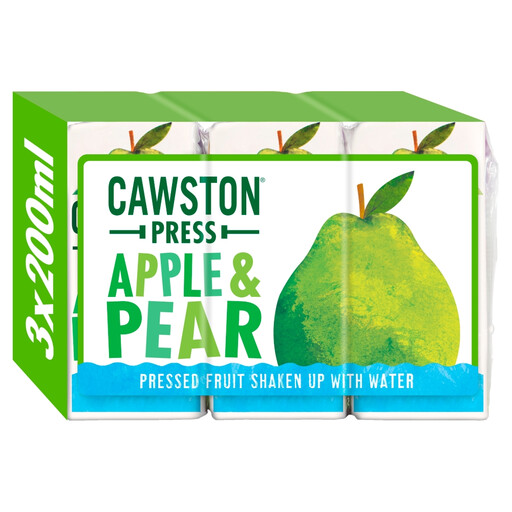
Cawston Press Apple & Pear Fruit Water, 3 × 200ml
The product description says this apple-and-pear fruit water has no added sugar or artificial sweeteners, making it a different choice from pure apple juice or a drink containing sucralose. Each carton is 200ml: measure the amount you plan to serve rather than assuming a full carton equals a 150ml juice portion.
View on Joybuy
 No image available
Appletiser 100% Apple Juice Lightly Sparkling, 6 × 250ml
This sparkling apple-juice option comes in 250ml cans, so a full can is larger than the NHS 150ml daily recommendation for fruit juice and smoothies combined. If the words ‘no added sugar’ must appear on the product, check the current can before choosing it.
View on Joybuy
Questions about apple juice
Does ‘no added sugar’ mean apple juice is sugar-free?
No. The claim concerns sugar added to the product, not all sugar present in it. The NHS explains that fruit juice contains free sugars; check the total sugars figure for the serving you plan to pour.
How much apple juice should I serve a child?
The NHS recommends no more than 150ml of fruit juice and smoothies combined per day for children and adults, kept to mealtimes. Count a smoothie towards that same amount rather than allowing 150ml of each.
Can a no-added-sugar juice drink contain a sweetener?
Yes. Tesco No Added Sugar Apple Juice Drink and ASDA Apple & Pear Juice Drink list sucralose in their ingredients. Read the ingredients panel if avoiding sweeteners is part of your choice.
What should I check if I want apple juice without sweeteners?
Check that the product is apple juice rather than a juice drink, then read its full ingredients list for sweeteners. Copella Cloudy Apple, Tropicana Pressed Apple and Tesco Pure Apple Juice are examples with no sweetener listed, but their declared sugars still range from 15g to 16.7g per 150ml.
How long can I keep a larger bottle after opening?
Follow that product’s current label. The Marks & Spencer Cloudy Apple Juice page says to refrigerate and drink within 24 hours of opening, while the Tesco listing for Tropicana Pressed Apple says to use it within five days.


