Households watching juice portions
If apple juice is part of breakfast, compare the sugars stated for the amount you plan to pour. Decide separately whether you want 100% juice or a juice drink made with water and some fruit juice.


Choose 100% apple juice if you want an all-juice drink; consider a no-added-sugar juice drink if its ingredients and stated sugars figure better match what you are looking for, recognising that it may contain less fruit juice. For a weekly shop, choose a pack you can use within its instructions after opening. The NHS advises limiting fruit juice, vegetable juice and smoothies to a combined 150ml a day.
If apple juice is part of breakfast, compare the sugars stated for the amount you plan to pour. Decide separately whether you want 100% juice or a juice drink made with water and some fruit juice.
Separate cartons let you open one at a time. Check where unopened packs should be stored, then plan fridge space and use around each carton’s instructions after opening.
Pressed or cloudy juice may be the style you want. Check the nutrition panel independently: the production description does not tell you the sugars in your serving.
Choose the drink type first, then compare portions and pack instructions on the products you would actually buy.
| Priority | What to check | Your needs |
|---|---|---|
| Portion and sugars | Compare sugars on the same per-100ml or per-serving basis. The NHS advises no more than 150ml a day of fruit juice, vegetable juice and smoothies combined. | I want to know what is in the glass I normally pour, not judge a drink by the size of its carton. |
| Fruit-juice content | Read the ingredients and stated juice percentage. Sainsbury’s lists 20% apple juice and 5% pear juice in its no-added-sugar Apple & Pear Juice Drink; it is not 100% apple juice. | Having an all-juice drink matters to me more than choosing one by its front-label wording alone. |
| Pack format | Check whether the pack holds separate cartons, one large bottle or individual cans, and how much each opened container holds. | I would rather open one carton at a time than have a large bottle open in the fridge. |
| Storage | Follow the individual pack’s storage and after-opening instructions. Tesco’s Copella Apple Juice 1.35L listing says to keep it refrigerated and consume it within four days of opening. | Fridge space and how quickly we finish an opened bottle affect what I put in the weekly shop. |
| Apple-juice style | Look for pressed, cloudy or from-concentrate descriptions if the production style matters to you; check sugars separately. Tropicana describes Orchard Apple as 100% pressed juice, not from concentrate. | I prefer a pressed-juice option, but I do not want to mistake that description for a sugars figure. |
Those descriptions answer different questions. Sainsbury’s Apple & Pear Juice Drink lists water, 20% apple juice and 5% pear juice.
Read the ingredient list and juice percentage alongside the nutrition panel before deciding whether a juice drink meets your needs.
A bigger carton changes how much you have available, not the NHS advice to limit fruit juice, vegetable juice and smoothies to a combined 150ml a day.
Choose a pack for how your household will store and use it, and measure a serving separately from the pack size.
Instructions differ between products. Tesco’s listing for the chilled Copella 1.35L bottle says to consume it within four days of opening.
Check the bottle or carton before buying, particularly if only one person will drink it during the week.
These examples show different drink types and formats; check the label of the particular product you choose.
Tropicana describes Orchard Apple as 100% pressed juice, not from concentrate.
Copella Cloudy Apple is an option for shoppers choosing a cloudy apple-juice style.
Tesco lists Grower’s Harvest Pure Apple Juice in a 1L carton.
Asda lists apple juice from concentrate in both a single 1L carton and a four-carton 1L multipack.
Sainsbury’s no-added-sugar Apple & Pear Juice Drink is a juice drink, rather than a 100% apple-juice option.
M&S lists apple-juice choices that include pressed blends and Pink Lady options.
These options cover a 1L apple juice and a lightly sparkling apple juice in separate cans. Check each product’s label for the sugars and storage details that matter to your household.
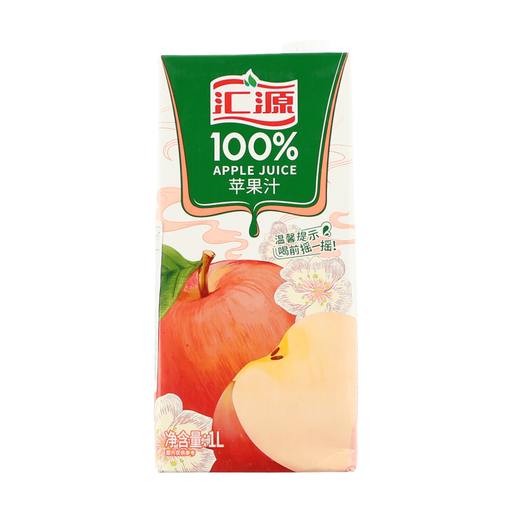 No image available
The 1L format is one option for a weekly shop. Check the nutrition panel for sugars in your serving and the pack for instructions after opening; the NHS advises limiting fruit juice, vegetable juice and smoothies to a combined 150ml a day.
 No image available
Six separate 250ml cans may suit a household looking for sparkling rather than still apple juice. Each can holds more than the NHS-advised combined daily 150ml limit for fruit juice, vegetable juice and smoothies, so pack size and serving size are separate considerations.
No. Check the sugars figure on the nutrition panel rather than relying on the front label. Also check the fruit-juice percentage: Sainsbury’s no-added-sugar Apple & Pear Juice Drink lists 20% apple juice and 5% pear juice, so it is not 100% apple juice.
The NHS advises limiting fruit juice, vegetable juice and smoothies to a combined 150ml a day. That guidance applies to the amount poured, regardless of whether the weekly shop includes a large bottle, cartons or cans.
The word “pressed” describes how the juice is presented, not its sugars per serving. If that distinction affects your choice, compare the nutrition panels on the pressed and from-concentrate products you are considering using the same serving amount.
Match the container size to how quickly your household will use it and follow its storage instructions. For example, Tesco’s Copella Apple Juice 1.35L listing says to keep the bottle refrigerated and consume it within four days of opening; separate cartons let you leave later cartons unopened until needed.