What should you compare?
Decide whether you want 100% juice or a juice drink, then compare sugars using the same volume and check the ingredients of the particular pack.
| Priority | What to check | Your needs |
|---|
| Label meaning |
Read “no added sugar” alongside “of which sugars” per 100ml and per serving. Check whether the product is 100% juice or a juice drink. |
I do not want to mistake “no added sugar” for sugar-free. The NHS says sugars in unsweetened fruit juice still count as free sugars. |
| Serving size |
Compare equal volumes and check the pack size. The NHS advises no more than a combined 150ml of fruit juice and smoothies a day. |
For a revision snack, I would rather pour a measured serving than assume a whole bottle is the same as a 150ml glass of juice. |
| Juice content |
Check the fruit percentage and whether other fruits are included. Tesco Groceries lists 20% apple juice in its no-added-sugar apple juice drink; Sainsbury's lists 20% apple and 5% pear juice in its apple-and-pear drink. |
If I want 100% apple juice, a diluted juice drink will not meet that preference, even when both carry no-added-sugar wording. |
| Sugars and sweeteners |
Use a like-for-like serving: Tesco Groceries lists 3.1g sugars per 150ml for its apple juice drink, while its Tropicana pressed apple juice listing states 15g per 150ml. Check the sweeteners in each drink. |
Lower labelled sugars may matter more to me than having 100% juice. If I avoid sweeteners, I need to read the ingredients too; the Tesco juice drink lists sucralose. |
| Other ingredients |
Read the current ingredient and allergen information, particularly for squash. Sainsbury's lists sodium metabisulphite (sulphites) in its no-added-sugar apple high-juice squash. |
I need the ingredients of the exact drink I am packing to fit my preferences or any relevant allergen requirements. |
Relevant brand examples
These product lines illustrate different label choices; a brand name alone does not tell you the sugars or ingredients of every drink it sells.
Tropicana
Tropicana describes its Orchard Apple as 100% pressed apple juice, not from concentrate.
- A choice to examine if you want 100% apple juice rather than a diluted drink.
- Tesco Groceries lists 15g sugars per 150ml for Tropicana pressed apple juice, despite its no-added-sugar wording.
Copella
Copella Cloudy Apple is a pressed apple juice for shoppers who prefer a cloudy style.
- Copella lists pressed apple juice and ascorbic acid in this product.
- Copella lists 15g sugars per 150ml; choosing cloudy juice does not remove the juice sugars.
Tesco
Tesco's no-added-sugar apple juice drink offers an apple-flavoured alternative to 100% juice.
- Tesco Groceries lists 3.1g sugars per 150ml for this juice drink.
- It contains 20% apple juice from concentrate and sucralose, so it is not 100% apple juice.
Sainsbury's
Its no-added-sugar apple-and-pear juice drink and apple high-juice squash are different formats with different ingredients.
- Sainsbury's lists 3.9g sugars per 150ml for the apple-and-pear juice drink.
- That drink contains apple and pear juice and sweeteners. Its separate apple squash lists sulphites; check the exact product.
Asda
Asda lists both a 100% pressed apple juice and a no-added-sugar apple-and-pear juice-drink carton.
- ASDA Groceries lists 1.8g sugars in the 150ml apple-and-pear carton, compared with 16g per 150ml in its pressed apple juice.
- The carton contains 10% combined apple and pear juice and sucralose; it is not a smaller pack of the 100% juice.
Joybuy drink options
These options include an apple-and-pear carton, a blackcurrant-and-apple drink and a sparkling 100% apple juice. Check the individual format and label rather than treating them as interchangeable apple juices.
 No image available
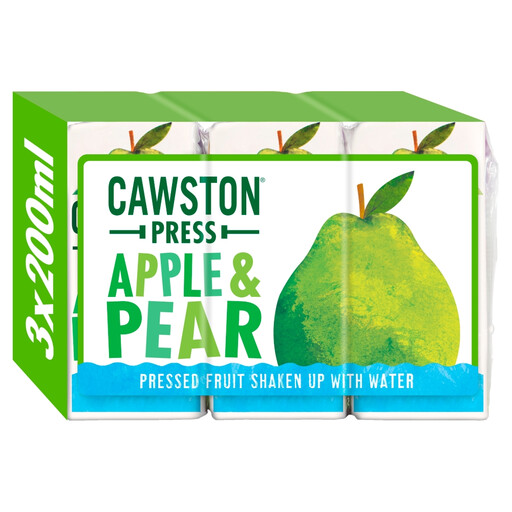
Cawston Press Apple & Pear Fruit Water 3 × 200ml
The carton format may suit a packed revision snack if an apple-and-pear drink, rather than apple-only juice, is what you want. Check the current pack for its sugars and juice content before comparing it with 100% apple juice.
View on Joybuy
 No image available
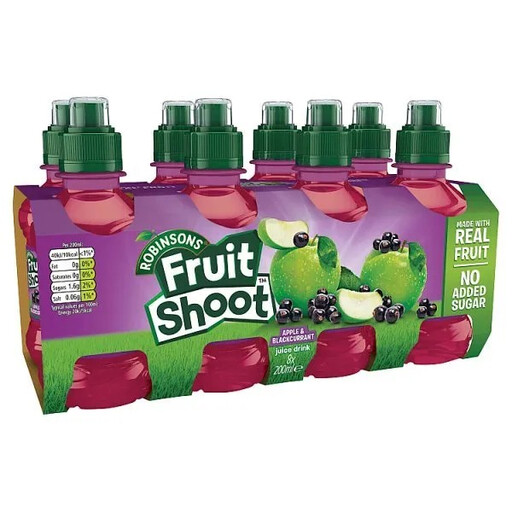
Fruit Shoot Black & Apple No Added Sugar 8 × 200ml
This bottled option is labelled no added sugar, but its blackcurrant-and-apple flavour is not an apple-only juice choice. Compare the sugars for the amount drunk and check the fruit and sweetener ingredients on the pack.
View on Joybuy
 No image available
Appletiser 100% Apple Juice Lightly Sparkling 6 × 250ml
Consider this if you want sparkling 100% apple juice rather than a still juice drink. Each bottle is 250ml; for fruit juice, the NHS advises a combined daily limit of 150ml across juice and smoothies, so portioning matters.
View on Joybuy
Questions about apple drinks
Does “no added sugar” mean an apple drink is sugar-free?
No. Check the “of which sugars” figure on the nutrition label: a drink can have no added sugar and still contain sugars from its fruit ingredients. The NHS counts sugars in unsweetened fruit juice as free sugars.
Should I choose 100% apple juice or a juice drink for revision?
Choose 100% apple juice if the juice content matters most, or compare juice drinks if lower labelled sugars per glass matter more. On a 150ml basis, Tesco Groceries lists 15g sugars for Tropicana pressed apple juice and 3.1g for Tesco's no-added-sugar apple juice drink; the latter contains 20% apple juice and sucralose.
How much fruit juice should I pour?
The NHS advises limiting fruit juice and smoothies to a combined total of no more than 150ml a day. Measure the juice rather than assuming a full bottle matches that amount; a juice drink's ingredients and serving information should be checked separately.
Can a no-added-sugar apple drink contain sweeteners?
Yes. Tesco Groceries lists sucralose in its no-added-sugar apple juice drink, and Sainsbury's lists acesulfame K and sucralose in its apple-and-pear juice drink. Read the current ingredients if avoiding sweeteners affects your choice.
What should I do with juice after opening it?
Follow the storage and use instructions on the particular pack. Sainsbury's says to consume Copella Cloudy Apple within four days of opening, while Marks & Spencer says to drink its Cloudy Apple Juice within 24 hours of opening.


