Shoppers checking sugar claims
If sugar content affects your choice, distinguish the sugars in 100% juice from ‘no added sugar’ and ‘sugar-free’ claims on other drinks. The nutrition panel matters as much as the wording on the front.


Choose 100% apple juice if you specifically want juice and can follow NHS advice to limit fruit juice and smoothies to 150ml a day, with a meal; the Tropicana and Copella examples each list 10g sugars per 100ml. If lower label sugar matters more than pure juice, compare apple-flavoured drinks by their nutrition panels, ingredients and preparation instructions: ‘no added sugar’ does not mean ‘sugar-free’. For an online order, make any substitution requirements clear before checkout.
If sugar content affects your choice, distinguish the sugars in 100% juice from ‘no added sugar’ and ‘sugar-free’ claims on other drinks. The nutrition panel matters as much as the wording on the front.
If you would accept a cordial or juice drink instead of pure apple juice, check how it is prepared and whether its ingredients include sweeteners or allergens you avoid.
If your order must be 100% juice, contain no added sugar or exclude a particular sweetener, a substitute needs the same checks as your original choice.
Decide whether you want apple juice itself or an apple-flavoured alternative, then check the exact drink and your delivery preferences.
| Priority | What to check | Your needs |
|---|---|---|
| Sugar claims | Read the product type and sugars figure on the nutrition panel. Legislation published on legislation.gov.uk sets a maximum of 0.5g sugar per 100g or 100ml for a ‘sugar-free’ claim; ‘no added sugar’ is a different claim. | I want to know whether I am ordering 100% juice, a no-added-sugar drink or one labelled sugar-free, rather than treating the descriptions as interchangeable. |
| Juice portion | Check sugars per 100ml and the amount you intend to pour. The NHS advises limiting fruit juice and smoothies to 150ml a day and drinking them with a meal. | If I choose apple juice, I want a serving that fits the NHS guidance. Tropicana Orchard Apple and Copella Cloudy Apple each list 15g sugars per 150ml, according to their brands’ product information. |
| Drink type | Check the fruit-juice content, ingredients and any dilution directions. Marks & Spencer describes Apple and Elderflower High Juice as a concentrated squash made with 50% fruit juice, not 100% apple juice. | Lower label sugar may matter more to me than having pure juice, but I still need to know whether the alternative is a squash, juice drink or ready-to-drink soft drink. |
| Substitutions | Review the retailer’s substitution controls or basket notes. Check the delivered product’s type, nutrition and ingredients before accepting a different drink. | A replacement must still meet my requirement, whether that is 100% juice, no added sugar or avoiding a particular sweetener. |
Tropicana Orchard Apple and Copella Cloudy Apple each list 10g sugars per 100ml. Naturally occurring sugars do not make these juices sugar-free.
Order 100% juice if that is the drink you want, and check the portion. If lower label sugar is the priority, compare a different drink type instead.
The claims mean different things: a no-added-sugar drink can still contain sugars. The sugar-free claim threshold published on legislation.gov.uk is no more than 0.5g sugar per 100g or 100ml.
Check both the claim and the sugars figure for the exact product you are ordering.
A replacement can change the product type or introduce ingredients that matter to your choice. Sainsbury’s says it may offer substitutes unless shoppers ask otherwise, while Tesco allows shoppers to leave substitution preferences.
Turn off substitutions where the retailer permits it, or specify what a replacement must meet. Check any offered substitute before accepting it.
Sainsbury’s listing for Copella Cloudy Apple 1.35L says to keep it refrigerated and consume it within four days of opening.
Check whether the bottle size fits how it will be used, and follow the storage instructions on the delivered pack.
A large bottle may leave unused juice if it cannot be finished within its stated post-opening period.
Orchard Apple is a pressed apple-juice reference for shoppers who want juice rather than an apple-flavoured drink.
Cloudy Apple is a pressed apple-juice option for shoppers who prefer cloudy juice.
Its apple-drink range provides a distinction between apple juice and concentrated squash.
Tesco’s apple-juice category lists own-label and branded products, including pressed-juice options.
These options include apple-flavoured soft drinks and a sparkling 100% apple juice. Check the product type before choosing between them: a flavoured drink is not a substitute for juice if 100% juice is your requirement.
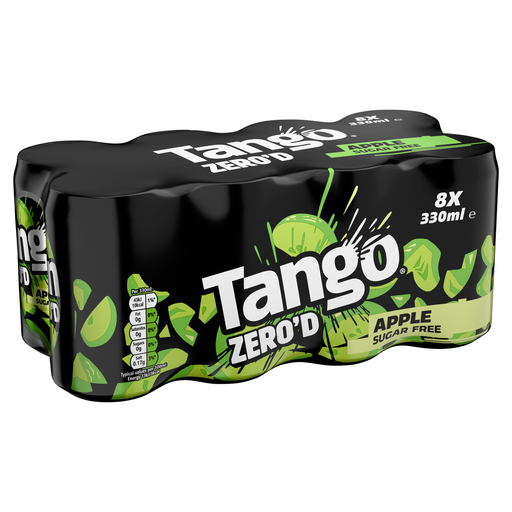 No image available
An apple-flavoured canned drink to consider when you want an alternative to 100% juice. The pack contains eight 330ml cans; check the nutrition panel and ingredients if a sugar-free claim or particular sweetener matters to you.
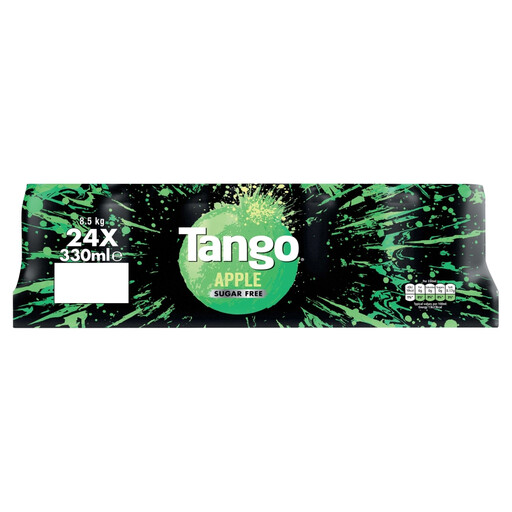 No image available
This 24-can pack is another apple-flavoured drink option rather than a way to order 100% apple juice. Check the nutrition panel and ingredients for the exact variant before choosing the larger pack.
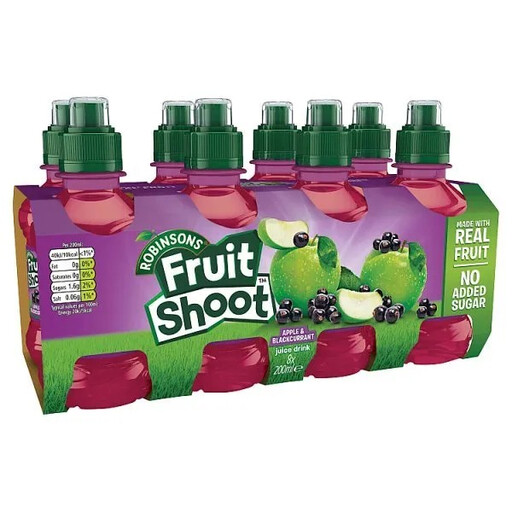 No image available
This apple-and-blackcurrant drink comes in eight 200ml bottles and is a different choice from 100% apple juice. ‘No added sugar’ does not by itself establish that a drink is sugar-free, so check its sugars figure and ingredients.
 No image available
Choose this only if sparkling 100% apple juice is the drink you want, rather than a lower-sugar apple-flavoured soft drink. Each can is 250ml; the NHS advises limiting fruit juice and smoothies to 150ml a day, with a meal.
Not in the Tropicana Orchard Apple and Copella Cloudy Apple examples: each brand lists 10g sugars per 100ml. For comparison, the sugar-free claim threshold published on legislation.gov.uk is no more than 0.5g sugar per 100g or 100ml. Check the exact drink’s nutrition panel rather than relying on a search description.
No. It is a different claim from ‘sugar-free’, and an apple drink may still contain sugars from its ingredients. Read the sugars figure and product description, particularly when comparing a juice with a cordial or soft drink.
The NHS advises limiting fruit juice and smoothies to one small glass of 150ml a day and drinking it with a meal. Check the container size if you are ordering single-serve bottles or cans.
Only if the replacement meets the same product and ingredient requirements. Tesco allows substitution preferences in shopper notes, and Sainsbury’s says it may offer substitutes unless asked not to. Check an offered replacement’s label before accepting it; Asda says unwanted substitutes delivered to customers can be handed back to the driver.
Follow the instructions on the delivered pack. Sainsbury’s listing for Copella Cloudy Apple says to keep it refrigerated and consume it within four days of opening, a consideration when choosing a larger bottle.