Who is this choice for?
The useful distinction is whether the drink is for regular drinking, a small juice serving with lunch or a zero-sugar preference.
Parents planning school-holiday lunches
If a child needs a drink throughout the day, water or milk is the usual choice under NHS guidance. If you include juice at lunch, count it towards the NHS limit of 150ml of juice and smoothies combined per day.
Families choosing a fruit-juice serving
A small serving of 100% juice can be part of lunch; Copella, for example, says a 150ml serving of its Cloudy Apple counts as one of five fruit and vegetable portions. That does not make juice an unrestricted drink: the NHS daily juice-and-smoothie limit still applies.
Shoppers looking for zero sugar
Pure apple juice does not meet a zero-sugar requirement. Compare the total-sugars figure on a non-juice drink instead of treating an apple flavour or a ‘no added sugar’ claim as proof that it contains no sugar.
What matters when choosing a lunch drink?
Decide what role the drink needs to play, then check its description, serving size and nutrition label.
| Priority |
What to check |
When it matters to me |
| Regular drinking |
Keep water or milk available for routine drinking. If serving juice, account for any smoothies and the NHS combined limit of 150ml a day. |
I need a drink for a child to have across lunch and the rest of the day, rather than a juice serving to sip repeatedly. |
| Drink type |
Read the product description and ingredients to distinguish 100% apple juice from an apple-flavoured soft drink or mixed fruit drink. |
I want an actual apple-juice serving with lunch, not just a drink that tastes of apple. |
| Total sugars |
Compare the total-sugars line on the same basis, such as per 100ml or per serving. ‘No added sugar’ and ‘zero sugar’ do not mean the same thing. |
If zero sugar is essential, I need to check the drink itself rather than assume a pure juice qualifies. |
| Pack and storage |
Check the container size against the amount you intend to serve, then follow that pack’s storage and after-opening instructions. |
A large bottle may need measuring out for lunch; for an occasional serving, I also want to know how long the opened pack can be kept. |
Apple juice brand references
These examples show why the exact product label matters; a brand name alone does not establish the juice type, sugar content or storage instructions.
Tropicana
Tropicana’s Orchard Apple is an apple-juice example for shoppers comparing a stated serving with their lunch plans.
- Tropicana lists 15g sugars per 150ml for Orchard Apple.
- That serving uses the full NHS daily allowance for juice and smoothies if none has been consumed earlier.
Copella
Copella Cloudy Apple is a juice example for families considering a measured fruit-juice serving.
- Copella says a 150ml serving counts as one of five fruit and vegetable portions.
- The Copella Cloudy Apple listing carried by Sainsbury’s says to keep it refrigerated and consume it within four days of opening.
Tesco
Tesco’s apple-juice range includes own-label Apple Juice and 100% Pressed Apple Juice.
- The separate product descriptions give shoppers a starting point for comparing juice types.
- Check the chosen pack’s ingredients, nutrition and serving size rather than applying one product’s details to the other.
Sainsbury’s
Sainsbury’s Pure Apple Juice is described as apple juice from concentrate made with 100% fruit juice.
- Its product description identifies it as a juice rather than an apple-flavoured soft drink.
- A 100% juice description does not make it a zero-sugar choice or remove the NHS daily juice-and-smoothie limit.
Asda
Asda’s Apple Juice is another product to assess by its stated serving rather than its name alone.
- Asda lists 16g sugars per 150ml for this apple juice.
- The stated sugar content means it is not a zero-sugar drink; check the current pack when comparing products.
M&S
M&S lists an apple juice for shoppers considering a larger pack to serve at home.
- Its product listing provides nutrition and after-opening storage information to check before choosing a pack size.
- M&S says to refrigerate this juice after opening and consume it within four days.
Joybuy drink options for lunch
These options span apple-flavoured soft drinks, an apple-and-pear fruit water and apple juices. Check the drink type as well as the pack format: they do not all serve the same purpose at a school-holiday lunch.
 No image available
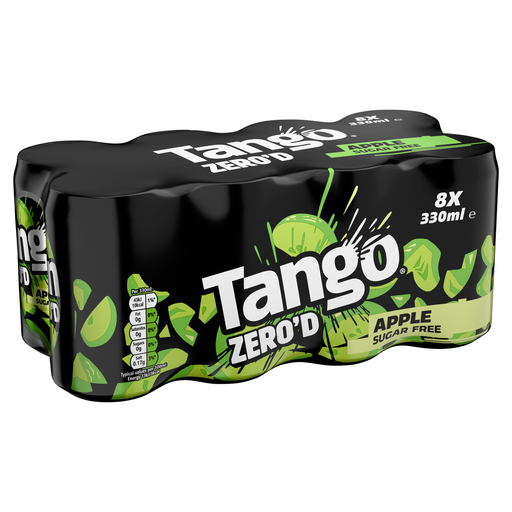
Tango Sugar Free Apple, 8 × 330ml
Consider this apple-flavoured soft drink when choosing a non-juice option, not when you want a serving of apple juice. The pack contains eight 330ml cans; check the current total-sugars and ingredients labels if zero sugar is essential. For children’s regular drinks, the NHS recommends water or milk.
View on Joybuy
 No image available
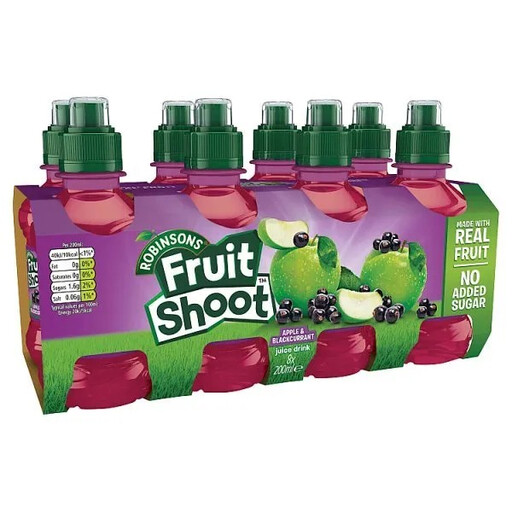
Fruit Shoot Black & Apple No Added Sugar, 8 × 200ml
The eight 200ml bottles offer a ready-to-pack mixed-fruit drink, not a 100% apple-juice serving. ‘No added sugar’ is not a zero-sugar statement, so check total sugars on the pack. The product information warns that the caps contain small parts and that the drink is unsuitable for children under 36 months.
View on Joybuy
 No image available
Appletiser 100% Apple Juice Lightly Sparkling, 6 × 250ml
This is a lightly sparkling apple-juice option for a meal, not a zero-sugar alternative. Each 250ml can is larger than the NHS daily limit of 150ml for juice and smoothies combined, so measure a smaller serving for a child rather than treating a whole can as one portion.
View on Joybuy
 No image available
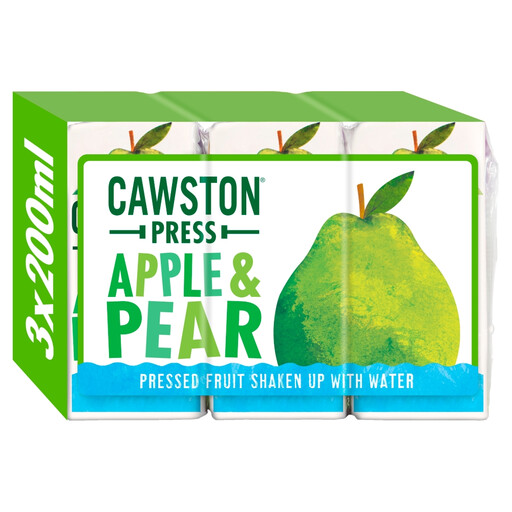
Cawston Press Apple & Pear Fruit Water, 3 × 200ml
These three 200ml cartons are an apple-and-pear fruit-water option for a packed lunch, rather than a pure apple juice. Check the current total-sugars figure before choosing it for a sugar-related preference, and do not assume its fruit-portion basis is the same as a 100% juice serving.
View on Joybuy
 No image available
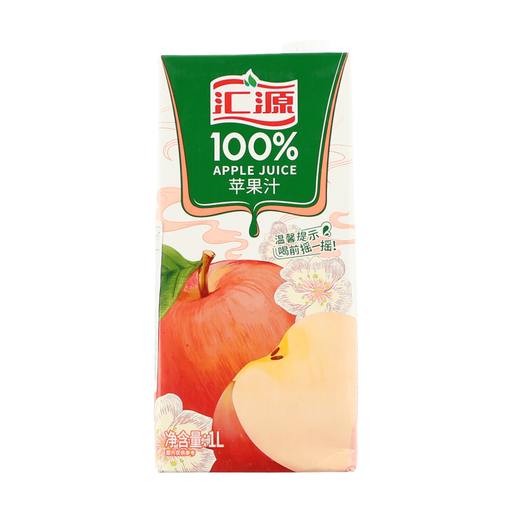
Huiyuan Apple Juice, 1L
The 1L pack is an apple-juice option to pour into a measured lunch serving, not a portion-sized container. For a child, keep juice and smoothies together within the NHS limit of 150ml a day. Check the current pack for its exact juice description, nutrition and storage instructions.
View on Joybuy
Questions about apple juice at lunch
Should apple juice be a child’s everyday lunch drink?
Choose water or milk for regular drinking, as the NHS recommends for children. If you include apple juice with lunch, count it alongside any smoothies and keep the combined daily amount to no more than 150ml.
Does ‘no added sugar’ apple juice contain zero sugar?
No: a no-added-sugar description does not mean a juice contains no sugar. Check total sugars on the label; if zero sugar is essential, compare non-juice drinks rather than assuming pure apple juice will meet that requirement.
What should I compare on drinks labelled with apple?
Start with the product description to distinguish 100% apple juice from a mixed fruit drink or apple-flavoured soft drink. Then compare total sugars on the same volume basis, the amount in the container and any storage instructions.
Is a whole 250ml can of apple juice one child’s daily serving?
No. The NHS advises no more than 150ml of juice and smoothies combined per day, so a 250ml can exceeds that amount if one child drinks it all. Measure a smaller serving and account for any other juice or smoothie that day.
How long can I keep apple juice after opening it?
Follow the instructions on the particular pack. For example, the Copella Cloudy Apple listing carried by Sainsbury’s and the M&S apple-juice listing both say to refrigerate after opening and consume within four days; do not apply that period to every juice.


