Choose 100% apple juice if that is the drink you want with lunch and you can measure a 150ml serving. If lower labelled sugar matters more, compare ready-to-drink juice drinks and cordial prepared as directed, but check their fruit content, sweeteners and whether you can store or mix them at work. The NHS counts sugars in unsweetened fruit juice as free sugars and advises limiting fruit juice and smoothies to a combined 150ml a day.
Who is each option for?
The useful distinction is whether you want a serving of apple juice, a ready-to-drink alternative with less labelled sugar, or a drink you can dilute at work.
Workers who want 100% apple juice
A measured 150ml serving suits a packed lunch if you want apple juice itself rather than an apple-flavoured drink. The NHS advises limiting fruit juice and smoothies to a combined 150ml a day; sugars naturally present in juice still count as free sugars.
Lunch packers choosing by labelled sugar
An individually portioned juice drink lets you compare sugars per pack before leaving home. Check the ingredients too: a drink with less labelled sugar may contain much less fruit juice and use sweeteners.
Workers who can mix a drink at work
Cordial is an option when you have water and a way to follow its dilution instructions. Compare nutrition for the prepared drink and check the ingredient and allergen information.
What should you check before choosing?
Decide first whether the drink must be 100% juice. Then compare a portion you would actually pack, followed by the storage and preparation instructions.
100% apple juice
Choose when: You want apple juice itself and can measure a 150ml portion.
Bear in mind: No added sugar does not remove juice-derived sugars; the NHS counts these as free sugars.
Ready-to-drink juice drink
Choose when: A portioned drink with less labelled sugar matters more to you than 100% juice.
Bear in mind: Check fruit percentages and sweeteners rather than assuming it is equivalent to apple juice.
Diluted cordial
Choose when: You can add water and mix a drink at the office.
Bear in mind: Nutrition for the prepared drink depends on following the stated dilution instructions.
| Priority |
What to check |
Your needs |
| Portion and sugars |
Compare sugars per 100ml and per serving, as well as the pack size. The NHS advises a combined daily limit of 150ml for fruit juice and smoothies. |
I want apple juice with lunch, but I would rather pour a measured serving than keep topping up from a bottle. |
| Product type |
Read the product name, fruit percentages and ingredients. According to ASDA Groceries, its Apple & Pear Juice Drink contains 6% apple juice, 4% pear juice and sucralose; its 150ml carton lists 1.8g sugars. |
If I am choosing by labelled sugar, I still want to know whether the pack contains 100% juice or a juice drink. |
| Storage and preparation |
Check storage directions for a bottle you will open. For cordial, follow the dilution ratio: the M&S high juice listed by Ocado specifies one part cordial to four parts water. |
I need a drink I can pack and prepare with the fridge, water and time available at work. |
| Ingredients |
Check sweeteners and the allergen statement on the particular pack, especially when switching from juice to a juice drink or cordial. |
I want to know what is in the lower-sugar option, not judge it from its front-of-pack wording alone. |
What can catch you out?
-
Reading ‘no added sugar’ as ‘sugar free’
The NHS counts sugars naturally present in unsweetened fruit juice as free sugars. Ocado lists 15g sugars per 150ml for Tropicana Pressed Apple, and Copella lists the same amount for its Cloudy Apple.
Check sugars per serving and measure the juice you pack. The NHS advises limiting fruit juice and smoothies to a combined 150ml a day.
-
Treating a juice drink as 100% juice
ASDA Groceries lists water, 6% apple juice, 4% pear juice and sucralose in its Apple & Pear Juice Drink. Its lower labelled sugar figure describes that juice drink, not an equivalent serving of 100% apple juice.
Choose which matters more for this lunch—100% juice or the drink’s labelled sugar figure—then read the product name, ingredients and fruit percentages.
-
Overlooking storage or mixing
A bottle that needs refrigeration and a cordial that needs water present different practical demands during a commute and at work.
Check the chosen pack’s storage directions before packing it. If taking cordial, make sure you can dilute it as directed rather than comparing nutrition for the concentrate with ready-to-drink products.
Product lines to compare
These examples show how particular apple drinks differ; their details apply to the named products, not every drink from each brand.
Tropicana
Tropicana Pressed Apple is an example for someone choosing 100% pressed apple juice rather than a juice drink.
- Ocado lists it as 100% pressed fruit juice, not from concentrate, with 15g sugars per 150ml.
- That sugar figure makes the serving important even though no sugar has been added; check the bottle’s refrigeration instructions.
Copella
Copella Cloudy Apple is a pressed-juice option for someone who prefers cloudy apple juice.
- Copella lists 15g sugars, 69 kcal and 1.1g fibre per 150ml for Cloudy Apple.
- Naturally occurring juice sugars still count as free sugars under NHS guidance; cloudiness does not change the need to consider the serving size.
ASDA
ASDA Apple & Pear Juice Drink offers a portioned, ready-to-drink alternative to 100% apple juice.
- ASDA Groceries lists 1.8g sugars and 9 kcal per 150ml carton.
- It contains 6% apple juice, 4% pear juice and sucralose, so check that a juice drink meets what you want from the pack.
M&S
M&S Apple & Elderflower High Juice suits a lunch routine that allows you to mix a drink at work.
- Ocado lists 50% fruit juice in the concentrate and 2.5g sugars per 250ml prepared drink when diluted as directed.
- It needs one part cordial to four parts water; check the pack’s ingredients and allergen statement before choosing it.
Joybuy apple-flavoured drinks
These ready-to-drink apple-flavoured options are for considering alongside the lower-sugar drink route, not as substitutes for a measured serving of 100% apple juice. One is an apple-and-blackcurrant drink; the other is an apple-flavoured soft drink.
 No image available
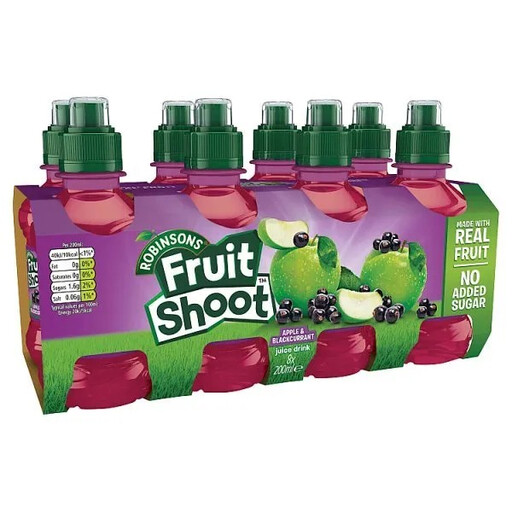
Fruit Shoot Black & Apple No Added Sugar, 8 × 200ml
The individual bottles provide a ready-to-drink apple-and-blackcurrant option for a packed lunch. This is not 100% apple juice; check the pack’s fruit percentages, sweeteners and serving information if those affect your choice.
View on Joybuy
 No image available
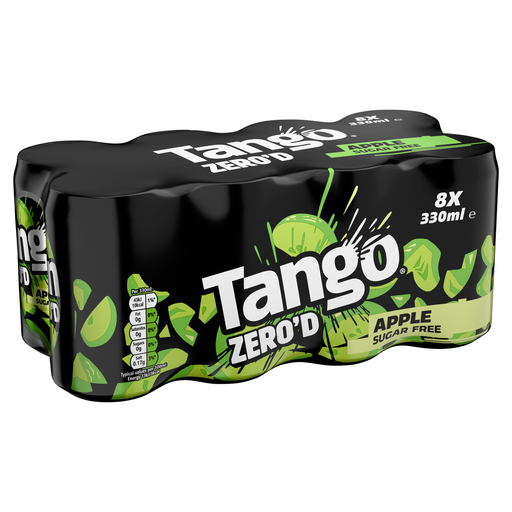
Tango Sugar Free Apple, 8 × 330ml
These 330ml cans are a ready-to-drink apple-flavoured soft drink, rather than 100% apple juice. Check the nutrition panel, fruit content and sweeteners if you are comparing them with juice drinks or a 150ml serving of juice.
View on Joybuy
Questions about apple drinks at lunch
Does ‘no added sugar’ apple juice contain no sugar?
No. The NHS says sugars naturally present in unsweetened fruit juice still count as free sugars. Check the nutrition panel: Ocado lists 15g sugars per 150ml for Tropicana Pressed Apple, and Copella lists 15g per 150ml for Cloudy Apple.
How much apple juice should I pack for lunch?
A measured 150ml serving fits within the NHS advice to limit fruit juice and smoothies to a combined 150ml a day. If you take a larger bottle, measure what you intend to drink rather than treating the whole bottle as one serving.
Is a no-added-sugar juice drink the same as 100% apple juice?
No. The product name and fruit percentages tell you what you are buying: ASDA Groceries lists 6% apple juice, 4% pear juice, water and sucralose in its Apple & Pear Juice Drink. Compare its nutrition per carton with juice on the same serving basis, while keeping the difference in fruit content clear.
What should I check before taking apple cordial to work?
Check that you can follow the dilution instructions and compare nutrition for the prepared drink. The M&S Apple & Elderflower High Juice listed by Ocado calls for one part cordial to four parts water; read the chosen pack’s ingredients and allergen statement too.


