Organisers offering a lower-sugar apple drink
Compare the sugar declaration and ingredients with those of 100% juice. Make sweeteners clear where they are used, and offer a separate sugar-free drink when that is what guests require.


Choose 100% apple juice when guests specifically want fruit juice, and plan 150ml servings in line with NHS guidance; pure juice still contains sugars. A no-added-sugar apple juice drink can have less stated sugar, but check its fruit content and sweeteners rather than treating it as pure juice. If a guest needs a sugar-free drink, offer a separate option instead of assuming apple juice qualifies.
The useful distinction is between guests asking for pure juice, those looking at stated sugar content and organisers planning how much will be served.
Compare the sugar declaration and ingredients with those of 100% juice. Make sweeteners clear where they are used, and offer a separate sugar-free drink when that is what guests require.
Choose a product labelled as 100% juice rather than a diluted juice drink, then plan the pour. The NHS advises limiting fruit juice and smoothies to a combined 150ml a day.
Match the bottle size to attendance and check the exact pack’s instructions after opening. The reviewed M&S cloudy juice specifies 24 hours, while reviewed Sainsbury’s juices specify four or five days.
Decide whether the meeting needs pure juice, a lower-sugar juice drink or a separate sugar-free option. Then compare labels on the same per-100ml basis and plan servings and storage.
| Priority | What to check | Your needs |
|---|---|---|
| Sugar and drink type | Read sugars per 100ml, the percentage of apple juice and the ingredients. Tesco Groceries lists water, 20% apple juice from concentrate and sucralose in its no-added-sugar apple juice drink; it is not 100% juice. | If I’m catering for someone limiting sugar, I want the stated sugar amount and any sweetener to be clear. If they specifically want pure juice, a juice drink is a different choice. |
| Juice portions | Plan 150ml glasses for fruit juice. The NHS advises limiting juice and smoothies to a combined 150ml a day. | I’d like guests to be able to choose a small glass of juice without making large refills the default. |
| Pack size and storage | Count planned servings, then check bottle size, refrigeration instructions and the period stated after opening. M&S specifies 24 hours for its reviewed Cloudy Apple Juice; Sainsbury’s specifies four or five days for its two reviewed juices. | For a small or one-off meeting, I want a pack size that fits the expected pours. For repeated use, the opened-pack instructions matter. |
| Ingredients for guests | Keep the delivered pack available so guests can read its ingredients, sweeteners and allergen information. GOV.UK says food businesses must provide information about any of 14 specified allergens used as ingredients. | If guests need to check what is in a drink, I want them to see the information for the pack being served. |
Tesco Groceries lists apple juice and sucralose in its no-added-sugar apple juice drink. The reviewed Sainsbury’s alternatives are 100% juice, so the labels describe different types of drink.
Describe each option accurately on the refreshments table, and provide a separate sugar-free drink if one is needed.
The NHS advises a combined daily limit of 150ml for fruit juice and smoothies. A large meeting glass can make the portion difficult to judge.
Use small glasses or measured portions, with water available alongside the juice.
Instructions differ between products: the reviewed M&S cloudy juice specifies use within 24 hours of opening, while the reviewed Sainsbury’s juices specify four or five days.
Estimate attendance and 150ml pours before choosing a pack, then follow its refrigeration and use-by-opening instructions.
A partly used bottle may need to be discarded if it cannot be used within the stated period.
Guests may need to distinguish pure juice from a drink containing sweetener or check ingredients relevant to them.
Check the delivered pack and keep its ingredient and allergen information available when serving.
These product-line examples show why the drink description and exact label matter more than the brand name alone.
Orchard Apple is a 100% pressed, not-from-concentrate juice according to Tropicana.
Cloudy Apple is a pressed-apple juice offered in several bottle sizes, according to Copella.
The reviewed Tesco products include a 100% pressed apple juice and a separate no-added-sugar apple juice drink.
The reviewed 1L choices are a 100% juice from concentrate and a 100% pressed juice that is not from concentrate.
The reviewed Cloudy Apple Juice is a not-from-concentrate option, according to Marks & Spencer.
These options cover sugar-free apple-flavoured fizzy drinks, a no-added-sugar mixed-fruit drink and a sparkling apple-juice listing. Check each drink type against what guests have requested; an apple-flavoured drink is not automatically 100% apple juice.
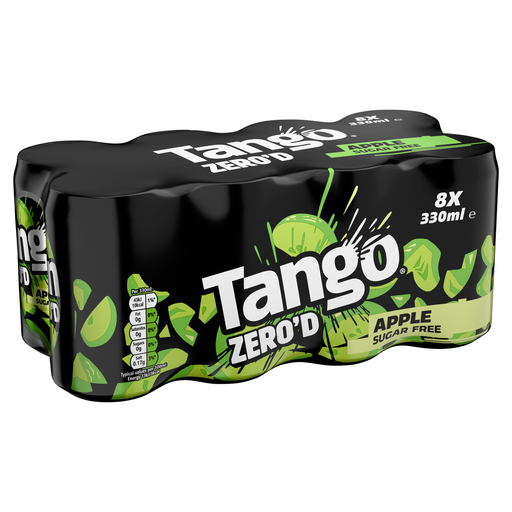 Image unavailable
An apple-flavoured fizzy option when a sugar-free drink is requested. The product information lists 0g sugars, 4% apple juice from concentrate and sweeteners; it is not 100% apple juice. The cans are pressurised and should be handled with care.
 Image unavailable
A larger multipack of apple-flavoured fizzy drink for meetings where a sugar-free option is wanted. The product information lists 0g sugars, 4% apple juice from concentrate and sweeteners; it is not pure juice. Each pressurised can contains 330ml.
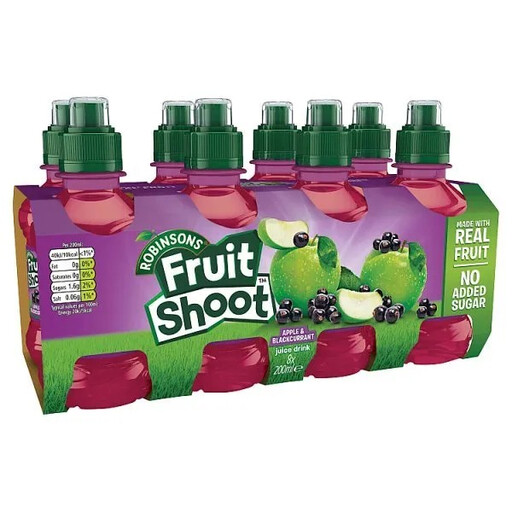 Image unavailable
A bottled mixed-fruit drink rather than pure apple juice or a zero-sugar drink. Its product information declares 0.7g sugars per 100ml, 6% apple juice, 2% blackcurrant juice and sweeteners. Refrigerate an opened bottle and use it within three days.
 Image unavailable
A lightly sparkling option in six 250ml bottles. Check the specific pack’s juice content, ingredients and sugar declaration before choosing it for guests with a sugar-related requirement or planning juice portions.
No. Tesco Groceries lists sugars, 20% apple juice from concentrate and sucralose in its reviewed no-added-sugar apple juice drink. Check the sugar declaration and describe it as a juice drink, not as zero-sugar or 100% apple juice.
A 150ml glass is a practical planning portion. The NHS advises limiting fruit juice and smoothies to a combined 150ml a day, so provide water or another suitable drink alongside juice rather than relying on refills.
No. Sainsbury’s declares 8.7g sugars per 100ml for its reviewed not-from-concentrate pressed apple juice, while Tesco Groceries declares 11.2g per 100ml for its reviewed pressed juice. Choose between juice types on their stated characteristics, not an assumption that one has no sugar.
Keep the delivered drink’s packaging available so guests can check its ingredients, sweeteners and allergen information. GOV.UK says food businesses must provide information about any of 14 specified allergens used as ingredients; check the exact product being served.
Follow the instruction on that bottle and the planned date of the next meeting. Marks & Spencer specifies 24 hours after opening for its reviewed Cloudy Apple Juice; Sainsbury’s specifies four days for its reviewed from-concentrate juice and five days for its pressed juice.