Households buying several servings at once
Compare the number of servings with the label’s instructions for using the juice after opening. A large chilled bottle only fits the shop if it can be finished within that period.


Choose 100% apple juice if you want juice rather than a diluted juice drink, but do not mistake “no added sugar” for “low sugar”: juice still contains sugars. If sugars per serving are the deciding factor, compare no-added-sugar juice drinks too, while checking their fruit content and sweeteners. For a large household shop, match the pack size to how quickly you will use it after opening.
The useful starting point is whether your household wants pure apple juice, a drink with less sugar per serving, or a pack that fits its usual rate of use.
Compare the number of servings with the label’s instructions for using the juice after opening. A large chilled bottle only fits the shop if it can be finished within that period.
Read the sugars figure for a consistent serving size. Unsweetened fruit juice still contains free sugars; a juice drink with sweeteners may have a different figure and a different fruit content.
Check the product description and ingredients rather than relying on the front-of-pack claim. A no-added-sugar apple-based drink is not necessarily 100% apple juice.
Decide which type of drink you want, then compare its sugars, pack format and storage instructions on the label of the exact product.
| Priority | What to check | Your needs |
|---|---|---|
| Type of drink | Check whether the product is 100% apple juice or a juice drink. Read the ingredients for water, other fruit juices and named sweeteners. | I want to know whether I am buying pure apple juice or a different apple-based drink. |
| Sugars per serving | Compare the sugars line using the same volume; check both per 100ml and any stated serving figure. NHS guidance sets a combined daily maximum of 150ml for fruit juice and smoothies for children and adults. | If sugars matter to my choice, I want the amount in a glass—not just a “no added sugar” claim on the front. |
| Pack format | Check the total volume, whether it is one bottle or separate units, and the size of each unit. | For a larger household shop, I need enough servings without assuming that a bigger container means a bigger serving. |
| After opening | Read the refrigeration and use-after-opening instructions on the exact pack. For a multipack, check how those instructions apply to each unit. | I would rather choose a format my household can use within the time stated on its label. |
Pure apple juice can have no sugar added and still contain sugars from the fruit. Those sugars count as free sugars once the fruit is juiced.
Compare the sugars figure for the amount you plan to pour. The NHS advises no more than a combined 150ml of fruit juice and smoothies a day for children and adults.
Sainsbury’s no-added-sugar apple-and-pear juice drink contains sweeteners and has 3.9g sugars per 150ml, according to its product listing. Its formulation is different from 100% apple juice.
If fruit content matters more to you than that sugars figure, read the product type and ingredient list before choosing.
A bottle’s total volume does not tell you how long its contents can be kept once opened.
Check the current pack’s storage instructions and choose a bottle or multipack format that suits your household’s rate of use.
These brand examples illustrate different apple-juice formats and formulations; check the label of the particular product you intend to buy.
Tesco lists a 1.75L, not-from-concentrate pressed apple juice.
Sainsbury’s lists 100% not-from-concentrate apple juice as well as a separate no-added-sugar apple-and-pear juice drink.
Asda lists a 1L 100% pure pressed apple juice.
Tropicana’s Pressed Apple Fruit Juice comes in a 1.5L pack described as ten 150ml servings.
Copella lists a cloudy apple juice in a 1.35L bottle.
The M&S range lists several apple-juice formats, including a 1.75L pressed cloudy apple juice.
These options cover a sparkling apple-juice multipack and a 1L apple juice made from concentrate. Check the format and ingredients if your family normally buys still, pressed juice.
 No image available
Six separate 250ml units offer 1.5L in total for a household shop, but this is lightly sparkling rather than still apple juice. The listed ingredient is carbonated apple juice from concentrate. Its description gives 10.5g sugars per 100ml and 26g per 250ml unit; a whole unit is larger than the NHS 150ml daily fruit-juice-and-smoothie reference. Check the pack’s storage instructions before buying.
 No image available
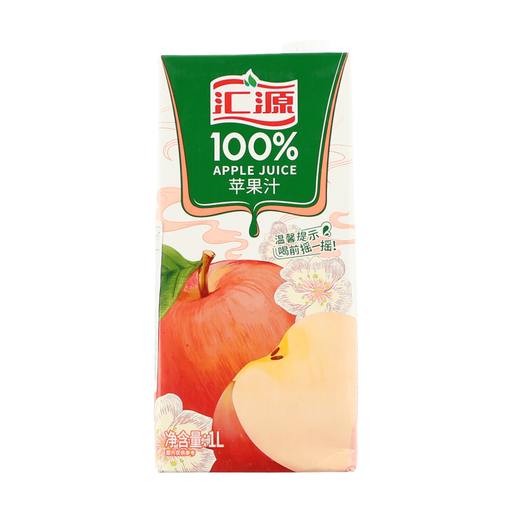
This 1L pack may suit a household that prefers one container to a multipack. Its description claims no added sugar and lists water and apple juice concentrate as ingredients; check the current label if 100% juice is a requirement. The description lists 10.2g sugars per 100ml. Check the pack’s instructions for storage after opening.
No. The claim concerns what has been added, while juice can still contain sugars from fruit. Check the sugars line for a consistent serving size instead of using the claim to judge the amount of sugar in a glass.
Use the same volume for each product’s sugars comparison. The NHS advises children and adults to have no more than a combined 150ml of fruit juice and smoothies a day; a larger bottle does not change that guidance.
A juice drink can contain water, other fruit juices and sweeteners rather than being 100% apple juice. Sainsbury’s no-added-sugar apple-and-pear drink lists sweeteners and 3.9g sugars per 150ml. Read its ingredients if pure apple juice is what you want.
Choose the format your household can use in line with the exact product’s storage instructions. Compare the volume of each bottle or unit, then check how it must be kept after opening.