Choose 100% apple juice if fruit-only composition matters and you can keep the child’s total juice and smoothie intake to the NHS’s recommended maximum of 150ml a day, served with a meal. If a lower listed sugar amount matters more, compare no-added-sugar juice drinks by their ingredients and serving-size nutrition: the Tesco and Sainsbury’s examples contain sweeteners and are not pure apple juice. For a routine school drink, the NHS recommends water or milk for children.
Who is this choice for?
Parents packing regular school lunches
If you send a drink most days, separate the choice of an everyday drink from the occasional or measured juice serving. The NHS recommends water or milk for children and limits fruit juice and smoothies to 150ml a day with a meal.
Families looking for 100% juice without sweeteners
Check that the ingredients describe pure or pressed juice, then plan the portion rather than assuming a whole bottle is one serving. Tropicana and Copella each list around 15g sugars per 150ml of the juices described here.
Families comparing apple-flavoured juice drinks
If the listed sugar amount is a deciding factor, compare nutrition for the amount your child will actually drink. Check the fruit percentage and sweeteners too: a no-added-sugar juice drink need not be 100% apple juice.
What should you check?
100% apple juice
Choose it when: You want a fruit-only juice and can pour a measured serving with lunch.
Bear in mind: No added sugar does not mean no sugars; Copella lists 15g sugars per 150ml of its Cloudy Apple juice.
No-added-sugar juice drink
Choose it when: You are comparing listed sugars per serving and are willing to consider a diluted drink.
Bear in mind: Tesco’s apple drink and Sainsbury’s apple-and-pear drink both contain sweeteners and 20% apple juice.
| Priority | What to check | Your needs |
|---|
| Juice portion |
For fruit juice or smoothies, the NHS advises no more than 150ml in a day, with a meal. Compare that daily total with the amount you plan to pack. |
I may need to allow for juice or a smoothie served at another meal, rather than treating the lunchbox serving separately. |
| Sugars |
Read ‘of which sugars’ for the intended portion. Copella lists 15g per 150ml of Cloudy Apple juice; Tesco lists 3.1g per 150ml of its No Added Sugar Apple Juice Drink. |
A ‘no added sugar’ claim alone will not tell me how much sugar is in the drink my child will have. |
| Ingredients |
Check the fruit percentage and any sweeteners. Tesco lists 20% apple juice and sucralose; Sainsbury’s Apple & Pear Juice Drink lists 20% apple juice, 5% pear juice, acesulfame K and sucralose. |
If I want pure apple juice, or prefer to avoid sweeteners, I need to read past the front of the pack. |
| Lunchbox fit |
Check the pack volume, the child’s ability to use its cap and the school’s packed-lunch policy. A 200ml pack should not automatically be treated as a 150ml juice serving. |
I want a pack my child can manage at school that also fits the drink rules for their lunch. |
Common buying mistakes
-
Reading ‘no added sugar’ as ‘sugar-free’
Fruit juice still contains sugars from the fruit. Tropicana states that a 150ml glass of its juice has approximately 15g sugars, while Copella lists 15g per 150ml of Cloudy Apple.
Compare the ‘of which sugars’ figure for the portion you intend to serve, not just the front-of-pack wording.
-
Assuming a whole carton is the recommended juice portion
A 200ml pack exceeds the NHS’s recommended daily maximum of 150ml for fruit juice and smoothies if it contains 100% juice and is consumed in full.
For 100% juice, pour a measured amount with lunch and account for any other juice or smoothie that day. Water is another option for the routine lunch drink.
-
Choosing a juice drink when you want pure juice
Tesco’s no-added-sugar apple drink contains water, 20% apple juice and sucralose. Sainsbury’s apple-and-pear version also contains water and sweeteners. Neither has the composition of 100% apple juice.
Use the ingredients list to decide whether fruit-only juice or a diluted drink fits what you want to pack.
-
Overlooking the pack and school rules
A portable format does not settle whether its portion, cap or drink type is suitable for a particular child’s lunch. Fruit Shoot’s product information warns that its caps contain small parts and says the bottles are unsuitable for children under 36 months.
Check the current pack instructions and your child’s school packed-lunch policy before choosing a format.
Brand and retailer references
These examples show why the ingredients and nutrition panel matter more than the words ‘no added sugar’ on their own.
Tropicana
Tropicana describes its juices as 100% fruit juice with no added sugar.
- A fruit-juice option for shoppers who do not want a diluted juice drink.
- Tropicana states that a 150ml glass contains approximately 15g sugars; no added sugar does not mean sugar-free.
Copella
Copella Cloudy Apple is a pressed apple juice for shoppers seeking an apple-led juice rather than a diluted drink.
- Copella lists 15g sugars per 150ml, making the serving amount clear for comparison.
- Its listed bottles start at 250ml; pour a measured serving if following the NHS’s 150ml daily juice guidance.
Tesco
Tesco’s No Added Sugar Apple Juice Drink is a diluted apple drink, not 100% apple juice.
- The 1L product lists 3.1g sugars per 150ml and identifies its ingredients as including 20% apple juice.
- It contains sucralose. Check the exact format: Tesco’s 200ml apple drink pouch has a different listed recipe and serving-size nutrition.
Sainsbury’s
Sainsbury’s No Added Sugar Apple & Pear Juice Drink combines apple and pear juice with water.
- The 1L product lists 3.9g sugars per 150ml.
- Its ingredients include 20% apple juice, 5% pear juice and two sweeteners, so it is neither pure apple juice nor apple-only.
M&S
M&S lists a 200ml Apple Juice in its children’s drinks range alongside other drink types.
- The named pack size gives parents a starting point for checking the intended serving.
- Do not treat every apple-based product in the range as ready-to-drink pure juice: M&S Apple and Mango High Juice contains sucralose and carries dilution instructions for older children.
Apple-based drinks on Joybuy
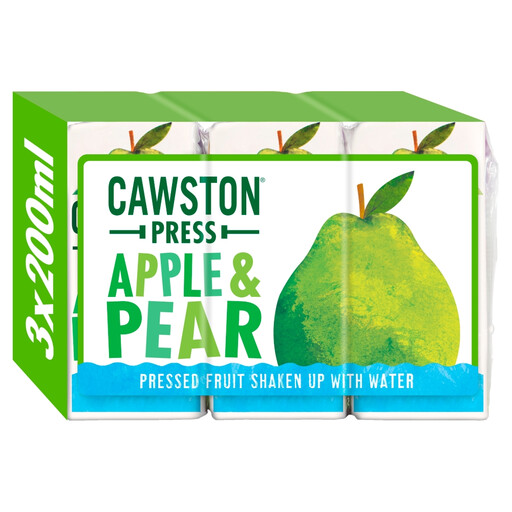
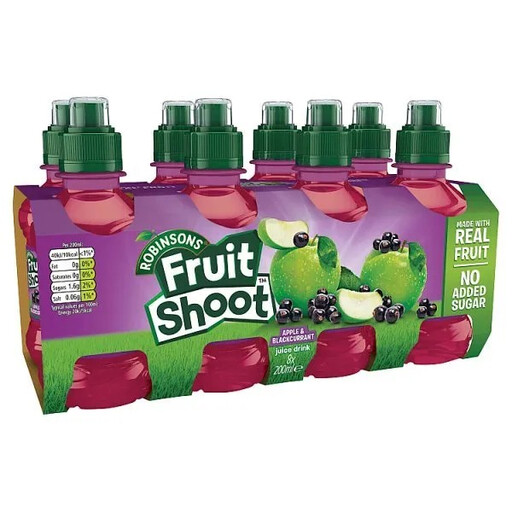
These options are individual apple-based lunchbox drinks: an apple-and-pear fruit water and an apple-and-blackcurrant no-added-sugar drink. Neither should be mistaken for 100% apple juice.
 No image available
Cawston Press Apple & Pear Fruit Water 3x200ml
The three-carton format offers an apple-and-pear drink for separate packed lunches, rather than pure apple juice. If fruit-only composition or a particular sugar amount matters, check the ingredients and nutrition on the current pack before choosing it.
View on Joybuy
 No image available
Fruit Shoot Black & Apple No Added Sugar 8x200ml
The individual bottles may suit packed lunches if an apple-and-blackcurrant drink, rather than apple-only juice, is wanted. Check the sweeteners on the pack; its cap contains small parts, and the product information says it is unsuitable for children under 36 months.
View on Joybuy
Questions about packed-lunch drinks
Does ‘no added sugar’ mean an apple drink is sugar-free?
No. Tesco’s No Added Sugar Apple Juice Drink lists 3.1g sugars per 150ml and contains apple juice from concentrate. Read both ‘of which sugars’ and the ingredients for the exact drink and portion.
How much 100% apple juice should go in a packed lunch?
The NHS advises limiting fruit juice and smoothies to one small 150ml glass a day, with a meal. Count any juice or smoothie the child has at another time of day before packing a lunch serving.
Is a 200ml children’s pack automatically one suitable juice serving?
No. If it contains 100% juice, drinking the whole 200ml pack exceeds the NHS’s 150ml daily guidance for fruit juice and smoothies. For a diluted juice drink, check its own ingredients and nutrition rather than assuming it has the same composition as juice.
Are no-added-sugar apple juice drinks free from sweeteners?
Not necessarily. Tesco’s cited apple drink contains sucralose, while Sainsbury’s cited apple-and-pear drink contains acesulfame K and sucralose. Check the exact product’s ingredients if avoiding sweeteners matters to your household.
Will the school accept an apple juice drink in a packed lunch?
Check your child’s school packed-lunch policy before buying. The Department for Education’s school-food guidance addresses food and drink provided in state-funded schools in England; it does not tell you which parent-packed drinks an individual school accepts.


