Choose 100% apple juice if you want carbohydrate in a drink before exercise; Tropicana and Copella list 16–17g carbohydrate and 15g sugars per 150ml. If you want less sugar rather than the same carbohydrate intake, Tesco’s no-added-sugar apple juice drink lists 3.1g carbohydrate and 3.1g sugars per 150ml. For a snack 60–90 minutes before training, University College London Hospitals NHS Foundation Trust advises including carbohydrate, protein and minimal fat, so juice alone does not cover that snack pattern.
Who is each drink for?
The useful distinction is whether you want carbohydrate from the drink or simply prefer an apple-flavoured option with less sugar.
People planning a pre-workout snack
If you have not eaten a meal 2–3 hours before training, 100% apple juice can provide the carbohydrate part of a snack. University College London Hospitals NHS Foundation Trust advises including protein and minimal fat too when eating 60–90 minutes before exercise.
Shoppers looking for less sugar
If you want an apple-flavoured drink but are not relying on it for carbohydrate, compare no-added-sugar juice drinks with 100% juice. The Tesco example contains water, 20% apple juice from concentrate and sucralose; it is a different product type, not a sugar-free version of full-strength juice.
People managing diabetes around exercise
Carbohydrate choices around activity need to fit an individual plan. Diabetes UK notes that different activities can affect blood glucose differently and advises discussing what is appropriate with your healthcare team.
What should you check?
Start with the drink’s intended role, then compare the same serving size and read the product description alongside the nutrition panel.
| Priority | What to check | Your needs |
|---|
| Carbohydrate | Compare carbohydrate per 150ml. Tropicana Orchard Apple lists 17g and Copella Cloudy Apple 16g; Tesco’s no-added-sugar apple juice drink lists 3.1g. | I want carbohydrate from my drink before exercise, rather than apple flavour alone. |
| Sugar and product type | Read both sugars per serving and the ingredients. The Tropicana and Copella juices each list 15g sugars per 150ml; Tesco’s drink lists 3.1g and contains water, 20% apple juice from concentrate and sucralose. | Less sugar matters more to me than getting the carbohydrate supplied by 100% juice. |
| Snack timing | Consider whether you have eaten a meal and what else is in the snack. University College London Hospitals NHS Foundation Trust advises carbohydrate, protein and minimal fat for a snack 60–90 minutes before training. | If I missed a meal, I want to plan the whole snack rather than count juice as one on its own. |
| Serving size | Compare nutrition figures using the same volume and measure what you pour. NHS guidance limits fruit juice and smoothies to a combined 150ml a day. | A pre-workout glass may be my fruit-juice serving for the day, even when the bottle holds more. |
What is easy to overlook?
-
Reading “no added sugar” as “100% juice”
The descriptions do not mean the same thing. Tesco’s no-added-sugar apple juice drink contains water, 20% apple juice from concentrate and sucralose, and lists less carbohydrate per 150ml than the Tropicana and Copella 100% juices.
Check the product type, ingredients and carbohydrate figure before choosing it for a particular pre-workout purpose.
-
Counting juice as the whole snack
Tropicana Orchard Apple and Copella Cloudy Apple each list 0.3g protein per 150ml. That differs from the carbohydrate-and-protein snack pattern University College London Hospitals NHS Foundation Trust describes for 60–90 minutes before training.
If that timing applies, consider what food will accompany the drink.
-
Pouring without checking the serving
The sugars in 100% apple juice still count towards the NHS guidance to limit fruit juice and smoothies to a combined 150ml a day.
Measure a 150ml portion rather than treating a larger bottle as one serving.
-
Copying someone else’s exercise drink routine
Diabetes UK says different types of activity can affect blood glucose in different ways. Food, activity and diabetes medication, especially insulin, can also affect the risk of a hypo.
If you manage diabetes, use your individual plan and discuss exercise-related choices with your healthcare team.
Brand and retailer references
These examples show why a brand name or an apple-flavoured description is less useful than the individual product’s ingredients and per-serving figures.
Tropicana
Tropicana Orchard Apple is an apple juice option for comparing carbohydrate from a 150ml serving.
- Tropicana lists apple juice and ascorbic acid, with 17g carbohydrate and 15g sugars per 150ml.
- The same serving lists 0.3g protein and is not sugar-free.
Copella
Copella Cloudy Apple provides another pressed-apple-juice example with figures for a 150ml serving.
- Copella lists 16g carbohydrate and 15g sugars per 150ml.
- It also lists 0.3g protein per serving, so the juice alone does not provide the protein in a carbohydrate-and-protein snack.
Tesco
Tesco’s no-added-sugar apple juice drink illustrates the distinction between a juice drink and 100% apple juice.
- The drink lists 3.1g carbohydrate and 3.1g sugars per 150ml.
- It contains water, 20% apple juice from concentrate and sucralose; its carbohydrate content is not equivalent to the cited 100% juices.
M&S
M&S lists apple juice, cloudy and pressed options, as well as a no-added-sugar category filter.
- The range offers product types to distinguish by description and ingredients.
- Use the individual pack’s nutrition panel to compare carbohydrate and sugars at the same serving size.
Joybuy product options
These options include apple juice, an apple juice drink and an apple-and-pear fruit water. Check each description and nutrition panel for the role you want the drink to play; do not treat every item as a no-added-sugar or 100% juice option.
 No image available
Appletiser 100% Apple Juice Lightly Sparkling, 6 x 250ml
Consider this sparkling apple juice when you want juice as the drink in a pre-workout snack. The pack contains six 250ml portions; measure the amount you drink against the NHS’s combined 150ml daily guidance for fruit juice and smoothies.
 No image available
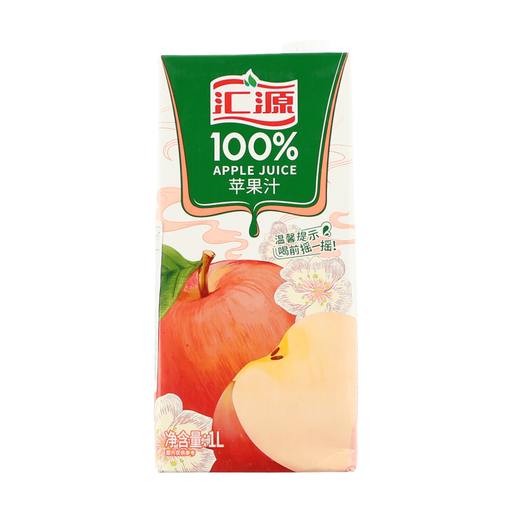
Huiyuan Apple Juice, 1L
The 1L bottle is an option if you prefer to pour your own serving of apple juice. Check its nutrition panel for carbohydrate and sugars at the volume you intend to drink, and measure a portion rather than treating the bottle as one serving.
 No image available
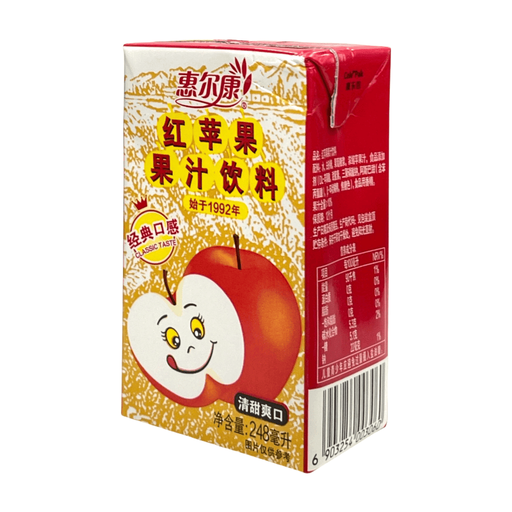
Huierkang Red Apple Juice Drink, 248ml carton
This is labelled an apple juice drink, not simply apple juice. If you are comparing it with 100% juice for a pre-workout snack, check the ingredients and carbohydrate per serving; do not assume that a juice drink is sugar-free.
 No image available
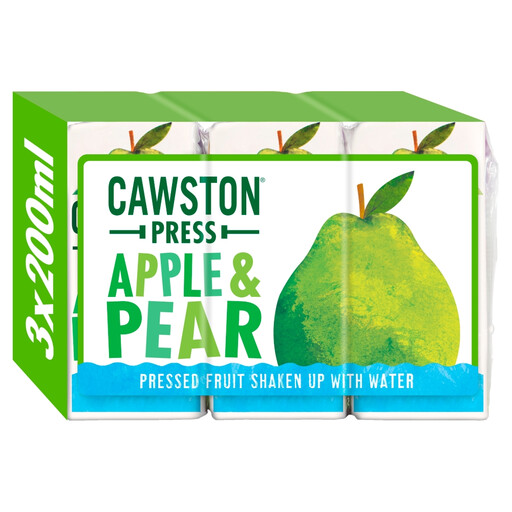
CAWSTON PRESS Apple & Pear Fruit Water, 3 x 200ml
Consider this apple-and-pear fruit water if you want that combination of flavours rather than plain apple juice. The pack contains three 200ml portions; compare its ingredients, sugars and carbohydrate with any juice you are considering for the same snack.
Common questions
Is 100% apple juice a zero-sugar drink?
No. Tropicana Orchard Apple and Copella Cloudy Apple each list 15g sugars per 150ml. Check the sugars figure rather than assuming that 100% juice means zero sugar.
Does a no-added-sugar juice drink supply the same carbohydrate as 100% apple juice?
Not in these examples. Tesco’s no-added-sugar apple juice drink lists 3.1g carbohydrate per 150ml, compared with 17g for Tropicana Orchard Apple and 16g for Copella Cloudy Apple at the same volume. Compare the product you are buying rather than applying those figures to every juice drink.
Is apple juice enough for a snack 60–90 minutes before training?
Juice can be the carbohydrate part, but University College London Hospitals NHS Foundation Trust advises a snack with carbohydrate, protein and minimal fat in that window when you have not eaten a meal 2–3 hours beforehand. Plan the accompanying food as well as the drink.
How does a pre-workout glass fit the daily fruit-juice guidance?
NHS guidance limits fruit juice and smoothies to a combined 150ml a day. A measured 150ml glass of apple juice reaches that general daily amount.
What if I manage diabetes and exercise affects my blood glucose?
Use an individual plan rather than assuming a particular apple drink suits every session. Diabetes UK notes that activities can affect blood glucose differently and advises discussing what is appropriate with your healthcare team.


