Parents packing school-day drinks
A carton or bottle may be easy to pack, but its full volume may be more than the intended juice portion. The NHS advises no more than 150ml of fruit juice and smoothies combined per day, served at mealtimes.


For an everyday school drink, choose water or milk if you do not need a juice serving. If you want 100% apple juice, measure no more than 150ml and serve it with a meal: the NHS advises a combined daily limit of 150ml for fruit juice and smoothies. If the labelled sugar figure matters more than buying pure juice, compare apple-based drinks by serving size and ingredients; Sainsbury’s Apple & Pear No Added Sugar Juice Drink lists 3.9g sugars per 150ml but contains sweeteners.
Portion size, ingredients and pack format matter differently depending on how a school-day drink will be used.
A carton or bottle may be easy to pack, but its full volume may be more than the intended juice portion. The NHS advises no more than 150ml of fruit juice and smoothies combined per day, served at mealtimes.
If apple flavour matters more than buying pure juice, compare sugars for the same serving size. Read the ingredients as well: a no-added-sugar juice drink may contain sweeteners.
Check whether the pack says 100% juice, pressed or from concentrate, according to your preference. Pure juice is not a zero-sugar drink: Tropicana Orchard Apple and Copella Cloudy Apple each list 15g sugars per 150ml.
Decide whether the drink is for everyday use or for a measured juice serving, then compare the ingredients, nutrition panel and pack volume.
Choose when: You specifically want pure juice and can serve a measured portion with a meal.
Bear in mind: Tropicana Orchard Apple and Copella Cloudy Apple each list 15g sugars per 150ml; the NHS limit covers juice and smoothies combined.
Choose when: A lower labelled sugar figure matters more to you than a 100% juice ingredient list.
Bear in mind: Sainsbury’s Apple & Pear No Added Sugar Juice Drink lists 3.9g sugars per 150ml, but contains water, apple and pear juice, acesulfame K and sucralose.
Choose when: You need a routine school-day drink rather than a juice serving.
Bear in mind: This does not meet a preference for apple flavour or 100% juice.
| Priority | What to check | Your needs |
|---|---|---|
| Juice portion | Check the pack volume against the NHS combined limit of 150ml of fruit juice and smoothies per day. If serving juice, keep it to a mealtime. | I want to include apple juice with a meal without treating the whole carton or bottle as an automatic serving. |
| Sugars and ingredients | Compare sugars for equivalent serving sizes and check whether the drink is 100% juice or a diluted juice drink. Sainsbury’s lists 3.9g per 150ml for its Apple & Pear drink; Tropicana and Copella each list 15g per 150ml for the cited pure juices. | Lower labelled sugars matter to me, but I also want to know whether I am buying pure juice or a drink made with water and sweeteners. |
| Sweeteners | Read the ingredient list rather than relying on “no added sugar”. Sainsbury’s Apple & Pear drink lists acesulfame K and sucralose. | If I prefer to avoid sweeteners, a no-added-sugar claim alone does not answer my question. |
| Pack size | Check the full pack volume and the nutrition panel’s serving size. Sainsbury’s 100% apple juice carton is 200ml, while the NHS combined daily juice and smoothie limit is 150ml. | A lunchbox carton is convenient, but I need to know whether its full contents fit the juice portion I intend to serve. |
| Opened-pack storage | Check the exact refrigeration and consume-within instructions before choosing a larger bottle. M&S says to refrigerate its Apple Juice 1L after opening and consume it within four days. | When pouring from one bottle over several days, I want a pack size that fits how quickly it will be used. |
A no-added-sugar drink can still list sugars and sweeteners. Sainsbury’s Apple & Pear No Added Sugar Juice Drink lists 3.9g sugars per 150ml and contains acesulfame K and sucralose.
Check both the nutrition panel and ingredients, then decide whether pure juice, the labelled sugar figure or avoiding sweeteners matters most to you.
Sainsbury’s 200ml pure apple juice carton exceeds the NHS combined daily limit of 150ml for fruit juice and smoothies if one person drinks it all.
Check the pack volume before putting juice in a lunchbox. If serving it, measure the intended portion and keep it to a mealtime.
The NHS advises limiting fruit juice and smoothies to a combined 150ml a day and having them at mealtimes, so a juice bottle is not an unrestricted drink for throughout the school day.
Choose water or milk when you need a routine drink; offer a measured juice portion with a meal if you specifically want juice.
A large bottle may be used across several days, but opened-pack instructions differ by product. M&S Apple Juice 1L says to refrigerate after opening and consume within four days.
Match the pack size to likely use and follow the storage instructions on the bottle you buy.
These examples show why the exact product label matters more than the brand name alone.
Tropicana describes Orchard Apple as 100% pressed juice, not from concentrate.
Copella Cloudy Apple is a pressed apple juice with vitamin C listed in its ingredients.
The cited own-label products illustrate the difference between a 100% apple juice carton and an apple-and-pear juice drink.
Tesco’s apple juice listing includes own-label apple juice alongside Tropicana and Copella products.
Asda lists a 300ml Copella Cloudy Apple bottle, an example of a larger single bottle.
The cited M&S products include apple juice and a separate apple-and-blackcurrant juice drink.
These options are apple-containing or apple-flavoured soft drinks for comparing no-added-sugar and sugar-free labels. Neither is an example of 100% apple juice.
 No image available
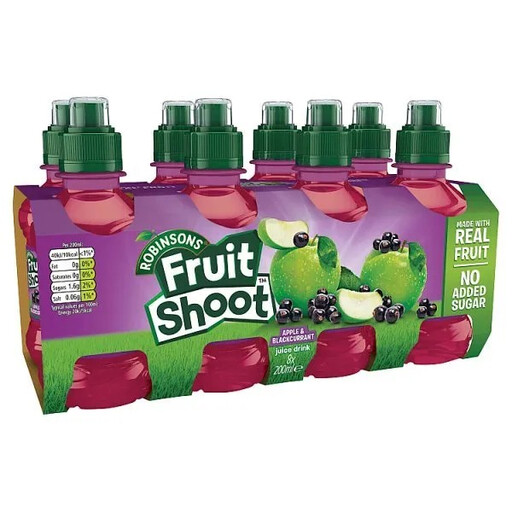
The eight 200ml bottles offer an apple-and-blackcurrant drink rather than 100% apple juice. Its listed ingredients include acesulfame K and sucralose, so check the label if avoiding sweeteners matters to you. The product information warns that the caps contain small parts and that the bottles are unsuitable for children under 36 months; it also says not to refill them.
 No image available
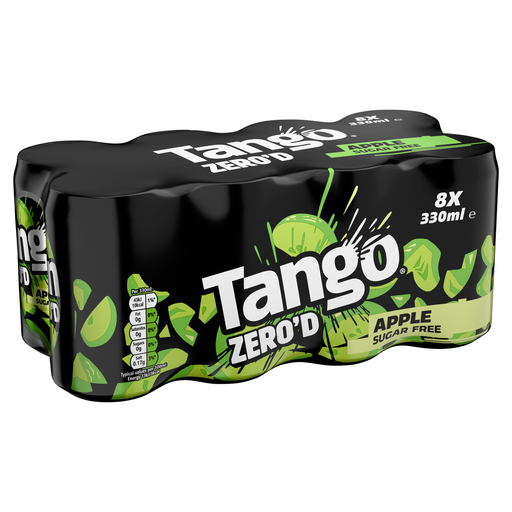
This apple-flavoured carbonated soft drink comes in eight 330ml cans; it is not 100% apple juice. Its listed sweeteners are sucralose and acesulfame K, so check the ingredients if that affects your choice. The product information warns that the pressurised container should be handled with care.
The NHS advises children and adults to have no more than 150ml of fruit juice and smoothies combined per day, and to keep them to mealtimes. A smoothie and an apple juice both count towards that combined amount.
No. Tropicana Orchard Apple and Copella Cloudy Apple each list 15g sugars per 150ml. Being 100% juice does not make a drink sugar-free.
No; read the ingredients of the exact drink. Sainsbury’s Apple & Pear No Added Sugar Juice Drink contains acesulfame K and sucralose, while M&S says its Apple & Blackcurrant Juice Drink has no artificial sweeteners.
Not if one person drinks the whole carton: the NHS advises a combined daily limit of 150ml for fruit juice and smoothies. Sainsbury’s Pure Apple Juice carton contains 200ml, so check volume rather than assuming a single carton equals the intended portion.
Choose water or milk when you want a routine drink rather than a juice serving. If you do pack apple juice, the NHS advises keeping fruit juice and smoothies to a combined 150ml a day and having them at mealtimes.