Choose 100% apple juice if you want its flavour with breakfast and can keep fruit juice and smoothies to a combined 150ml for the day, consumed with a meal, as the NHS advises. If reducing sugar is the priority, compare the nutrition panels of apple-based drinks rather than assuming ‘no added sugar’ means sugar-free or pure juice. Whole fruit retains fibre that juice largely loses, according to Diabetes UK.
Who is this choice for?
Breakfast juice drinkers watching free sugars
If you enjoy apple juice with breakfast, the amount you pour matters as much as the words ‘100% fruit’ on the carton. The NHS advises limiting fruit juice and smoothies together to 150ml a day and having them with a meal.
Shoppers considering an apple-based juice drink
A juice drink may have a different fruit content and ingredient list from pure apple juice. Compare sugars per 100ml, the fruit-juice percentage and any sweeteners before deciding whether that trade-off suits you.
People counting carbohydrates
Check total carbohydrate for the portion you intend to drink, not just the sugars line. Diabetes UK notes that juice has most of the fibre removed compared with whole fruit; if you follow an individual diabetes care plan, use its advice when planning breakfast.
What should you check?
Decide whether you want pure juice, an apple-based drink or whole fruit, then compare the serving you would actually have at breakfast.
| Priority |
What to check |
Your needs |
| Juice portion |
Measure the serving rather than relying on the glass or bottle size. The NHS advises a combined maximum of 150ml of fruit juice and smoothies a day, with a meal. |
I enjoy juice at breakfast but want to leave room for any other juice or smoothie I might have that day. |
| Sugars |
Compare sugars per 100ml on the same basis, then check the amount in your planned serving. Sainsbury’s lists 9.2g per 100ml for its Pure Apple Juice; ASDA lists 11g per 100ml for its Apple Juice. |
‘100% juice’ tells me what kind of drink it is, but I still want to know how much sugar I would pour. |
| Drink type |
Read the ingredients, fruit-juice percentage and sweetener declaration. ASDA lists 6% apple juice, 4% pear juice and sucralose in its Apple & Pear Juice Drink, so it is not equivalent to 100% apple juice. |
I might choose an apple-based drink instead of pure juice, but I want to understand what makes it different. |
| Carbohydrate and fibre |
Check total carbohydrate for the serving if you count it. For a fruit choice rather than a drink, Diabetes UK notes that whole fruit retains fibre that juice largely loses. |
At breakfast, I need to account for the drink’s carbohydrates—or choose whole fruit when keeping its fibre matters to me. |
Common buying mistakes
-
Treating a large glass of juice like a whole apple
Diabetes UK notes that juice has most of the fibre removed compared with whole fruit. A large glass can also exceed the NHS’s 150ml daily limit for fruit juice and smoothies.
Measure a 150ml serving to have with breakfast. Choose a whole apple when you want to keep the fruit’s fibre.
-
Reading ‘no added sugar’ as ‘zero sugar’ or ‘pure juice’
The label describes whether sugar has been added; it does not, by itself, establish the drink’s total sugars or fruit content. ASDA’s Apple & Pear Juice Drink, for example, contains 10% fruit juice in total and sucralose.
Check sugars per 100ml alongside the ingredients and juice percentage before substituting a juice drink for 100% apple juice.
-
Choosing a large carton without checking the portion or storage label
Pack size does not tell you how much sugar is in the glass. It also needs to suit how quickly your household will use the drink after opening.
Compare the nutrition panel per 100ml, decide on your serving, then follow the pack’s refrigeration and use-after-opening instructions.
Brand and retailer references
These named products illustrate different labels to compare; a brand name alone does not establish the contents of another product in its range.
Tropicana
Tropicana describes Orchard Apple as 100% pressed apple juice, not from concentrate.
- Tropicana lists 10g sugars per 100ml for Orchard Apple.
- It is still juice containing free sugars; measure the breakfast serving against NHS guidance.
Copella
Cloudy Apple is Copella’s pressed-apple option in this comparison.
- Copella lists 10g sugars per 100ml for Cloudy Apple.
- Cloudy appearance does not replace a check of serving size or the nutrition panel.
Tesco
Tesco lists Apple Juice 1.75L and 100% Pressed Apple Juice 1L in its fresh-juice range.
- The two names offer a starting point for distinguishing a pressed option from another apple-juice listing.
- Read the chosen carton’s ingredients, sugars per 100ml and storage instructions rather than applying one product’s label to the other.
Sainsbury's
Sainsbury’s describes its Pure Apple Juice 1L as 100% apple juice from concentrate.
- Sainsbury’s lists 9.2g sugars per 100ml for this product.
- The figure does not make a large serving equivalent to the NHS’s 150ml daily juice allowance.
Asda
ASDA lists both Apple Juice from concentrate and a separate Apple & Pear Juice Drink.
- ASDA lists 11g sugars per 100ml for its Apple Juice; the Apple & Pear Juice Drink lists its fruit juices separately in the ingredients.
- The drink contains 10% fruit juice in total and sucralose, so it should not be treated as pure apple juice.
M&S
M&S lists Cloudy Apple Juice 1L within a wider apple-juice range.
- M&S reports 10.2g sugars per 100g for its Cloudy Apple Juice.
- That figure is expressed per 100g, not per 100ml. Check the label basis before comparing it directly with drinks labelled by volume.
Apple-based drinks on Joybuy
These options include apple juice, an apple-and-blackcurrant drink, and other apple-based or apple-flavoured drinks. Check each product’s label against the kind of breakfast drink you want; a juice drink is not interchangeable with 100% apple juice.
 No image available
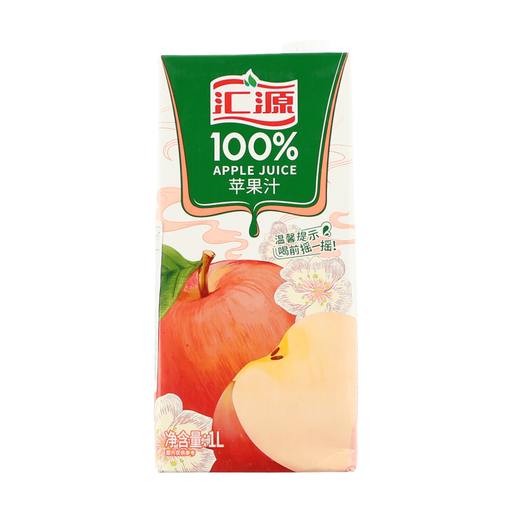
Huiyuan Apple Juice 1L
For a breakfast glass of apple juice, check the carton’s sugars and total carbohydrate per 100ml, then measure the amount you pour. The NHS advises no more than 150ml of fruit juice and smoothies combined in a day, with a meal.
View on Joybuy
 No image available
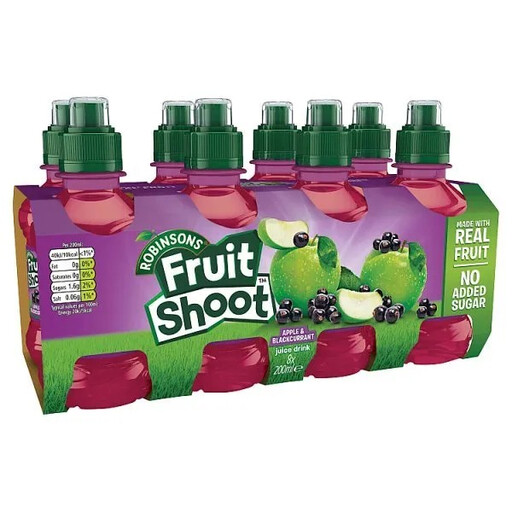
Fruit Shoot Black & Apple No Added Sugar 8x200ml
This apple-and-blackcurrant drink is an option to examine if you want something other than pure apple juice at breakfast. ‘No Added Sugar’ is part of its product name; check the sugars, fruit-juice percentage and ingredients on the label rather than reading it as ‘zero sugar’.
View on Joybuy
 No image available
Appletiser 100% Apple Juice Lightly Sparkling 6x250ml
This is a lightly sparkling 100% apple-juice option rather than a still breakfast juice. Each bottle is 250ml, which exceeds the NHS’s 150ml daily allowance for fruit juice and smoothies; check the nutrition panel and pour a measured serving if you choose it with breakfast.
View on Joybuy
 No image available
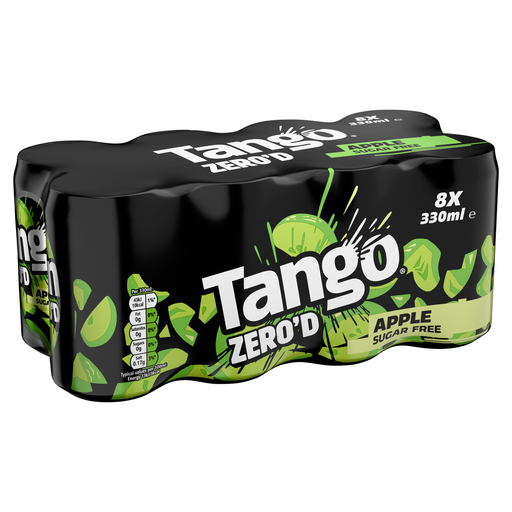
Tango Sugar Free Apple 8x330ml
If your priority is an apple-flavoured drink rather than pure apple juice, compare its ingredients and nutrition panel with those of a juice. The ‘Sugar Free’ name does not tell you its fruit-juice content; check the label if that distinction matters to you.
View on Joybuy
 No image available
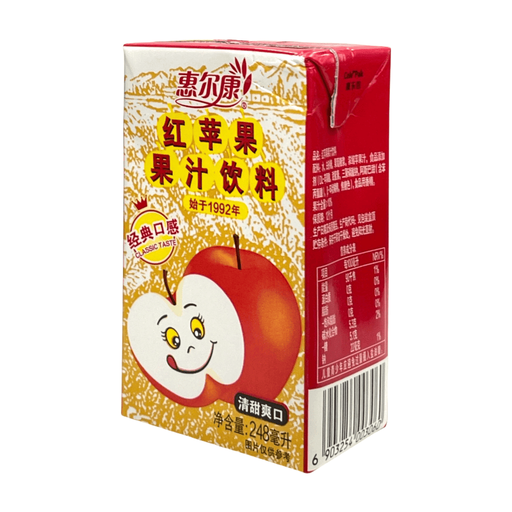
Huierkang Red Apple Juice Drink 248ml
This carton is labelled as an apple juice drink, not 100% apple juice. Before choosing it for breakfast, check the fruit-juice percentage, ingredients and sugars per 100ml; its 248ml carton size alone does not describe the serving you plan to have.
View on Joybuy
Questions about breakfast apple juice
Can I have 100% apple juice with weekday breakfast?
Yes, if you account for the portion. The NHS advises limiting fruit juice and smoothies together to one small 150ml glass a day and drinking it with a meal.
Does 100% apple juice mean it has no sugar?
No. For example, Sainsbury’s lists 9.2g sugars per 100ml for its Pure Apple Juice, while ASDA lists 11g per 100ml for its Apple Juice. Check the figure for the particular carton and the serving you intend to pour.
Is a no-added-sugar apple drink the same as pure apple juice?
Not necessarily. ASDA’s Apple & Pear Juice Drink lists water, 6% apple juice, 4% pear juice and sucralose. Read the fruit-juice percentage and ingredients as well as the sugars line when comparing it with 100% apple juice.
What matters if I count carbohydrates at breakfast?
Check total carbohydrate for the serving you would drink and follow any individual diabetes care plan. Diabetes UK notes that juice has most of the fibre removed compared with whole fruit, so the two are not nutritionally interchangeable.
How should I keep an opened carton for weekday breakfasts?
Follow that carton’s refrigeration and use-after-opening instructions. Choose a pack size that fits how much your household expects to drink within the period stated on its label.


