Choose 100% apple juice if you want a fruit-juice product and can serve a measured portion with a meal; the NHS advises no more than about 150ml of juice or smoothies a day for children aged 5 and over, and says juice sugars count as free sugars. If reducing the labelled sugar amount is the priority, compare no-added-sugar apple-and-pear juice drinks, but check their fruit content and sweeteners: they are not the same product as 100% apple juice.
Who is this choice for?
Parents planning drinks for children
Compare a measured serving of juice with an apple-and-pear juice drink, and consider when the drink will be served. NHS guidance for children aged 5 and over covers the daily amount of fruit juice and smoothies and recommends serving them with meals.
Households comparing sugars on labels
Read the sugars figure alongside the product name, fruit-juice percentage and ingredients. A no-added-sugar juice drink can contain sweeteners, while 100% juice still contains sugars.
Families choosing between cartons and larger packs
Think about whether a pack will be served at once or poured over several occasions. Check the individual label for storage and use instructions after opening.
What should you check?
100% apple juice
Choose it when: You want a fruit-juice product and can measure a serving to have with a meal.
Keep in mind: The NHS counts sugars in unsweetened fruit juice as free sugars, so 100% juice is not a zero-sugar option.
No-added-sugar apple-and-pear juice drink
Choose it when: A lower labelled sugar amount matters more than buying 100% apple juice, and the ingredients suit your household.
Keep in mind: The ASDA and Sainsbury's examples contain water, apple and pear juice, and sweeteners rather than being wholly fruit juice.
| Priority |
What to check |
Your needs |
| Serving size |
For children aged 5 and over, the NHS advises no more than about 150ml of fruit juice or smoothies a day, served with meals. Check the amount in the pack or glass. |
I want to serve juice with food without mistaking a larger bottle or can for one 150ml serving. |
| Sugars in juice |
Compare sugars on the same per-150ml basis. Sainsbury's Pure Apple Juice lists 13.8g per 150ml; ASDA Apple Juice lists 16g per 150ml. The NHS counts juice sugars as free sugars. |
If I choose 100% juice, I still want to know how much sugar the measured serving contains. |
| Drink ingredients |
Read the product name, fruit percentages and sweetener declaration alongside sugars per serving. The ASDA and Sainsbury's no-added-sugar apple-and-pear juice drinks have different fruit proportions and sweeteners. |
A lower labelled sugar figure matters to me, but so does whether I am buying fruit juice or a juice drink. |
| Pack and storage |
Compare individual portions with larger packs, then read the instructions for storing and using the drink after opening. Do not assume instructions are the same across products. |
I need a pack size that fits the number of drinks we are likely to serve during half term. |
Common buying mistakes
-
Reading “no added sugar” as “100% apple juice”
The ASDA and Sainsbury's no-added-sugar apple-and-pear products are juice drinks containing water, fruit juice and sweeteners. They differ in composition from the reviewed 100% apple juices.
Check the product name, ingredients, fruit-juice percentage and sweeteners before comparing their sugar figures.
-
Assuming sugar in fruit juice does not count
The NHS classifies sugars naturally present in unsweetened fruit juice as free sugars. The reviewed ASDA and Sainsbury's 100% apple juices list 16g and 13.8g sugars per 150ml respectively.
If serving juice to a child aged 5 or over, measure the portion and follow NHS advice to serve it with a meal.
-
Serving a whole larger bottle as one juice portion
A 300ml bottle holds two 150ml portions. For children aged 5 and over, NHS advice is no more than about 150ml of fruit juice or smoothies a day.
Pour a measured serving rather than assuming the container size matches the daily amount; follow the pack's instructions for any remainder.
-
Choosing a large pack without checking storage
An opened pack may need different handling from an unopened one, which matters when drinks will be served over several days.
Check the selected product's after-opening instructions and choose a size that fits how you plan to use it.
Brand and retailer references
These examples show why it helps to compare a specific product label rather than relying on a brand name or a no-added-sugar description.
Tropicana
Tropicana describes its Orchard Apple product as 100% pressed apple juice, not from concentrate.
- A route to consider if pressed apple juice is the product you want.
- Pressed juice should not be treated as a zero-sugar drink; check the serving and nutrition panel.
Copella
Copella's Cloudy Apple is a pressed apple juice offered in different bottle sizes.
- Copella lists 15g sugars per 150ml for Cloudy Apple.
- Measure a child's serving from a larger bottle rather than using the bottle size as a portion guide.
Tesco
Tesco lists standard apple juice, 100% pressed apple juice and a Finest pressed Pink Lady apple juice in its range.
- The listed products offer different apple-juice types and pack sizes.
- Check the individual product's ingredients and nutrition panel before comparing it with a juice drink.
Sainsbury's
The reviewed range includes Pure Apple Juice and a no-added-sugar Apple & Pear Juice Drink.
- Pure Apple Juice lists 13.8g sugars per 150ml and is labelled 100% fruit juice.
- The apple-and-pear juice drink contains water, fruit juice and sweeteners; it is not the same product as pure juice.
Asda
The reviewed products include apple juice from concentrate and a no-added-sugar apple-and-pear juice drink in portioned cartons.
- ASDA Apple Juice lists 16g sugars per 150ml, providing a stated serving basis for comparison.
- The apple-and-pear juice drink contains water, apple and pear juice, and sucralose; check its ingredients if you want 100% juice.
M&S
M&S lists apple-juice options that include pressed blends and Pink Lady varieties.
- The range gives shoppers different apple-juice styles to consider.
- Use the selected product's own ingredients and nutrition panel for a like-for-like comparison.
Joybuy product options
These options cover an apple-and-pear fruit water and apple-juice products in different pack sizes. Check the product type and serving size against what you plan to put in a lunchbox or serve with food.
 No image available
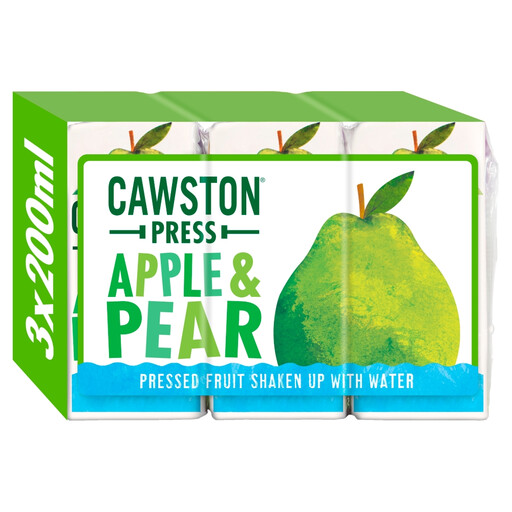
Cawston Press Apple & Pear Fruit Water 3 × 200ml
The separate cartons may suit snacks away from home, but this is an apple-and-pear fruit water, not 100% apple juice.
The pack contains three 200ml cartons. Check the carton's instructions if you plan to keep any drink after opening it.
View on Joybuy
 No image available
Appletiser 100% Apple Juice Lightly Sparkling 6 × 250ml
This labelled 100% apple-juice option is lightly sparkling; consider whether that suits the snack and how you will serve a measured portion.
Each 250ml unit is larger than the NHS's suggested daily juice amount of about 150ml for children aged 5 and over. Juice sugars count as free sugars even when no sugar is added.
View on Joybuy
 No image available
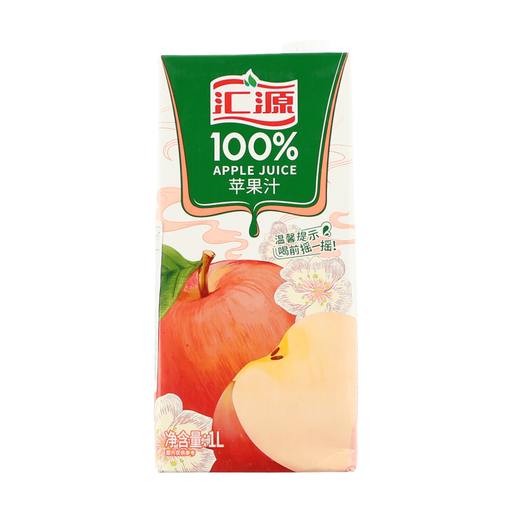
Huiyuan Apple Juice 1L
The 1L pack can be poured into measured servings rather than treated as a single portion.
The Joybuy ingredient listing names water and apple juice concentrate. If the exact juice composition matters to you, check the pack label against the product description; also check its instructions for storage after opening.
View on Joybuy
Questions about apple-juice snacks
Is 100% apple juice a zero-sugar drink?
No. The NHS says sugars naturally present in unsweetened fruit juice count as free sugars. For example, Sainsbury's Pure Apple Juice lists 13.8g sugars per 150ml, while ASDA Apple Juice lists 16g per 150ml.
How much juice should I serve a child with a snack?
For children aged 5 and over, the NHS advises no more than one small glass of fruit juice or smoothies, about 150ml in total per day, served with meals. Check the amount in a bottle or can before treating it as one serving.
Does “no added sugar” mean 100% fruit juice?
No. The reviewed ASDA and Sainsbury's no-added-sugar apple-and-pear products are juice drinks containing water, fruit juice and sweeteners. Read the fruit percentages and ingredients if you want to distinguish a juice drink from 100% juice.
What should I check when opening a large carton?
Read that carton's refrigeration and use-after-opening instructions before planning drinks for several days. Storage directions can differ between products and pack formats.


