Choose 100% apple juice if you want undiluted juice, but do not read “no added sugar” as “sugar-free”: juice still contains naturally occurring sugars. If sugars per served glass matter more than a 100% juice format, compare apple-based juice drinks and diluted squash by their fruit content, sweeteners and serving instructions; NHS guidance limits fruit juice, vegetable juice and smoothies to a combined 150ml a day.
Who might choose each format
The useful distinction is between wanting apple juice itself and wanting an apple-based drink with a different sugar figure per serving.
Breakfast drinkers who want 100% apple juice
Pressed or not-from-concentrate juice keeps the choice focused on apple juice rather than a drink diluted with water. Check the sugars in the amount you pour: a no-added-sugar message does not mean the juice contains no sugar.
Families comparing apple-based drinks
Ready-to-drink cartons and squash offer different ways to serve an apple-flavoured drink. Fruit percentage, sweeteners, portion size and any allergen declaration matter when deciding what fits the household.
Shoppers comparing supermarket labels
A 100% juice, a juice drink and a squash are different products even when each mentions apple and no added sugar. Start with the product description and ingredients, then compare nutrition on the basis of the drink as served.
What to check before buying
100% apple juice
Choose it when: You want undiluted apple juice rather than a juice drink.
Bear in mind: No added sugar does not remove naturally occurring sugars; Ocado lists 15g sugars per 150ml for Tropicana Pressed Apple Fruit Juice.
Apple-based juice drink
Choose it when: You want a ready-to-drink option and are comparing sugars per serving rather than seeking 100% juice.
Bear in mind: Fruit content varies; ASDA Groceries lists water, 6% apple juice, 4% pear juice and sucralose in its Apple & Pear Juice Drink.
Dilute-to-serve squash
Choose it when: You are happy to prepare each glass to the stated dilution ratio.
Bear in mind: M&S Apple & Elderflower High Juice is not plain apple juice; Ocado lists sucralose and sulphites in its ingredients.
Once you have chosen a format, compare the drink you would actually serve at breakfast—not the front-of-pack claim alone.
| Priority | What to check | Your needs |
|---|
| Drink format |
Read the product description and fruit percentage. Distinguish 100% apple juice from a drink containing water or other fruits, and from squash that needs diluting. |
I want to know whether I am pouring apple juice itself or an apple-based alternative. |
| Sugars per serving |
Compare sugars for the amount served, including the prepared serving for squash. Ocado lists 15g per 150ml for Tropicana pressed apple juice; ASDA Groceries lists 1.8g per 150ml for its Apple & Pear Juice Drink. These are different formats, not equivalent juices. |
A lower sugar figure in my glass matters more to me than choosing a 100% juice format. |
| Juice portion |
NHS 5 A Day guidance limits fruit juice, vegetable juice and smoothies to a combined 150ml a day; that amount counts only once towards 5 A Day. Check how much a breakfast glass holds. |
If I choose fruit juice, I want to pour a measured portion rather than assume a large glass counts as several portions. |
| Ingredients |
Check sweeteners and allergen declarations alongside fruit content. ASDA Groceries lists sucralose in its Apple & Pear Juice Drink; Ocado lists sucralose and sulphites in M&S Apple & Elderflower High Juice. |
I would rather check what replaces some of the juice before choosing a drink with a lower sugar figure. |
| Preparation |
Check whether nutrition is stated for concentrate or for the prepared drink. Ocado gives a one-part-cordial-to-four-parts-water instruction and a prepared 250ml serving for M&S Apple & Elderflower High Juice. |
For a weekend breakfast, I want to know what a finished glass contains and how much preparation it takes. |
Common label and serving mistakes
-
Reading “no added sugar” as “sugar-free”
Fruit juice still contains naturally occurring sugars. Ocado lists 15g sugars per 150ml for Tropicana Pressed Apple Fruit Juice despite its no-sugar-added description.
Check the sugars for your intended serving and whether the bottle contains 100% juice, a juice drink or squash.
-
Comparing squash concentrate with a ready-to-drink glass
The figures refer to different quantities if one label describes concentrate and another describes a prepared serving.
Follow the dilution instructions before comparing servings. Ocado lists M&S Apple & Elderflower High Juice at 2.5g sugars per prepared 250ml drink when diluted one part cordial to four parts water.
-
Overlooking ingredients in an apple-based alternative
A juice drink or squash may contain a sweetener; Ocado also lists sulphites in M&S Apple & Elderflower High Juice.
Read the ingredients and allergen declaration on the product you buy, particularly if sweeteners or sulphites matter to your household.
-
Pouring fruit juice without checking the portion
A large glass can exceed the 150ml combined daily amount for fruit juice, vegetable juice and smoothies in NHS 5 A Day guidance.
Measure the juice you serve at breakfast if you are using that guidance; a larger carton does not change the advised amount.
Brand and retailer references
These examples show how specific UK listings describe different apple-drink formats; the details apply to the named products, not every drink sold under each brand or by each retailer.
Tropicana
A reference point for shoppers seeking 100% pressed apple juice.
- Ocado describes Tropicana Pressed Apple Fruit Juice as 100% pressed and not from concentrate.
- Its listing gives 15g sugars per 150ml; no sugar added does not mean no sugar in the glass.
Copella
Its Cloudy Apple product is a pressed apple juice option.
- Copella describes Cloudy Apple as pressed apple juice.
- Copella lists 15g sugars per 150ml, so check the serving rather than judging sugar content by the cloudy format.
Tesco
Tesco Groceries lists Grower's Harvest No Added Sugar Apple Juice Drink, a juice drink rather than 100% apple juice.
- The listed drink contains 50% apple juice from concentrate and gives 6.9g sugars per 150ml.
- Its ingredients also include water and sucralose; check the current listing before planning to buy it.
Sainsbury's
Its apple-juice category offers examples of both pure juice and pressed, not-from-concentrate juice.
- Sainsbury's Groceries lists Sainsbury's Pure Apple Juice and Sainsbury's 100% Pressed Apple Juice, Not From Concentrate.
- Use the individual product label for ingredients and sugars; the two category descriptions alone do not establish those details.
Asda
ASDA Groceries provides examples of a pressed apple juice and a separate apple-and-pear juice drink.
- ASDA Apple Juice is described as 100% pure pressed and lists 16g sugars per 150ml.
- ASDA Apple & Pear Juice Drink lists 1.8g sugars per 150ml but contains 6% apple juice, 4% pear juice and sucralose; it is not an equivalent 100% juice.
M&S
Its apple products include juice and an apple-and-elderflower squash that is diluted before serving.
- Ocado lists M&S Apple & Elderflower High Juice as 50% fruit juice, with 2.5g sugars per prepared 250ml serving.
- That squash contains sucralose and sulphites and requires dilution; Ocado separately lists 10.3g sugars per 100ml for M&S Apple Juice from concentrate.
Joybuy apple-based drink options
These portioned, apple-containing drinks are options for a breakfast juice-drink choice, not examples of plain 100% apple juice or dilute-to-serve squash. Check each product's fruit mix and label before deciding.
 No image available
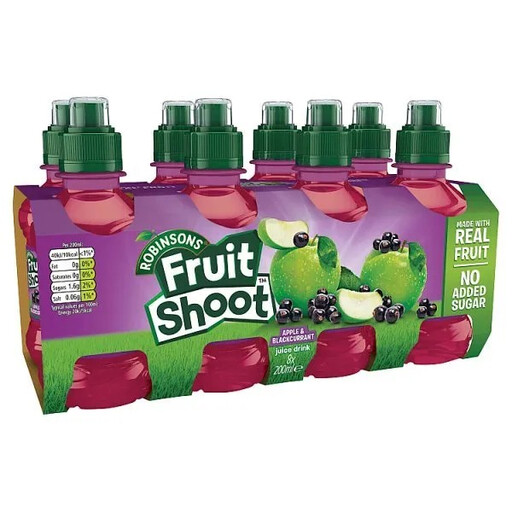
Fruit Shoot Black & Apple No Added Sugar 8 x 200ml
Eight 200ml bottles offer individual servings of an apple-and-blackcurrant drink for breakfast rather than plain apple juice. The product information lists sweeteners and warns that the caps contain small parts; it says the drink is unsuitable for children under 36 months.
View on Joybuy
 No image available
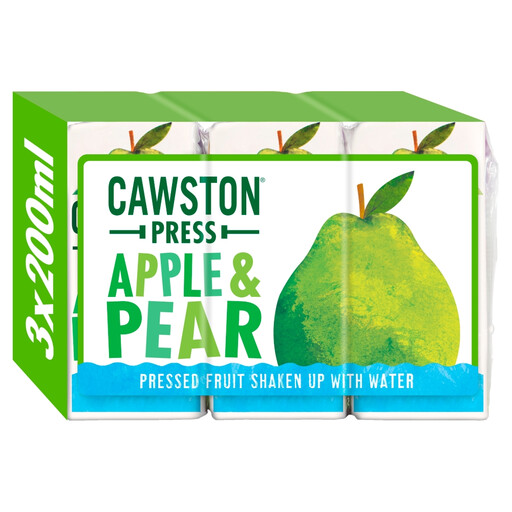
Cawston Press Apple & Pear Fruit Water 3 x 200ml
Three 200ml cartons provide portioned apple-and-pear fruit water for breakfast, rather than plain apple juice. Its product information describes it as having no added sugar; check the pack's sugars per serving and ingredients when comparing it with juice.
View on Joybuy
Breakfast drink questions
Does “no added sugar” mean apple juice is sugar-free?
No. Apple juice contains naturally occurring sugars even when no sugar has been added. Ocado lists 15g sugars per 150ml for Tropicana's 100% pressed apple juice, so check the nutrition information for the portion you intend to pour.
How much fruit juice counts towards 5 A Day?
Under NHS 5 A Day guidance, 150ml of fruit juice, vegetable juice or smoothie counts only once in a day. The NHS advises limiting those drinks to a combined 150ml a day, even if you pour more than one glass at breakfast.
Is a no-added-sugar juice drink the same as 100% apple juice?
No. ASDA Groceries lists water, 6% apple juice, 4% pear juice and sucralose in its Apple & Pear Juice Drink, whereas its pressed apple juice is labelled 100% juice. Read the product description and fruit percentage before comparing their sugars per serving.
What should I check before serving apple squash to children?
Check the ingredients, allergen declaration and dilution instructions for the specific squash. Ocado lists sucralose and sulphites in M&S Apple & Elderflower High Juice, which is diluted one part cordial to four parts water; its product information also says it is not suitable for babies and advises extra water for older children.


