Choose 100% apple juice if you want apple juice rather than a diluted fruit drink, but do not take “no added sugar” to mean low in total sugars: the NHS counts sugars in unsweetened juice as free sugars. For lunch, the NHS advises limiting fruit juice, vegetable juice and smoothies to a combined 150ml a day and having them with meals, so a larger portable pack need not be finished at once. If labelled sugars matter more to you than pure apple juice, compare apple-based juice drinks too, checking their fruit content and sweeteners.
Who is choosing?
Lunch buyers who want apple juice
If the taste and ingredients of apple juice are the point, distinguish 100% juice from an apple-based drink containing water or other fruit. Pack size matters too: the NHS advises a combined daily limit of 150ml for fruit juice, vegetable juice and smoothies, which is smaller than some portable bottles.
Shoppers comparing total sugars
A no-added-sugar claim does not tell you how many sugars a drink contains. Compare the “of which sugars” figure on the nutrition panel as well as the ingredients: the NHS counts sugars naturally present in unsweetened fruit juice as free sugars.
People packing a school or family lunch
An individual carton or bottle is convenient to carry, but its full contents may be more than the NHS’s 150ml combined daily juice-and-smoothie guidance. Check the pack volume before deciding whether to pour a smaller serving or share a larger pack.
What should you check?
Decide whether you want pure apple juice or an apple-based drink, then compare the ingredients, labelled sugars and amount you would actually drink at lunch.
100% apple juice
Choose it when: You want apple juice as the juice ingredient, rather than a drink diluted with water.
Bear in mind: No added sugar does not remove the naturally occurring sugars in juice, and a whole portable pack may exceed the NHS’s 150ml combined daily juice-and-smoothie guidance.
No-added-sugar juice drink
Choose it when: You prioritise the labelled sugar figure over buying 100% apple juice and are content with the ingredients.
Bear in mind: A juice drink can contain water, less fruit juice and sweeteners; check its composition rather than treating it as a different version of pure juice.
| Priority | What to check | Your needs |
|---|
| Sugars |
Read “of which sugars” per 100ml and per serving, not just the no-added-sugar claim. Tesco lists 15g per 150ml for Tropicana Pressed Apple; Sainsbury’s lists 3.9g per 150ml for its apple-and-pear juice drink, which has a different composition. |
I want to compare the sugars in the amount I would drink, without assuming that “no added sugar” means low in sugars. |
| Ingredients |
Check the product description and juice percentage. Sainsbury’s no-added-sugar apple-and-pear drink lists water, 20% apple juice, 5% pear juice, acesulfame K and sucralose. |
For this lunch, do I want apple juice itself, or am I happy with a diluted drink containing pear juice and sweeteners? |
| Serving size |
Compare the pack volume with the NHS’s combined daily limit of 150ml for fruit juice, vegetable juice and smoothies. Tesco lists a 300ml Copella bottle as containing two stated 150ml servings; the NHS advises having juice at mealtimes. |
A bottle may be easy to carry, but I do not need to treat everything in it as one lunchtime portion. |
| Storage |
Read the opened-pack refrigeration and use-by instructions, particularly for a bottle intended to last several lunches. Marks & Spencer says its 1200ml Cloudy Apple Juice should be refrigerated and consumed within 24 hours of opening. |
If I am buying for one person, can I use the pack within its stated storage period? |
Common buying mistakes
-
Reading “no added sugar” as “low sugar”
The NHS counts sugars in unsweetened fruit juice as free sugars. Tesco’s nutrition panels list 15g sugars per 150ml for Tropicana Pressed Apple and Copella Apple Juice 900ml.
Compare the “of which sugars” line for the serving you intend to drink, alongside the ingredients.
-
Assuming a portable pack is the advised portion
Tesco lists Copella’s 300ml bottle as two 150ml servings. Drinking the whole bottle exceeds the NHS’s combined 150ml daily guidance for fruit juice, vegetable juice and smoothies.
Check the volume before lunch and pour a smaller amount if you do not plan to drink the whole pack.
-
Comparing juice and juice drinks as identical products
Sainsbury’s no-added-sugar apple-and-pear juice drink lists water, 25% combined apple and pear juice, and sweeteners. Its sugar figure therefore describes a different drink from 100% apple juice.
Compare both the nutrition panel and juice percentage, then decide which composition you want.
-
Overlooking storage after opening
A large pack may not suit occasional single-person lunches. Marks & Spencer instructs shoppers to refrigerate its 1200ml Cloudy Apple Juice and drink it within 24 hours of opening.
Match the pack size to when you will use it, and follow the instructions on the pack you buy.
An unfinished pack may mean avoidable food waste if it cannot be used within the stated period.
Brand and retailer references
These examples show why the exact product and pack matter; a brand name alone does not establish a drink’s ingredients or serving size.
Tropicana
Tropicana describes Orchard Apple as 100% pressed apple juice, not from concentrate. Tesco lists a 1.5L Pressed Apple pack.
- Tropicana lists apple juice and ascorbic acid as ingredients; Tesco lists 15g sugars per 150ml for its Pressed Apple product.
- A 1.5L pack requires pouring a serving rather than relying on an individual lunch-sized container.
Copella
Tesco lists Copella apple juice in both a 900ml bottle and a portable 300ml bottle.
- Tesco describes the 900ml Cloudy Apple Juice as not from concentrate and lists apple juice with ascorbic acid.
- Tesco lists the 300ml bottle as two 150ml servings; drinking it all exceeds the NHS’s combined daily 150ml juice-and-smoothie guidance.
Sainsbury’s
Sainsbury’s no-added-sugar Apple & Pear Juice Drink offers a different composition from pure apple juice.
- Its label lists 3.9g sugars per 150ml, giving shoppers a stated serving figure to compare.
- It contains water, 20% apple juice, 5% pear juice and sweeteners; it is not 100% apple juice.
M&S
Marks & Spencer lists a 200ml Apple Juice and a separate 1200ml Cloudy Apple Juice.
- The 200ml pack gives shoppers an individual-pack format to consider for lunch.
- The 1200ml Cloudy Apple Juice must, according to Marks & Spencer, be refrigerated and consumed within 24 hours of opening.
Tesco
Tesco’s apple-juice listings include a 300ml Copella bottle and larger branded packs, making pack volume an important point of comparison.
- Its product panels give serving and sugar figures for the listed Tropicana and Copella juices.
- Check the label on the pack you buy for its current ingredients, nutrition and storage instructions.
Joybuy product options
These Joybuy options cover a sparkling apple juice and two apple-based drinks in portable multipacks. Compare their pack sizes and product types rather than treating them as interchangeable apple juices.
 No image available
Appletiser 100% Apple Juice Lightly Sparkling 6x250ml
For a lunch where you want apple juice rather than a diluted juice drink, this lightly sparkling option comes as six 250ml containers. One 250ml container is larger than the NHS’s combined daily 150ml juice-and-smoothie guidance; check the pack label if a no-added-sugar claim matters to your choice.
View on Joybuy
 No image available
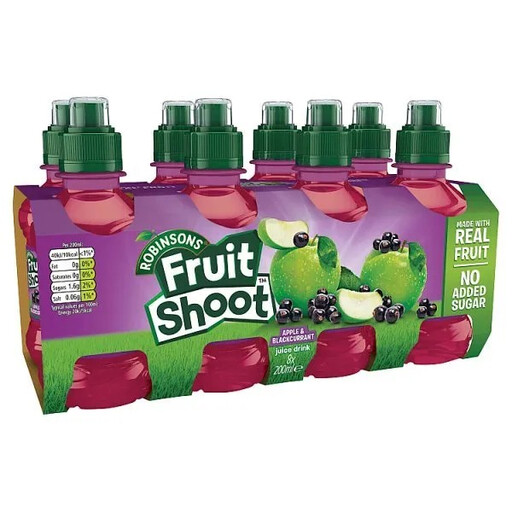
Fruit Shoot Black & Apple No Added Sugar 8x200ml
The individual 200ml bottles offer a portable no-added-sugar apple-based drink, not a substitute for 100% apple juice; check the ingredients if fruit content or sweeteners matter to you. The caps contain small parts: this product is unsuitable for children under 36 months, and its bottles should not be refilled.
View on Joybuy
 No image available
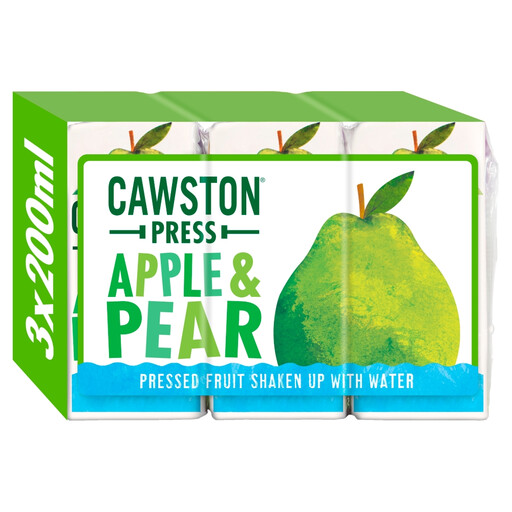
CAWSTON PRESS Apple & Pear Fruit Water 3x200ml
Three 200ml cartons offer an apple-and-pear drink for a packed lunch. This fruit water contains water and pear purée rather than being 100% apple juice; read the ingredients and nutrition panel if you are comparing fruit content or labelled sugars.
View on Joybuy
Frequently asked questions
Does “no added sugar” mean apple juice is low in sugars?
No. The NHS counts sugars naturally present in unsweetened fruit juice as free sugars, so read the nutrition panel. Tesco lists 15g sugars per 150ml for both Tropicana Pressed Apple and Copella Apple Juice 900ml; a no-added-sugar claim does not replace that serving figure.
How much apple juice fits the NHS guidance for lunch?
The NHS advises limiting fruit juice, vegetable juice and smoothies to a combined 150ml a day and having them at mealtimes. Check how much you pour or drink from a portable pack rather than assuming the whole pack is the advised daily amount.
Is a 300ml apple-juice bottle one daily portion?
No: Tesco lists its 300ml Copella Apple Juice bottle as containing two stated 150ml servings. Finishing the bottle exceeds the NHS’s combined daily 150ml guidance for fruit juice, vegetable juice and smoothies.
How can I tell pure apple juice from a juice drink?
Read the product description and ingredients, particularly the juice percentage. Tropicana describes Orchard Apple as 100% pressed apple juice, while Sainsbury’s no-added-sugar Apple & Pear Juice Drink lists water, 20% apple juice, 5% pear juice and sweeteners.


