After demanding exercise, particularly if another session is soon, a measured serving of 100% apple juice can contribute carbohydrate; pair it with a protein-containing food or drink rather than using juice as the whole recovery plan. After an ordinary session, water and a meal or snack may be more relevant, while a sugar-free apple-flavoured drink suits someone seeking a lower-sugar drink rather than carbohydrate from juice. UK government guidance limits fruit juice and smoothies to a combined 150ml a day, so check both the product type and the portion.
Who is choosing a post-workout drink?
Whether apple juice is useful depends chiefly on how soon you need to refuel and whether you want carbohydrate from the drink.
Training again soon
If the time before another demanding session is short, carbohydrate-rich food or drink becomes more relevant. The British Dietetic Association advises starting to refuel promptly when quick recovery is required. Juice can contribute carbohydrate, but include protein-containing food or drink and fluids as part of the wider plan.
After a routine gym session
If you are not preparing for another session soon, you need not treat apple juice as a required recovery drink. Water alongside your usual meal or snack is another way to approach the occasion; choose juice because you want it, not because every workout calls for it.
Watching free sugars
If you want an apple-flavoured drink without the sugars in a serving of fruit juice, compare sugar-free drinks with juice drinks rather than assuming they are the same product. The NHS counts sugars in unsweetened fruit juice as free sugars; a drink labelled ‘no added sugar’ can still contain sugar.
What matters when choosing?
Start with the purpose of the drink, then compare the nutrition information for the portion you would actually have.
100% apple juice with food
Consider it: When convenient carbohydrate matters after demanding exercise or before another session soon.
Bear in mind: Juice supplies little protein in the cited products, and its sugars count as free sugars.
Water with a meal or snack
Consider it: After a routine session when rapid refuelling is not the reason for choosing a drink.
Bear in mind: If you need to eat promptly before another session, plan when and what you will have alongside the water.
Sugar-free apple-flavoured drink
Consider it: When you want a lower-sugar drink rather than carbohydrate from apple juice.
Bear in mind: Check carbohydrate and sugars separately: ‘no added sugar’ does not mean ‘zero sugar’.
| Priority | What to check | Your needs |
|---|
| Carbohydrate |
Read carbohydrate per serving, not just the description on the front. Compare servings of the same size when weighing up drinks. |
If I am training again soon, I want to know what carbohydrate my chosen portion contributes. The British Dietetic Association advises prompt carbohydrate-rich food or drink when quick recovery is needed. |
| Protein alongside the drink |
Check protein on the juice label and plan a separate protein-containing food or drink if needed. Do not treat a carbohydrate figure as a protein figure. |
For a demanding session, I would plan what to eat with the juice rather than expect it to cover the whole recovery meal. The cited apple-juice labels show very little protein. |
| Sugars and drink type |
Identify 100% juice, a juice drink or an apple-flavoured drink; then read sugars, carbohydrate and the serving size. Check ‘no added sugar’ and ‘sugar-free’ claims separately. |
When I want an apple-flavoured drink but not carbohydrate from juice, I would compare sugar-free options. The NHS says sugars naturally present in unsweetened fruit juice still count as free sugars. |
| Juice portion |
Check the pack size against the amount you intend to pour. UK government guidance limits fruit juice and smoothies together to 150ml a day. |
A bottle or carton may hold more than I want in one juice portion; I would measure what I pour instead of using the pack size as the serving recommendation. |
What is easy to overlook?
-
Making juice the entire recovery plan
The cited juice labels show carbohydrate but very little protein. Recovery literature discusses carbohydrate and protein as distinct parts of nutrition after demanding exercise.
If you choose juice for its carbohydrate, plan a protein-containing food or drink alongside it.
-
Assuming juice and sugar-free drinks do the same job
Unsweetened juice contains free sugars, according to the NHS. A sugar-free apple-flavoured drink should not be assumed to provide the carbohydrate in 100% apple juice.
Decide whether you want carbohydrate from the drink or a lower-sugar option, then compare the product type, carbohydrate and sugars on the label.
-
Using the whole pack as a juice portion
A 200ml juice carton exceeds the UK government’s 150ml-a-day guidance for fruit juice and smoothies combined; a larger bottle is not a single advised portion either.
Measure a portion and consider how you will store any remainder according to the pack instructions.
Which brands offer relevant examples?
These brand and own-label examples show why the serving basis matters: some labels give values per 150ml, while others use a carton, 100ml or 100g.
Tropicana
Tropicana Orchard Apple is an example with nutrition stated for a 150ml serving.
- Tropicana UK lists 17g carbohydrate and 15g sugars per 150ml, with apple juice and ascorbic acid as ingredients.
- The same serving lists 0.3g protein, so plan protein separately if it matters to your post-workout meal.
Copella
Copella Cloudy Apple Juice offers a larger-bottle format; compare a measured portion rather than the bottle size.
- An Amazon UK listing for the 1.3L bottle gives 11g carbohydrate and 10.3g sugars per 100ml.
- That listing gives 0.2g protein per 100ml. Its per-100ml values should not be read as per-150ml values.
Tesco
Tesco 100% Pressed Apple Juice 1 Litre is an own-label format to consider if you want to pour a measured serving.
- The Tesco Groceries apple-juice category listed this pressed-juice product.
- Read the individual pack’s current nutrition panel before comparing its carbohydrate or sugars with another juice.
Sainsbury's
Sainsbury's Pure Apple Juice comes in 200ml cartons, a portable format that is larger than the UK daily juice guideline.
- Sainsbury's lists its 6 × 200ml product as 100% apple juice from concentrate, with 21g carbohydrate per carton.
- Each carton lists 18.4g sugars and less than 0.5g protein; 200ml also exceeds the 150ml-a-day guidance for fruit juice and smoothies combined.
Asda
Asda lists apple juice from concentrate in different formats, so compare the specific pack rather than treating its own-label products as interchangeable.
- ASDA Groceries lists 15g carbohydrate and 15g sugars per 150ml for its Apple Juice from Concentrate 4 × 1 Litre multipack.
- Its separately listed Apple Juice 1 Litre gives 17g carbohydrate and 16g sugars per 150ml. Both cited labels list less than 0.5g protein per 150ml.
M&S
M&S Cloudy Apple Juice is a 1L option whose listed nutrition uses a per-100g basis.
- Marks & Spencer lists 10.2g carbohydrate and 10.2g sugars per 100g for this product.
- It lists less than 0.1g protein per 100g. Do not compare that figure directly with another product’s per-100ml or per-serving figure.
Apple and apple-flavoured drink options
These Joybuy options include one 100% apple juice and three lower-sugar apple-flavoured drinks. Choose between them by the job you want the drink to do, then check the individual pack before comparing nutrition.
 No image available
Appletiser 100% Apple Juice Lightly Sparkling 6 × 250ml
Consider this juice when you want a carbohydrate-containing drink after demanding exercise, alongside a protein-containing food or drink. Each can holds 250ml, more than the UK 150ml-a-day guidance for fruit juice and smoothies combined; measure a portion and check the pack for storage instructions if you plan to keep the remainder.
View on Joybuy
 No image available
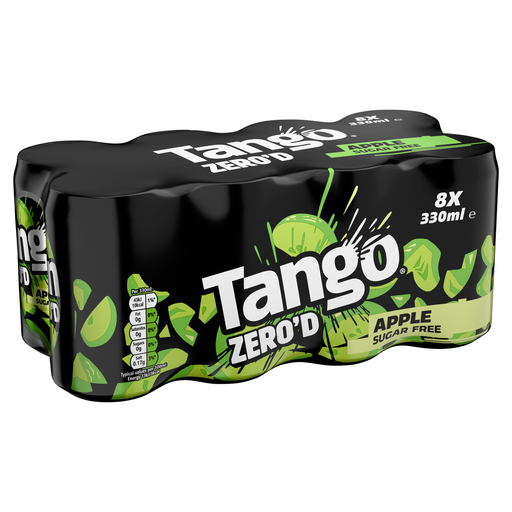
Tango Sugar Free Apple 8 × 330ml
This apple-flavoured sugar-free drink fits a choice focused on the drink rather than obtaining carbohydrate from 100% juice. It comes in 330ml cans; check its carbohydrate and ingredient information rather than treating it as equivalent to apple juice.
View on Joybuy
 No image available
Tango Apple Sugar-Free Can 24 × 330ml
This 24-can apple-flavoured pack is another sugar-free drink option, not a replacement for the carbohydrate supplied by 100% apple juice when rapid refuelling is the aim. Compare the label per 330ml can with any other drink you are considering.
View on Joybuy
 No image available
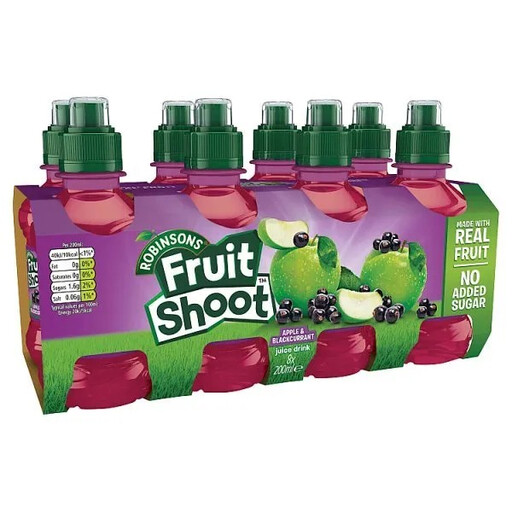
Fruit Shoot Black & Apple No Added Sugar 8 × 200ml
This 200ml bottle is an apple-and-blackcurrant drink, not apple juice alone. ‘No added sugar’ does not mean zero sugar: read the sugars and carbohydrate values if choosing it instead of juice. The product’s cap carries a choking warning for children under 36 months.
View on Joybuy
Common questions
When might apple juice be useful after a workout?
Apple juice can contribute carbohydrate when you need to refuel promptly after demanding exercise, particularly before another session soon. The British Dietetic Association advises starting carbohydrate-rich food or drink promptly when quick recovery is required; the cited juice labels also show very little protein, so plan protein-containing food or drink separately.
Should I choose a sugar-free apple drink instead?
A sugar-free apple-flavoured drink is a different choice when you want a lower-sugar drink rather than carbohydrate from juice. If carbohydrate after exercise is your aim, check the drink’s carbohydrate value; do not assume an apple flavour provides the same nutrition as 100% apple juice.
Does ‘no added sugar’ mean zero sugar?
No. The NHS states that sugars naturally present in unsweetened fruit juice count as free sugars, and ‘no added sugar’ does not establish that a drink contains no sugar. Read the sugars value and product description for the particular drink.
Is a 200ml apple-juice carton one daily portion?
A 200ml carton is larger than the UK government’s guidance of 150ml a day for fruit juice and smoothies combined. Check the carton size and measure the amount you intend to drink rather than assuming the whole carton matches that guidance.


