Choose 100% apple juice if you want juice with breakfast and can keep it to the NHS’s advised maximum of 150ml a day, taken with a meal. If total sugar in a portable drink matters more, compare apple-flavoured juice drinks and soft drinks by sugars per pack, juice content and sweeteners; they are not interchangeable with 100% juice. When fibre matters more than a ready-to-drink option, choose whole fruit alongside breakfast food instead.
Who is each option for?
People taking breakfast on the commute
A single bottle or can is easy to take out, but pack size matters if you choose fruit juice. The NHS advises no more than 150ml of fruit juice and smoothies combined each day, with a meal; a larger juice bottle need not be finished at once.
Shoppers comparing sugar claims
If you are choosing between 100% juice, a no-added-sugar juice drink and a sugar-free apple-flavoured soft drink, read the total sugars and ingredients as well as the front label. The names describe different products, not equivalent amounts of juice or sugar.
People who want fibre with breakfast
Whole fruit is worth considering instead of juice when fibre is the priority. Diabetes UK notes that whole fruit retains fibre while fruit juice has most of it removed; a drink also leaves you needing breakfast food.
What should you check before choosing?
Decide whether you want apple juice or an apple-flavoured drink, then check the amount you will actually drink and what you will eat with it.
100% apple juice with food
Choose it when: You want juice and can measure a serving to have with breakfast.
Trade-off: The NHS advises a combined daily maximum of 150ml for juice and smoothies; juice contains free sugars and less fibre than whole fruit.
No-added-sugar juice drink
Choose it when: A portable apple-flavoured drink with less sugar than the listed 100% juice examples matters more to you than pure juice.
Trade-off: Tesco lists 3.1g sugars in a 250ml Fruit Splash bottle, which contains 12% apple juice from concentrate and sweeteners; no added sugar does not mean zero sugar.
Whole fruit with breakfast
Choose it when: Fibre matters more than having a ready-to-drink apple option.
Trade-off: You give up the convenience of a bottled drink and need to take or prepare the fruit and breakfast food.
| Priority |
What to check |
Your needs |
| Total sugars |
Compare total sugars for the amount you will drink, not just the per-100ml figure. Check whether the label says 100% juice, no added sugar or sugar free. |
I want to know the sugar in the whole bottle or can. Tesco lists 3.1g sugars per 250ml Fruit Splash bottle despite its no-added-sugar label. |
| Juice content |
Read the juice percentage and ingredients. Tesco lists 12% apple juice from concentrate and sweeteners in Fruit Splash; its Grower's Harvest drink lists 50% apple juice from concentrate and sucralose. |
If I want apple juice rather than an apple-flavoured drink, the ingredient list matters as much as the name on the front. |
| Pack size |
For fruit juice, compare the pack with the NHS’s advised combined maximum of 150ml of juice and smoothies a day, taken with a meal. Copella lists 250ml and 300ml bottles; the M&S carton is 200ml. |
A portable juice pack may be more than I intend to drink at breakfast, so I need a way to portion it and keep the rest as the pack directs. |
| Breakfast food |
Consider what you will eat alongside the drink. Diabetes UK distinguishes the fibre in whole fruit from juice, which has most of its fibre removed. |
When I need breakfast food as well as a drink, I could take whole fruit or pair my drink with food such as oats, toast, yoghurt or eggs. |
Common mistakes with breakfast apple drinks
-
Reading “no added sugar” as “zero sugar”
Fruit juice in a no-added-sugar drink can still contribute sugar. Tesco lists 3.1g sugars in each 250ml Fruit Splash bottle.
Compare total sugars for the full pack, then check the juice percentage and sweeteners in the ingredients.
-
Assuming one juice bottle is one advised serving
A 200ml M&S juice carton or a 250ml Copella juice bottle exceeds the NHS’s advised combined daily maximum of 150ml for fruit juice and smoothies if you drink it all.
Measure out the juice you intend to have with breakfast and follow the pack’s storage instructions for any remainder.
-
Making juice the entire breakfast
Diabetes UK notes that juice has most of the fibre in whole fruit removed. A drink alone also leaves out the breakfast food you may want alongside it.
Take food with the drink, or choose whole fruit in place of juice when fibre is your priority.
Apple drink brands to compare
These examples illustrate different juice contents, sugar figures and pack sizes; check the label of the particular product you choose.
Tropicana
Orchard Apple is a pressed apple juice option for someone who wants juice rather than a diluted juice drink.
- Tropicana lists apple juice and ascorbic acid as ingredients, with 15g sugars and 0.9g fibre per 150ml.
- It is not a zero-sugar choice. The NHS advises limiting fruit juice and smoothies combined to 150ml a day and having them with a meal.
Copella
Cloudy Apple is a pressed juice sold in bottles including 250ml and 300ml formats.
- Copella lists 15g sugars and 1.1g fibre per 150ml of Cloudy Apple.
- Even its listed 250ml bottle is larger than the NHS’s advised 150ml combined daily maximum for juice and smoothies.
Tesco
Tesco lists no-added-sugar apple juice drinks in both a portable Fruit Splash bottle and a larger Grower's Harvest format.
- Tesco lists 3.1g sugars per 250ml Fruit Splash bottle and 6.9g per 150ml of Grower's Harvest.
- Fruit Splash contains 12% apple juice from concentrate and sweeteners; Grower's Harvest contains 50% apple juice from concentrate and sucralose. Neither label means zero sugar or 100% juice.
M&S
Its 200ml Apple Juice carton is a compact option for someone looking for juice to take with breakfast.
- Marks & Spencer lists 10.3g sugars per 100g for this UK-labelled product.
- The 200ml carton exceeds the NHS’s advised 150ml combined daily maximum for fruit juice and smoothies if finished in one day.
Joybuy apple-flavoured drinks
These portable apple-flavoured soft drinks offer an alternative when you are shopping for a sugar-free or no-added-sugar label. They are not the 100% apple juice option discussed above, and a drink on its own is not breakfast food.
 No image available
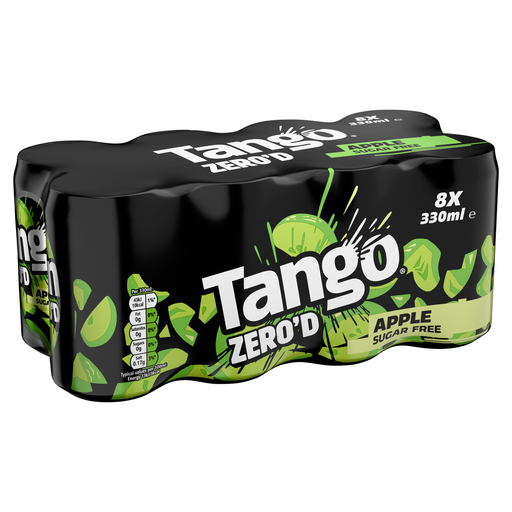
Tango Sugar Free Apple, 8 × 330ml
An individually canned apple-flavoured soft drink for taking alongside breakfast, rather than a 100% apple juice. This pack contains eight 330ml cans; check the can’s nutrition and ingredient labels if total sugars or sweeteners are deciding factors.
View on Joybuy
 No image available
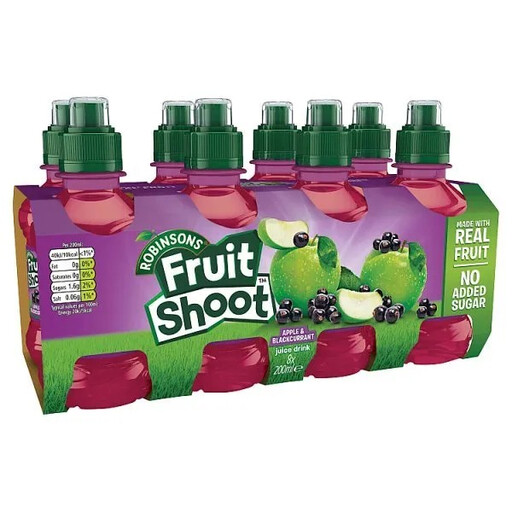
Fruit Shoot Black & Apple No Added Sugar, 8 × 200ml
The individual 200ml bottles suit a breakfast taken out of the house if you want an apple-and-blackcurrant drink rather than pure apple juice. No added sugar does not mean zero total sugars; check the bottle label for the figure and ingredients.
View on Joybuy
 No image available
Tango Apple Sugar-Free, 24 × 330ml
This larger multipack provides individual apple-flavoured soft drinks to take with breakfast. It contains 24 cans of 330ml each, so consider where you will keep the pack; it is not a substitute for breakfast food or 100% apple juice.
View on Joybuy
Questions about breakfast apple drinks
Does “no added sugar” mean an apple drink has zero sugar?
No. Tesco lists 3.1g sugars in a 250ml bottle of its no-added-sugar Fruit Splash juice drink, which contains 12% apple juice from concentrate and sweeteners. Check total sugars for the pack as well as the ingredients.
How much fruit juice should I have with breakfast?
The NHS advises a combined maximum of 150ml of fruit juice and smoothies a day, taken with a meal. A 200ml or 250ml juice pack exceeds that amount if you finish it; this guidance concerns juice and smoothies, not every apple-flavoured soft drink.
Can apple juice be breakfast by itself?
Treat juice as a drink with breakfast rather than the whole meal. If fibre matters to you, Diabetes UK notes that whole fruit retains fibre while juice has most of it removed; consider food alongside your drink or take whole fruit instead.
How do whole fruit and apple juice differ when fibre matters?
Whole fruit retains fibre that is largely removed when fruit is made into juice, according to Diabetes UK. Choose whole fruit if that difference is central to your breakfast decision; if you choose juice, the NHS advises keeping juice and smoothies combined to 150ml a day and having them with a meal.


