Shoppers who want 100% apple juice
Pressed or pure apple juice fits when juice itself is the priority. For lunch, plan a 150ml serving rather than treating a larger bottle as a single portion; that follows NHS guidance for fruit juice and smoothies.


Choose 100% apple juice if you want juice with lunch and can keep to a small serving: the NHS advises no more than 150ml of fruit juice or smoothies a day, taken with a meal. If the drink’s listed sugars matter more than drinking pure juice, compare no-added-sugar juice drinks or diluted squash by serving size and ingredients; “no added sugar” does not mean sugar-free.
The useful distinction is whether you want pure apple juice, a drink with fewer listed sugars, or a pack that makes your planned serving easy to manage.
Pressed or pure apple juice fits when juice itself is the priority. For lunch, plan a 150ml serving rather than treating a larger bottle as a single portion; that follows NHS guidance for fruit juice and smoothies.
A no-added-sugar juice drink or squash may fit if you are open to a drink containing less juice and sweeteners. Compare the sugars line for the amount you will actually drink, not the claim on the front of the pack.
A ready-to-drink carton, bottle or pouch needs no preparation. If it contains fruit juice, compare its volume with the NHS 150ml daily guidance; squash instead needs diluting before you leave or where you eat.
Start with the type of drink you want, then compare the nutrition information for the serving you plan to have with lunch.
Choose when: You want pure juice as a small accompaniment to lunch.
Bear in mind: Fruit juice contains free sugars even when none are added; NHS guidance limits fruit juice and smoothies to 150ml a day.
Choose when: You want a ready-to-drink apple-flavoured option and are willing to check its sugars and sweeteners.
Bear in mind: A juice drink is not necessarily pure juice. Tesco’s No Added Sugar Apple Juice Drink, for example, lists 20% apple juice from concentrate and sucralose.
Choose when: You can make up a drink before leaving or have water available at lunchtime.
Bear in mind: Squash needs dilution. M&S Apple and Elderflower High Juice also lists sucralose and sulphites, so check its ingredients if either matters to you.
| Priority | What to check | Your needs |
|---|---|---|
| Sugars | Compare “of which sugars” for the same serving size. Tesco lists 3.1g per 150ml for its no-added-sugar apple juice drink; Tropicana lists 15g per 150ml for Orchard Apple juice. | I want to know how much sugar is in the drink I will have with lunch, rather than rely on “no added sugar” as a zero-sugar claim. |
| Drink type | Read the product description, juice percentage and ingredients. Check whether it is 100% juice, a juice drink or a concentrate, and whether it contains sweeteners. | Pure apple juice matters to me, or I am happy with an apple-flavoured alternative if its ingredients suit me. |
| Portion | Compare the pack volume with the NHS limit of 150ml of fruit juice and smoothies a day, taken with a meal. A 200ml juice carton exceeds that amount if finished in one sitting. | I need a way to take a small serving of juice with lunch rather than assume one portable pack equals one portion. |
| Preparation | Check whether the drink is ready to consume or needs diluting. For squash, read the dilution instructions and allergen information before packing it. | On a journey, I would rather carry a ready-to-drink pack; with access to water, making up squash may also work. |
Tesco’s No Added Sugar Apple Juice Drink still lists 3.1g sugars per 150ml. The wording does not tell you that the finished drink contains no sugars.
Compare the “of which sugars” line for your serving and read the ingredients for juice content and sweeteners.
The NHS advises a maximum of 150ml of fruit juice and smoothies a day, with a meal. A portable juice carton can hold more than that amount.
If you choose 100% juice, check the pack volume and plan how you will pour or save a 150ml serving.
Tesco’s no-added-sugar apple juice drink lists water, 20% apple juice from concentrate and sucralose. Tropicana describes Orchard Apple as 100% pressed juice, not from concentrate: these are different types of drink.
Decide whether pure juice or the drink’s listed sugars and ingredients matter more to you, then check the product description.
Squash requires water before drinking. M&S Apple and Elderflower High Juice also lists sulphites, which matter to shoppers avoiding that allergen.
Check the dilution instructions, ingredients and allergen declaration before putting squash in a lunch bag.
These examples show how particular product lines differ; check the label of the pack you choose for its current ingredients and nutrition.
Tropicana describes Orchard Apple as 100% pressed juice, not from concentrate.
Copella describes Cloudy Apple as a pressed apple juice.
Tesco’s No Added Sugar Apple Juice Drink is a juice drink with sweetener, rather than 100% apple juice.
Sainsbury's lists a no-added-sugar Apple & Pear Juice Drink with sweeteners.
Asda lists an Apple Juice from Concentrate for shoppers choosing juice rather than a sweetened juice drink.
M&S lists both a portable Apple Juice carton and an Apple and Elderflower High Juice concentrate.
These ready-to-drink options suit a portable lunch if you want an apple-flavoured soft drink rather than 100% apple juice. Check each pack’s ingredients and nutrition when deciding between them.
 No image available
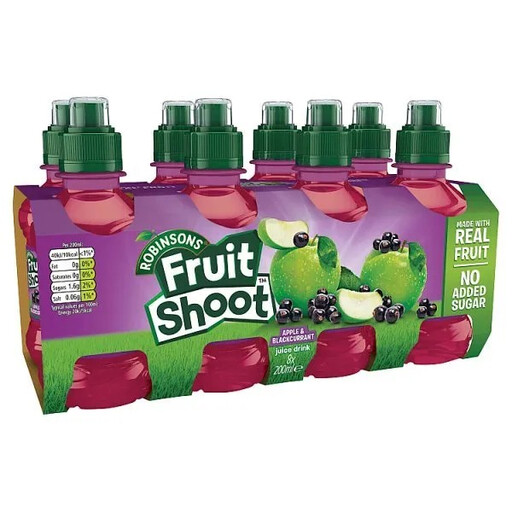
The eight 200ml bottles offer a ready-to-drink format for packed lunches. This is an apple-and-blackcurrant soft drink, not 100% apple juice; check the pack’s sugars per bottle and sweeteners if those affect your choice. Keep the caps away from children under 36 months because they contain small parts.
 No image available
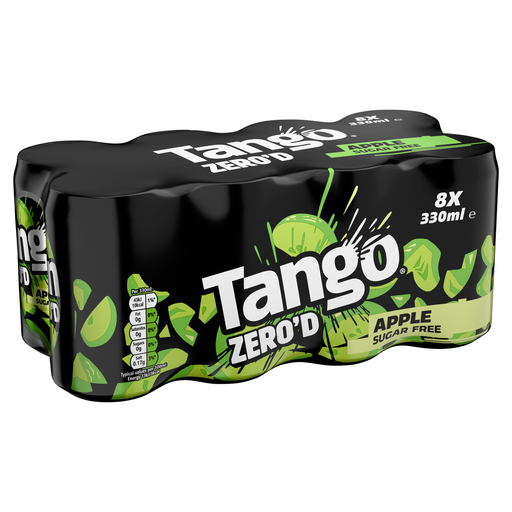
The 330ml cans are a ready-to-drink option if you want a carbonated apple-flavoured soft drink with lunch. This is not 100% apple juice and contains sweeteners; check the ingredients if you avoid sucralose or acesulfame K.
No. Tesco’s No Added Sugar Apple Juice Drink lists 3.1g sugars per 150ml and contains sucralose. Check the sugars line and ingredients rather than treating the front-of-pack wording as a zero-sugar claim.
The NHS advises no more than one small 150ml glass of fruit juice or smoothies a day, taken with a meal, because they are high in sugar. If a carton or bottle is larger, check its volume and plan what to do with the remainder.
Yes, if you can dilute it before leaving or have water where you will eat. Check the particular squash’s dilution instructions, ingredients and allergens: M&S Apple and Elderflower High Juice lists sucralose and sulphites.
Follow the instructions on that pack. Tesco says its No Added Sugar Apple Juice Drink should be refrigerated after opening and consumed within five days; check whether you can store any remainder when taking it out for lunch.