
24/7 全天候客户支持

免费退货

当日/次日达

品质保障

开启新人专享福利: 全场免邮 | 低至 2 折 | 免费试用 30 天 JoyPlus 会员
下载 Joybuy
Buying Applied Nutrition protein supplements can seem straightforward until you compare serving sizes, protein sources, dietary suitability and product formats. A tub may look good value, yet provide fewer servings than expected; a clear drink may feel convenient, but contain a different type of protein from a traditional whey shake.
This guide explains the practical details to check before buying Applied Nutrition whey protein, weight gainers, clear drinks or ready-to-drink options in the UK.
A larger container is not automatically better value. Compare the serving size, protein per serving and approximate number of servings, rather than looking only at the total weight.
For example, a 2kg whey product may use a 30g or 33g serving, while a mass gainer can require 120g or 150g per serving. The latter may provide more calories, but the tub will be used more quickly.
Traditional whey products contain milk-derived ingredients and may also contain soya lecithin. Weight gainers can include milk, oats, wheat and soya. This makes them unsuitable for some customers following dairy-free, lactose-free or allergy-conscious diets.
Always check the current packaging. “Clear” refers mainly to the drink texture; clear whey protein still contains milk unless the product is made from another protein source.
Some formulas include creatine, amino acids, digestive enzymes, vitamins or collagen. These additions may suit a particular routine, but they do not remove the need for varied meals, sufficient fluids and an appropriate training plan.
Food supplements should be used according to the label and should not replace a varied, balanced diet and healthy lifestyle.
Check both the source and the amount of protein per serving. Applied Nutrition whey protein products commonly combine whey protein concentrate and whey protein isolate, with some versions also including hydrolysed whey or milk protein concentrate.
The available Critical Whey products generally provide approximately 22–24g of protein per serving, while the 2kg Critical Professional Strawberry product lists 23.8g per 33g serving. Applied Nutrition Clear Whey lists approximately 21.27g per 25g serving, with hydrolysed whey protein as the main ingredient.
For customers avoiding dairy, beef protein isolate provides a different option. Applied Nutrition BEEF-XP Clear Beef Protein Isolate lists 27.3g of protein per 30g serving, with less than 0.1g of sugar and fat per serving.
Choose the format according to your energy needs. Standard whey powders are usually more suitable when you want to increase protein without adding a large number of calories. The listed Critical Professional Strawberry product provides 122 kcal per serving, while the Critical Mass weight gainer provides approximately 566 kcal per 150g serving, alongside around 42g protein and 74.7g carbohydrates.
A mass gainer can be useful for people who struggle to consume enough calories through ordinary meals, but it may be unnecessary for someone following a calorie-controlled plan.
Look for clearly declared ingredients and allergen warnings:
If you have an allergy, intolerance, medical condition or take medication, check the product label and seek advice from a qualified healthcare professional before use.
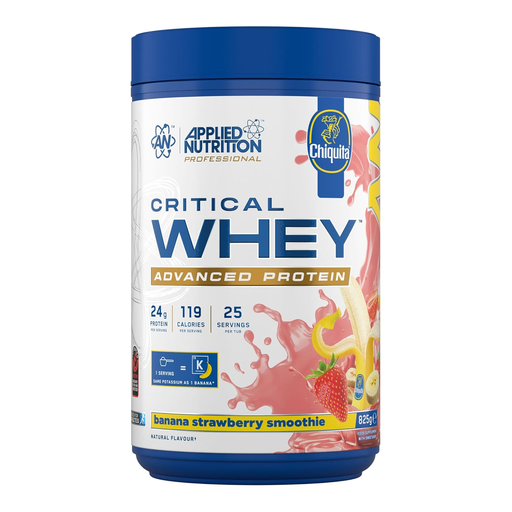
Why This Fits Their Persona: A manageable 825g format lets new users try a whey blend and flavour before committing to a larger tub. It can be mixed with water or milk after training or between meals.
The stated protein range is approximately 22–24g per serving, making comparison easier than judging value by tub size alone.
Whey concentrate and isolate blend; suitable for shakes, smoothies and recipes.
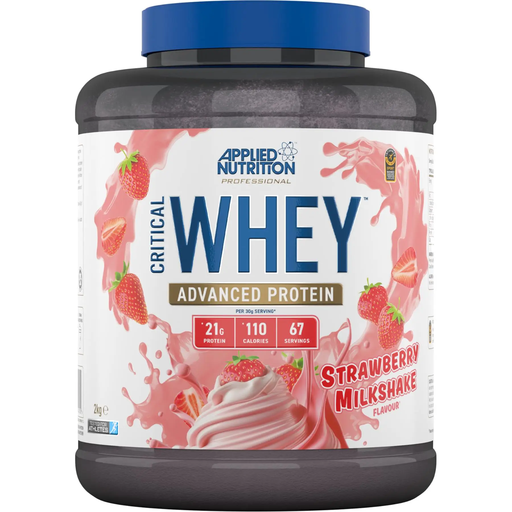
Why This Fits Their Persona: This larger option suits regular gym-goers who already know they will use protein powder consistently and prefer a multi-source dairy protein formula.
The label specifies the 33g serving size and 23.8g protein content, helping customers assess the formula without relying on promotional wording.
Contains whey concentrate, isolate, hydrolysed whey and milk protein concentrate; 2kg pack for frequent use.
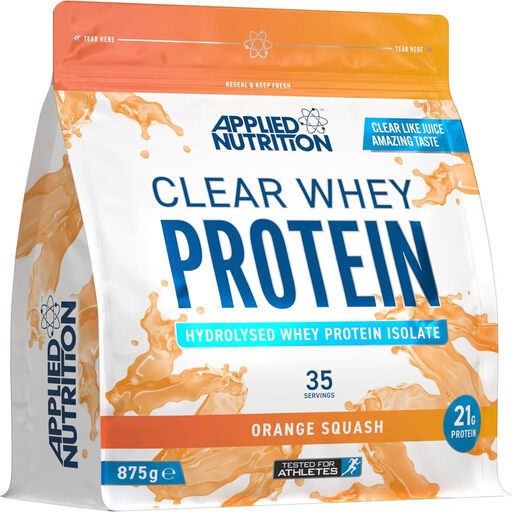
Why This Fits Their Persona: A fruit-style drink is suited to customers who find creamy shakes too heavy or want a lighter post-workout option.
Its clear format is distinct from a milkshake-style powder, while the label confirms that it still contains milk-derived whey.
Approximately 21.27g protein and 90 kcal per 25g serving; 95% hydrolysed whey protein listed.
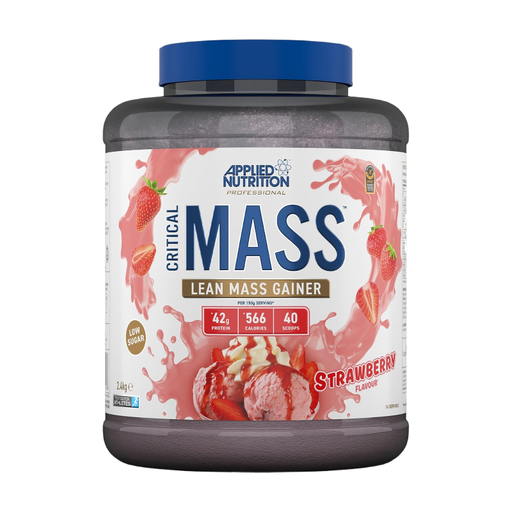
Why This Fits Their Persona: It is designed for adults with higher calorie and protein requirements, including heavy trainers and people who struggle to eat enough during a bulking routine.
The serving nutrition is shown clearly: approximately 566 kcal, 42g protein and 74.7g carbohydrates per 150g serving.
Includes creatine monohydrate and a multi-ingredient formula; available in a 2.4kg format.
We have compiled a complete, real-time list of products that fully satisfy these strict selection criteria and UK safety regulations.
A ready-to-drink protein shake can be useful after commuting from work or leaving the gym without access to a shaker. Applied Nutrition’s High Protein Shake provides 42g protein per 500ml bottle and requires no mixing. It contains milk, so it is not suitable for dairy-free customers.
For a dairy-free and lactose-free option, Applied Nutrition Sparkling Protein Water provides 10g collagen protein per 330ml can, with 44 calories and no added sugar listed. It is available in flavours including Orange Burst, Tropical Burst and Apple Burst. As collagen is bovine-derived, check that this protein type fits your nutritional objective.
It can be a convenient way for adults to increase daily protein intake, but beginners should compare the serving size, allergen information and total diet first. A standard whey product may be more appropriate than a mass gainer if extra calories are not required.
Yes, clear whey can be mixed with cold water and used after training or between meals. It remains a milk-derived product unless the label states otherwise, so it is not automatically dairy-free or suitable for people with milk allergies.
Calculate the price per serving and then compare the protein provided per serving. Also consider whether you will use the product often enough before its best-before date. For weight gainers, include the cost of the larger serving size and any milk used during preparation.