
24/7 全天候客户支持

免费退货

当日/次日达

品质保障

开启新人专享福利: 全场免邮 | 低至 2 折 | 免费试用 30 天 JoyPlus 会员
下载 Joybuy
For UK gym-goers, athletes and active adults, Applied Nutrition whey protein powder offers several formats rather than one universal option. You can choose a creamy whey blend, a clear fruit-style drink, a diet whey formula or a higher-calorie mass gainer.
The challenge is avoiding a product that looks suitable online but does not fit your diet, training routine or budget. A large tub may not represent good value if you dislike the flavour, while a low-calorie powder may be unsuitable if you are trying to gain weight. Use the checks below before buying.
A powder containing more protein per 100g is not automatically more suitable. Applied Nutrition Clear Whey, for example, is designed as a light drink, whereas Applied Nutrition Critical Whey is a conventional shake containing whey protein concentrate and isolate.
The more useful comparison is:
Nutrition can vary between protein powder flavours, particularly in creamy whey products. Check the label for the exact variant rather than relying on figures shown for another flavour. The supplied information for several Critical Whey options indicates approximately 22–24g of protein per serving, but exact energy and macronutrient values may differ.
Flavour also affects consistency. A milkshake-style powder may suit breakfast smoothies or porridge, while a fruit flavour can be more practical after training or during warmer weather.
A 2kg tub can be convenient for regular users, but it is a considerable commitment if the texture or sweetness does not suit you. Dairy-based powders contain milk, and some products also contain soya lecithin. People with allergies or intolerances should read the current packaging carefully before purchase.
A smaller 825g or 875g pack may be a sensible starting point. Once you know which format and flavour work for you, a larger pack can reduce the frequency of reordering.
Whey protein concentrate generally undergoes less processing and can contain more naturally occurring milk components. Whey protein isolate is more filtered and commonly has a higher protein concentration with less fat and lactose than concentrate, although the precise values depend on the formulation.
Hydrolysed whey protein has been broken down into smaller protein chains. Applied Nutrition’s Clear Whey products list hydrolysed whey protein as 95% of the formula. This creates a very different experience from a traditional creamy shake, but it does not remove the need to check the milk allergen declaration.
A multi-source product such as Critical Professional combines concentrate, isolate, hydrolysed whey and milk protein concentrate. This may appeal to users who want a more comprehensive blend, while a simpler concentrate-and-isolate formula may offer a more straightforward everyday option.
For muscle growth and maintenance, the key consideration is how the product contributes to your total daily protein intake. The Applied Nutrition products listed here typically provide around 21–24g per serving, depending on the format.
For a post-workout protein drink or a convenient snack, compare the protein amount with the calories. Clear Whey variants list approximately 21.27g protein and 90 calories per 25g serving, with around 1.01g carbohydrate. This may suit people seeking a low-calorie protein powder.
A mass gainer has a different purpose. Critical Mass lists approximately 460 calories, 27.6g protein and 76.8g carbohydrate per 120g serving. It is therefore more appropriate for people who need help increasing calorie intake, rather than those trying to keep a shake light.
Serving sizes vary from approximately 25g to 33g for standard whey products, while mass gainers use much larger portions. Check how much liquid is recommended:
A shaker is convenient, but some clear products may foam during mixing and benefit from standing briefly before drinking. Always follow the label’s directions and maximum daily intake.
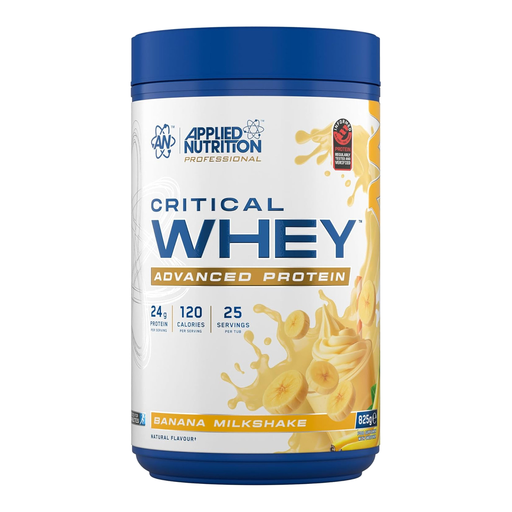
Why This Fits Their Persona: The 825g format gives newcomers an opportunity to try a familiar creamy shake without committing to a 2kg tub. The banana flavour can be used with water, milk or in a smoothie.
The label states 24g of protein per 30g serving, helping buyers compare the product by serving rather than tub size alone.
Whey concentrate, isolate and hydrolysed whey; suitable for post-workout or between-meal use.
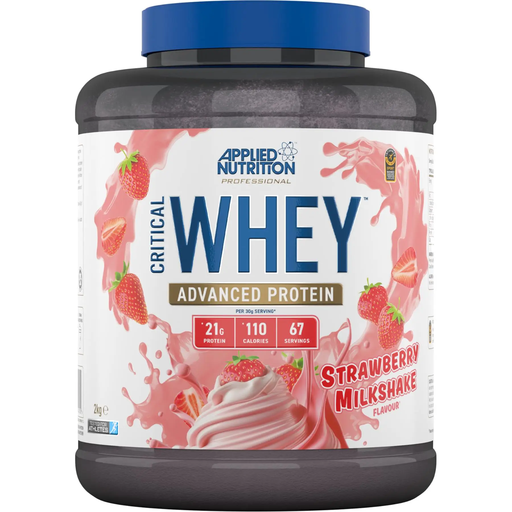
Why This Fits Their Persona: Regular lifters who already know they prefer a creamy shake may value the larger pack and multi-source protein blend for consistent daily use.
The product page clearly lists a 33g serving, 23.8g protein and 122 kcal, allowing a more accurate comparison with simpler blends.
Contains whey isolate, concentrate, hydrolysed whey and milk protein concentrate; strawberry flavour and 2kg capacity.
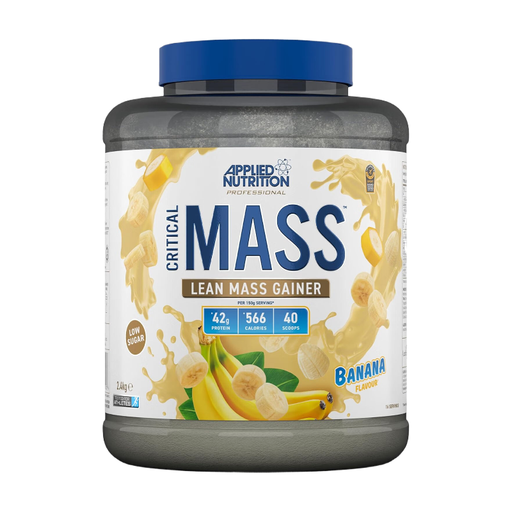
Why This Fits Their Persona: Heavy trainers and adults who struggle to consume enough calories may prefer a larger serving containing protein and carbohydrates rather than a low-calorie whey shake.
Its calorie and carbohydrate content is declared per 120g serving, making it less likely to be mistaken for standard whey.
Lists 460 kcal, 27.6g protein and 76.8g carbohydrate per serving; 2.4kg pack for frequent use.
We have compiled a complete, real-time list of products that fully satisfy these strict selection criteria and UK safety regulations.
Choose Clear Whey if you prefer a fruit-juice-style drink and want the listed 90-calorie serving with approximately 21.27g protein. Available flavours include cherry and apple, strawberry and raspberry, watermelon, orange squash, cranberry and pomegranate, and strawberry and lime.
Choose diet whey protein when you are tracking calories and want a creamy shake with 20g protein per 25g serving. Applied Nutrition Diet Whey also lists acetyl-L-carnitine, green tea extract and CLA; these ingredients should not be treated as medical or weight-loss guarantees.
Choose Critical Whey or Critical Professional for a conventional milkshake texture and a mixture of whey sources. For muscle gain, the powder should complement resistance training, adequate food intake, sleep and a varied diet rather than replace them.
Many products are intended for adults who want a convenient way to increase protein intake. Beginners should start by checking the serving size, milk and soya allergens, flavour and whether the calorie content matches their routine. Food supplements should not replace a varied, balanced diet.
The listed Clear Whey products provide approximately 90 calories per 25g serving, while some standard Critical Whey products provide around 108–130 calories, depending on flavour and serving size. Always use the nutrition panel for the exact product variant.
Shelf life depends on the best-before date, storage conditions and the product label. Keep the container tightly closed in a cool, dry place away from direct sunlight and moisture. Do not use the powder if its smell, appearance or texture has changed noticeably.