
24/7 Customer Support

Free returns

Same-day & Next-day Delivery

Quality Guaranteed
Download the APP
Categories
Navigating the world of baby formula can feel overwhelming for new parents. With so many options available, choosing the right one for your little one's needs is a significant decision. Aptamil is a popular choice for many UK families, offering a range of formulas designed for different stages and dietary requirements. This guide is here to help you understand the key differences in the Aptamil baby formula range, making it easier to select a suitable option for your baby.
A gentle reminder: Health authorities agree that breastfeeding provides the best nutrition for babies. Infant milk is suitable from birth when babies are not breastfed and should only be used on the advice of a doctor, midwife, health visitor or other professional responsible for maternal and child care.
Making an informed choice comes down to understanding a few key factors. Here are some practical points to consider when selecting an infant milk 0-12 months.
For newborns, a 'First Infant Milk' is the only type of formula they need. These are suitable from birth up to 12 months and are designed to be the sole source of nutrition for babies who are not being breastfed. Whether you are exclusively bottle-feeding or looking for a combination feeding formula, a newborn baby formula like Aptamil's Stage 1 milks are nutritionally complete to support your baby's early development.
Some babies may experience digestive discomfort, such as colic or constipation. If you have noticed these signs, it may be worth discussing specialised formulas with your healthcare professional. There are specific formulas designed to be gentler on a baby's tummy. For example, a baby formula for colic and constipation often contains partially broken-down proteins and a different blend of fats to help ease these common issues.
Within the Aptamil range, you will find standard and advanced options. Both are nutritionally complete and contain key nutrients like DHA (Omega-3) as required by legislation for all infant formula. The primary difference often lies in the specific blend of ingredients. For instance, Aptamil Advanced 1 is described by the brand as their most advanced formulation, while Aptamil First Infant Milk provides a trusted, standard option. Both come in convenient Aptamil 800g tins.
Here are our recommendations from the Aptamil range, broken down to help you understand which might be the most suitable for your baby's needs.

Why It Stands Out: This is a specialised formula designed for the dietary management of colic and constipation. It is formulated to be easier to digest for babies with sensitive tummies.
Pros:
Who is it for? This Aptamil comfort formula is intended for bottle-fed babies from birth to 12 months who are experiencing digestive issues like colic or constipation. It should only be used under medical supervision.
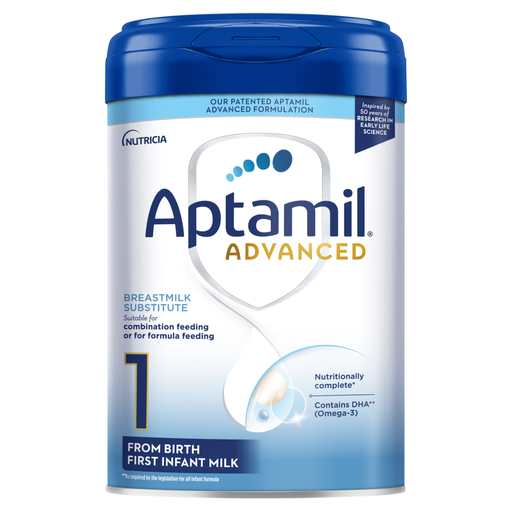
Why It Stands Out: Described by the manufacturer as their most advanced formulation, this is a premium first infant milk suitable from birth for bottle-fed or combination-fed babies.
Pros:
Who is it for? Aptamil Advanced 1 is for parents seeking a premium first infant milk for their newborn, whether for exclusive bottle-feeding or to supplement breastfeeding.
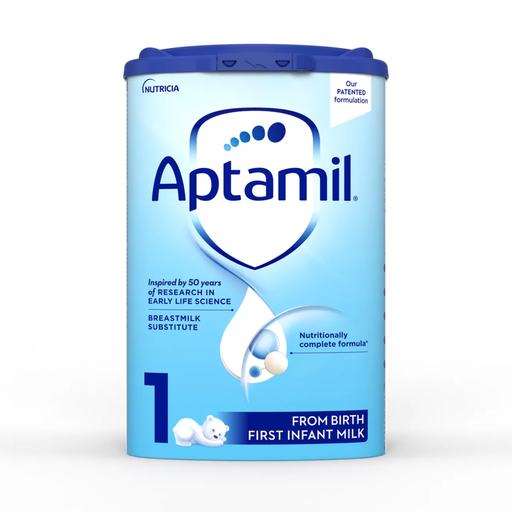
Why It Stands Out: This is the brand's trusted, standard first infant milk. It is a nutritionally complete formula that provides all the key nutrients your baby needs from day one.
Pros:
Who is it for? Aptamil First Infant Milk is a great all-round option for parents looking for a standard, scientifically developed breast milk substitute for their baby from birth.
Every baby is unique, and the formulas highlighted here are just a few of the options available. If your baby has different needs or you would like to explore a wider selection of formulas for various stages, you can find more choices in our comprehensive collection.
Explore our full range of Baby & Toddler Milk to find the right fit for your family.
Both Aptamil 1 First Infant Milk and Aptamil Advanced 1 are nutritionally complete formulas suitable from birth. The main difference is that Aptamil Advanced 1 is described by the manufacturer as their "most advanced formulation," containing a specific blend of ingredients. Both contain all legally required nutrients, including DHA, to support your baby's development.
It is generally possible to switch between formulas, but it is always best to do so gradually over several days to allow your baby's digestive system to adapt. If you are considering moving to a specialised formula like Aptamil Comfort for colic and constipation, it is important to first seek advice from your doctor, midwife or health visitor.
Always follow the precise instructions on the packaging, as preparation methods can vary slightly. Generally, you should wash your hands, sterilise all feeding equipment, boil fresh water and let it cool for no more than 30 minutes, add the correct number of levelled scoops of powder and shake well. Always check the temperature of the milk on your wrist before feeding your baby.