
24/7 Customer Support

Free returns

Same-day & Next-day Delivery

Quality Guaranteed

Unlock Your Welcome Offers: FREE Delivery | Up to 80% OFF | Free 30-day JoyPlus trial
Download the APP
Navigating the world of baby formula can feel overwhelming for new and expectant parents. With so many options available, choosing the right one for your newborn is a significant decision. Aptamil is a name many parents in the UK trust, but even within their range, there are different choices. This guide is designed to provide clear, practical information on the Aptamil first infant milk range, helping you understand the key differences so you can make a confident choice for your family.
Joybuy Product Recommendation Officer's Note: It is important to remember that breastfeeding is recommended for babies. Infant formula is intended to replace breast milk when mothers do not breastfeed. Any decision to use a newborn baby formula, either exclusively or as part of combination feeding, should be made on the advice of a healthcare professional, such as a doctor, midwife or health visitor.
Before looking at specific products, understanding a few key terms can help simplify your decision. All formulas sold in the UK are nutritionally complete and must meet strict legal standards.
First infant milk, often labelled as 'Stage 1', is the only type of formula your baby needs for the first six months of life. It is a whey-based formula, designed to be closer to the composition of breast milk, which is also whey-dominant. Whether you are bottle-feeding exclusively or combination feeding, Aptamil stage 1 is a suitable option from birth.
Within the Stage 1 category, you will often find a few variations:
Aptamil advanced formula. According to the manufacturer, these formulations are based on their latest research and may contain a different blend of ingredients compared to their standard formula, while still being nutritionally complete for your newborn.All infant formulas are required by law to contain key nutrients, including DHA (an Omega-3 fatty acid). However, it is always wise to read the full ingredient list, especially if there are any known allergies in your family. Pay close attention to the preparation and storage instructions to ensure every feed is made safely.
Here, we break down three popular options from the Aptamil Stage 1 range to help you compare their features.
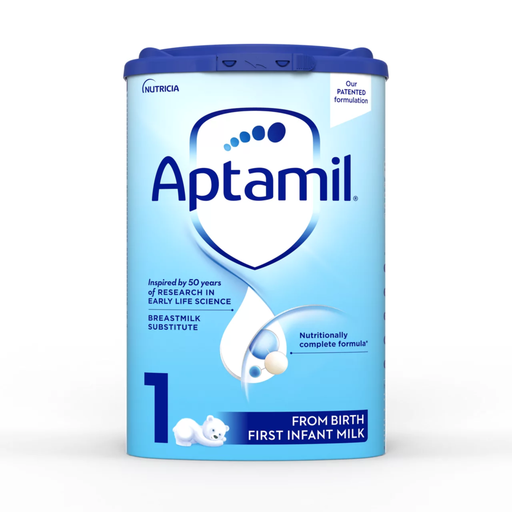
Why It Stands Out: This is the standard, go-to Aptamil first infant milk. It is a whey-dominant, nutritionally complete formula designed to support your baby from day one. According to the brand, it is backed by 50 years of research into breast milk.
Pros:
Who is it for? This formula is a suitable starting point for parents choosing to formula-feed their newborn, providing a complete nutritional profile that meets all regulatory standards. It is a reliable choice for everyday feeding from birth.
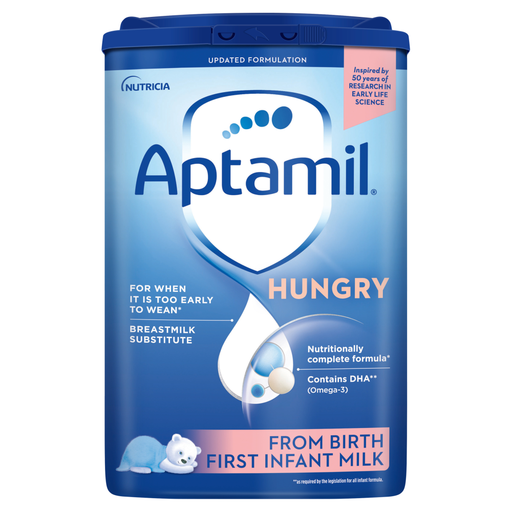
Why It Stands Out: The key feature of Aptamil hungry milk is its formulation. It contains a higher ratio of casein to whey protein. Casein is digested more slowly, which is why this formula is designed for babies who may seem especially hungry and are not satisfied by standard first infant milk.
Pros:
Who is it for? This formula should only be used on the advice of a healthcare professional. It is intended for bottle-fed babies who seem to get hungry again very quickly after feeds. It offers the same complete nutrition as first milk but with a different protein balance.
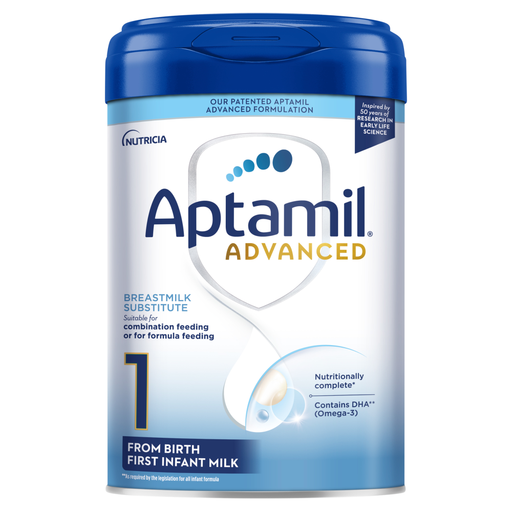
Why It Stands Out: This is described by the manufacturer as their most advanced formulation. While still a nutritionally complete Aptamil stage 1 milk, it contains a specific blend of ingredients developed from the brand's ongoing research into early life nutrition.
Pros:
Who is it for? This formula is for parents who are looking for a premium option that reflects the manufacturer's most recent developments in infant nutrition, while still providing all the foundational nutrients required for a newborn.
Every baby is unique, and the right choice for one family may not be the right one for another. If you are exploring a wider variety of nutritional products for your family, including different types of milk, you can browse our full selection.
Explore our alpine milk category for more choices.
1. What is the difference between Aptamil 1 and Aptamil Hungry Milk? The primary difference lies in the protein composition. Aptamil 1 First Infant Milk is whey-dominant, meaning it is digested relatively quickly. Aptamil Hungry Milk contains a higher proportion of casein protein. Casein forms a thicker curd in the stomach and takes longer to digest, which may help some babies feel satisfied for a longer period.
2. Can you switch between different Aptamil Stage 1 formulas? While all Stage 1 formulas are nutritionally complete, switching between them may cause a temporary change in your baby's digestion. If you are considering changing formulas (e.g., from standard to hungry milk), it is always recommended to speak with your health visitor, pharmacist or GP first.
3. How long can my baby stay on Aptamil First Infant Milk? First infant milk is the only food your baby needs for the first 6 months. It can continue to be used as their main milk drink alongside the introduction of solid foods (weaning) up until they are 12 months old. Always follow the guidance provided by your healthcare professional regarding your baby's diet.