Retro-arcade traditionalists
If a physical joystick and arcade buttons are central to how you want to play beat-’em-ups, start with a traditional-lever stick rather than a slim all-button layout.


Choose the systems and games you will use before choosing a control layout. A traditional lever gives you joystick-style arcade controls, while an all-button controller changes how you enter directions rather than offering an automatic upgrade. In a bright room, judge the finish and control markings from product images instead of treating RGB lighting as a visibility feature.
If a physical joystick and arcade buttons are central to how you want to play beat-’em-ups, start with a traditional-lever stick rather than a slim all-button layout.
If you move between PC, consoles and retro or mini hardware, check the exact controller and connection mode for each device before settling on a layout.
If reflections or hard-to-read markings concern you, inspect the finish and physical controls in product images. Razer describes the Kitsune’s RGB lighting as decorative flair, not a bright-room visibility feature.
Start with device and game compatibility, then decide whether joystick movement or directional buttons suit you. Room layout and visual finish matter once those choices are settled.
Choose it when: You want the physical joystick movement associated with an arcade cabinet; Turtle Beach UK explicitly positions the Victrix Pro FS for beat-’em-ups and classic arcade games.
Trade-off: A full-size stick takes more desk or lap space than a slim all-button controller, and platform support varies by model.
Choose it when: You deliberately prefer movement buttons to a joystick; Razer’s Kitsune uses four movement buttons and is aimed at PS5 and PC.
Trade-off: You give up joystick operation, and a PS5/PC-focused model may not cover the retro or mini systems you use.
| Concern | What to check | Who this matters to |
|---|---|---|
| System compatibility | Match the exact model and connection mode to each device; check support for the intended game. | I move between modern and retro hardware, so one controller needs to work with the devices I actually own. Around 36% of consumers put compatibility first. |
| Movement layout | Choose between a physical joystick and directional buttons before comparing other controls. | I want movement to feel familiar in beat-’em-ups, and swapping a lever for buttons would change how I play. Layout is the main concern for around 29% of consumers. |
| Setup and storage | Consider available playing space, cable placement and the connection mode needed for each system. | My playing space is shared, so setting up and putting away a full-size stick matters to me. Around 21% of consumers prioritise setup flexibility. |
| Bright-room visibility | Inspect images for reflective finishes, legible markings and the position of the controls. | In my bright room, I need to judge whether the controls will be easy to see rather than choose by decorative lighting. Visual practicality comes first for around 14% of consumers. |
PlayStation’s guidance concerns officially licensed specialty peripherals and supported games; it does not settle compatibility for every controller and connection method.
Check the exact controller, intended game and required connection mode before buying.
An all-button controller replaces joystick movement with directional buttons. That is a different control method, not proof that it will suit every retro beat-’em-up player.
Choose it if you actively want button-based directions; otherwise compare traditional-lever models first.
Razer describes the Kitsune’s RGB as decorative flair, not as a measured improvement to control visibility in a bright room.
Inspect images of the finish, labels and layout without letting lighting displace compatibility.
Wireless use adds charging and device-specific mode checks. Mayflash gives the F700 a 20-hour rating for Bluetooth or 2.4 GHz use; actual runtime can vary.
Confirm which mode works with each intended device and whether a wired connection suits longer sessions.
These brands offer different layouts and platform focuses; compatibility belongs to the specific model, not the brand as a whole.
Traditional-lever and all-button routes for PlayStation and PC players.
A traditional-lever route for players checking compatibility across several types of device.
An all-button option for players seeking directional buttons on PS5 or PC.
A conventional-lever option for PS5, PS4 and PC use.
A PS5 and Windows PC route for players considering a traditional lever with PlayStation Link wireless.
These HORI fighting sticks are traditional-lever options for players choosing between a PS5-oriented setup and an Xbox Series X/S setup. Check your intended game and any additional system separately.
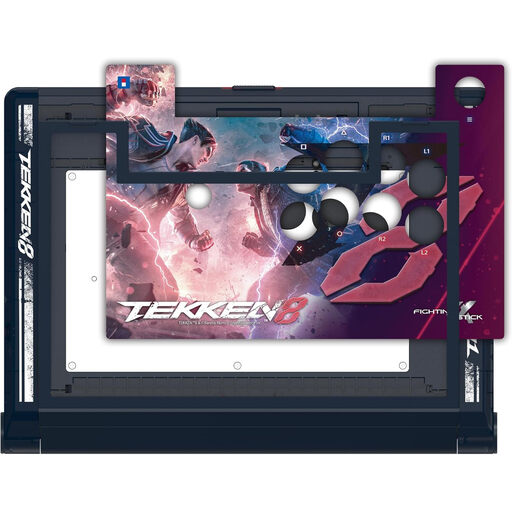 No image available
For PS5 players seeking joystick-style controls for arcade games, this is a traditional-lever option. Confirm that your intended beat-’em-up accepts the controller, and check whether wired play suits your setup.
For PC use, check the game’s required input mode. Inspect product images if the finish and control markings matter in your bright room.
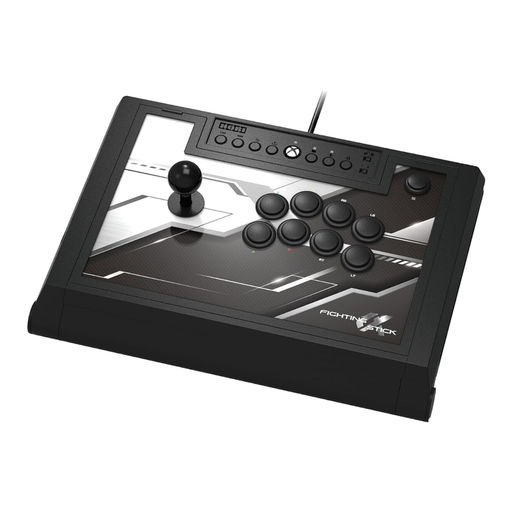 No image available
For Xbox Series X/S players who want a traditional lever, this model offers the relevant control layout. Confirm that your chosen beat-’em-up supports it before buying.
If you also play on PlayStation or a retro mini console, verify support for that exact system. Check current images for the finish and control markings in a bright room.
No—RGB alone is not a reason to choose an arcade controller for bright-room play. Razer describes the Kitsune’s lighting as decorative flair; inspect the finish, control positions and markings instead.
PlayStation says officially licensed specialty peripherals, including arcade sticks, work with PS5 games and supported PS4 games on PS5. Check the exact stick, intended game and connection method rather than extending that guidance to every controller.
Some models are intended for both. Mayflash lists the F700 for several modern systems and retro or mini targets, but you should match each device to the exact controller and its required connection mode.
For qualifying online, mail and telephone orders, GOV.UK says customers can cancel within 14 days of receiving the item and have a further 14 days to return it. Check applicable exceptions and the seller’s return procedure before opening or modifying the controller; remedies for faulty or misdescribed goods are a separate matter.