TV-based combo practisers
If you repeat combos on a large TV or monitor, the display setup matters alongside your controller choice. Sony UK advises using Game mode or Auto Low Latency Mode where supported to reduce input lag.


Check that the controller works with your platform and intended game before choosing a movement layout. A traditional lever stick suits players who want arcade-style motions and, on a full-size model, room to rest their hands; choose leverless if you specifically want to practise directional inputs on buttons. For a large TV, check its low-latency settings and the distance from your playing position as well as the controller.
If you repeat combos on a large TV or monitor, the display setup matters alongside your controller choice. Sony UK advises using Game mode or Auto Low Latency Mode where supported to reduce input lag.
If you want to learn joystick motions and rest your hands on a larger unit, compare lever-stick layouts and access to parts. Nacon and Qanba describe these features on specific models; PCMag UK also notes that compact sticks can feel too small for large hands.
If you want to learn movement inputs without a joystick, an all-button controller is a distinct option. Razer describes four directional buttons on its Kitsune; expect a different technique from lever movement.
Settle the movement layout you want to practise, but confirm platform and game support before committing to a model. For a large-screen setup, assess the display and where the controller will sit.
Choose it when: You want joystick-based motions and a conventional arcade layout; full-size models can provide more hand-resting space.
Allow for: A larger unit needs space, and a wired model needs a workable cable route.
Choose it when: You specifically want to practise directional movement with buttons rather than a joystick.
Allow for: The changed movement technique may take practice if you already use a lever.
| Concern | What to check | Who this matters to |
|---|---|---|
| Platform and game compatibility | Confirm the exact controller model, platform mode and intended game. For PS5, check current manufacturer guidance for the title. | I need the stick to work with the system and fighting game I use, before its other features matter. Around 33% of consumers would make compatibility their primary concern. |
| Lever or button movement | Choose joystick motions or directional buttons; on a leverless model, check how opposing direction presses are handled. | If I am learning combos through repetition, I want a movement method I intend to keep practising. For around 27% of consumers, layout would come first. |
| Comfort and customisation | Compare hand-resting space and stability, then check model-specific access to buttons or lever parts if you plan to change them. | Long sessions make the unit’s fit on my desk or lap important, and I may want to change parts later. That would be the leading need for around 20% of consumers. |
| Display and seating setup | Check for a supported low-latency display mode and measure the cable route; confirm platform and game support before relying on wireless use. | From where I sit, I need a practical connection and a TV setting that avoids unnecessary processing delay. Around 20% of consumers would put this setup first. |
A platform label does not settle every model-and-game combination. MAYFLASH publishes title-specific PS5 compatibility information for the F700, and Sony Interactive Entertainment advises checking peripheral compatibility with the manufacturer.
Confirm your controller model, selected mode and intended fighting game against current manufacturer guidance before ordering.
TV picture processing can delay what you see after an input; changing controllers does not remove that display-side delay.
Use Game mode or an equivalent low-latency setting if your display supports it. Sony UK says its supported Auto Low Latency Mode setup reduces input lag.
An all-button controller changes how you make directional inputs. Razer’s Kitsune replaces the joystick with four movement buttons, but that distinction alone does not establish a performance advantage for every player.
Choose leverless if you want to learn button-based movement; otherwise consider a conventional lever layout.
A cable has to reach your playing position along a safe route. Nacon specifies a 3 m detachable cable for Daija, while MAYFLASH lists several connection methods for F700.
Measure the route around furniture. If you need wireless operation, confirm that the model’s connection method works with your platform and game.
The Daija is a full-size PlayStation-oriented lever stick for players considering hand-resting space and control configuration.
Kitsune is an all-button option for PS5 and PC players who want to learn leverless movement.
The F700 is a conventional-stick option for players comparing connection methods across several systems.
Obsidian 2 is a traditional lever-stick option for players interested in PlayStation support and access to controls.
HORI offers conventional lever-stick formats, including compact hardware for buyers with limited space.
These HORI models suit players considering a conventional lever-and-button layout for large-screen practice. Choose between them by your intended platform, then check the exact game and the space available for a wired setup.
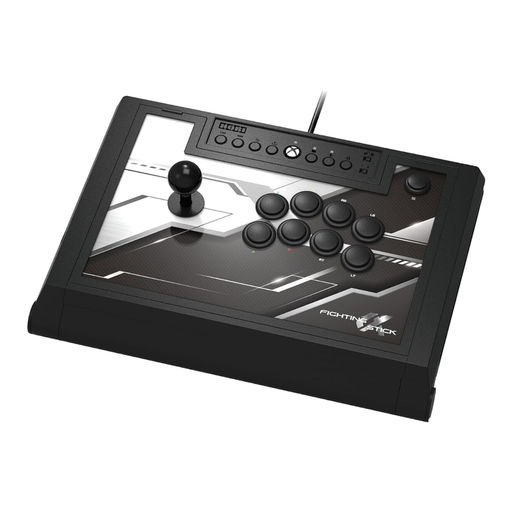 No image available
Consider this lever stick if you practise on Xbox Series X/S and want a conventional arcade layout. Check compatibility with your particular fighting game and whether a wired connection reaches your playing position.
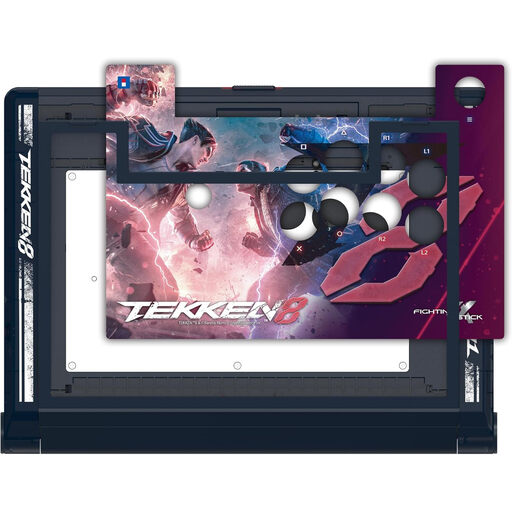 No image available
Consider this lever stick if PS5 is your intended platform and you want conventional joystick controls. Confirm support for the exact game you will practise; the edition name alone does not establish game compatibility.
Do not assume that every older stick will work. Sony Interactive Entertainment says officially licensed specialty arcade sticks work with PS5 games and supported PS4 games; check your exact model and intended title with its manufacturer.
No: leverless is a different way to make directional inputs, not an automatic upgrade. Razer’s Kitsune uses four movement buttons in place of a joystick, so choose that layout if it is the technique you want to practise.
Use Game mode or an equivalent low-latency setting when your display supports it. Sony UK says Auto Low Latency Mode can activate Game mode on compatible BRAVIA setups to reduce input lag; check your display’s input and settings.
A model may offer wireless PS5 use, but confirm its connection method and the game before buying. MAYFLASH lists 2.4 GHz and wired PS5 use for F700 and publishes title-specific PS5 compatibility information.