Viewers focused on architectural detail
If the group needs to follow plans, materials and façades, consider both the projector’s resolution and whether people at the back can see fine detail at the planned screen size.


Choose the screen size around the farthest seat, then match the projector’s throw distance and brightness rating to the room; consider 4K-capable projection when the programme source can supply that detail. A conventional projector suits a room with enough depth, while short-throw or ultra-short-throw placement addresses tighter spaces but needs model-specific planning. A lumen rating alone cannot guarantee a clear picture under the room’s lighting.
If the group needs to follow plans, materials and façades, consider both the projector’s resolution and whether people at the back can see fine detail at the planned screen size.
If daylight or household lighting will remain on, assess light at the intended screen wall. A projector’s rated output is worth checking, but the rating alone cannot tell you how the picture will look there.
If there is no practical position for a conventional projector farther from the screen, compare short-throw and ultra-short-throw placement using each model’s required distance.
Choose when: The room has enough distance from projector to screen and optical adjustment would help position the image.
Trade-off: The beam crosses more of the room, so seating and movement need planning.
Choose when: Room depth is limited but the projector can still stand in front of the audience.
Trade-off: The intended image size still requires the exact model’s specified placement and careful alignment.
Choose when: The projector needs to sit very close to the screen or wall, away from people crossing the beam.
Trade-off: Positioning and the flatness of the projection surface remain important.
| Concern | What to check | Who this matters to |
|---|---|---|
| Fine detail | Check native resolution, the programme source’s output and whether the planned viewing distance allows detail to be seen. Accepting a 4K signal does not itself mean native 4K projection. | If I want everyone to follow drawings and façade details, I need more than a large picture; around 36% of consumers would put fine-detail legibility first. |
| Back-row visibility | Measure the farthest seat and plan using screen height, not just the advertised diagonal. Epson suggests up to four times screen height as a reference for detail-oriented viewing. | When people sit well behind the front row, I want them to follow what is on screen without moving closer; for around 29% of consumers, back-row visibility is the primary concern. |
| Room lighting | Assess light at the screen wall and check the exact model’s brightness specification. Consider whether lighting can be controlled during viewing. | If I cannot darken the living room, I need a picture that remains usable under its usual lighting; around 21% of consumers would prioritise that need. |
| Placement and sound | Map the projector position, power and source connections. Check the model’s throw distance, inputs and audio options for the seating layout. | With little room for equipment or a group spread across the space, I want a setup that fits and can be heard; this is the main concern for around 14% of consumers. |
A bigger diagonal does not settle whether viewers can follow small architectural features. Epson’s guidance uses a shorter viewing-distance reference for detail-oriented material than for passive video.
Measure the farthest seat and compare it with screen height. Use Epson’s reference of up to four times screen height as a starting point, then try the actual programme content if possible.
A stated light-output figure does not account for daylight at the screen, image size or the projection surface.
Assess the room under the lighting you expect to use and compare specifications for the exact models you are considering. Check whether changing the lighting or screen is practical.
They require different positions: BenQ specifies a 0.8 throw ratio for the TK705STi, while Epson specifies 0.16 for the EH-QS100B. Neither ratio alone establishes the image size achievable in your room.
Choose a possible projector position before selecting a model, then check its throw-distance guidance and allow room for cables, ventilation and people moving past.
Built-in speakers do not establish that everyone will hear clearly. BenQ’s TK705STi quick-start guide also says video cables are purchased separately.
Check the source connections, cable lengths and audio outputs of the exact model, then decide whether the existing sound system suits the seating area.
Epson’s UK home-cinema range includes conventional and ultra-short-throw 4K PRO-UHD models relevant to different room layouts.
BenQ’s UK range includes conventional and short-throw home-entertainment projectors.
Sony’s UK launch material presents its BRAVIA Projector 8 and 9 as native-4K laser home-cinema models.
These projectors offer native 1080p resolution with varying setup features for home viewing. If following fine architectural detail from the back row is the priority, check whether native 1080p, the achievable screen size and the room’s lighting meet your needs; wording about 4K support does not mean native 4K projection.
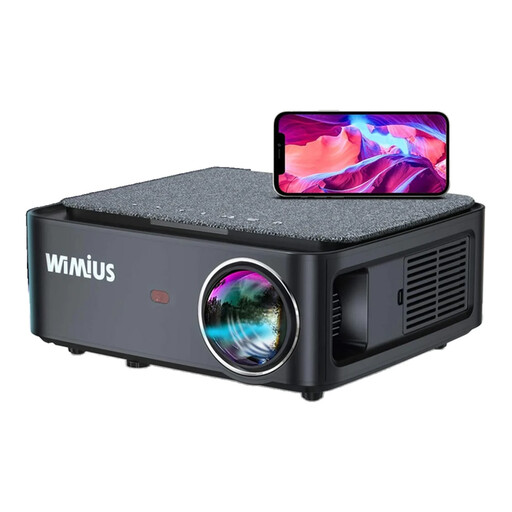 No image available
Consider this model if you need HDMI connections and image-alignment controls, provided its placement suits your room.
The listing states native 1080p, 4K support, 1,200 ANSI lumens, vertical and horizontal keystone correction, and stereo audio. Its 300-inch image claim needs checking against the available throw distance; also assess lighting and whether external audio is needed for the group.
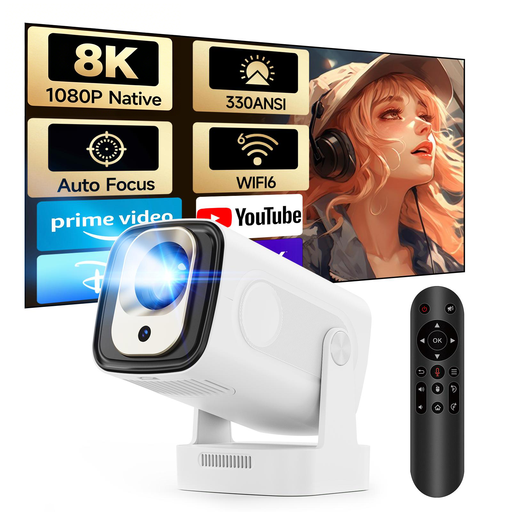 No image available
Consider its autofocus if automatic image setup matters, after checking that the projector can be positioned for the screen you plan to use.
The listing states native 1080p, 4K support, 330 ANSI lumens, automatic focus and a built-in speaker. Check the intended room lighting, throw distance and whether the speaker will serve the whole group.
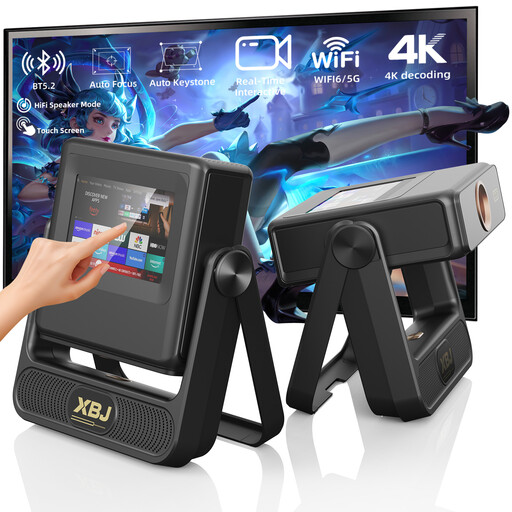 No image available
Consider this model if autofocus and keystone correction would help with setup, but settle the required image size and placement before choosing it.
The listing states native 1080p and 4K support. Its title claims 900 ANSI lumens and a 300-inch image, while other listing details give different brightness and size figures. Confirm which figures apply to this variant, the required throw distance and whether external audio is needed.
Start with the farthest seat and the screen’s height rather than its diagonal alone. Epson suggests a viewing distance of up to four times screen height for detail-oriented material; use that as a planning reference and try the intended content if possible.
Not necessarily: a conventional projector can work where there is enough throw distance and its beam does not interfere with the group. Short-throw suits limited room depth, while ultra-short-throw suits a position close to the screen; check placement for the exact model.
No. The picture also depends on room light, image size, the projection surface and the selected image mode. Assess daylight at the intended screen position alongside the exact model’s stated output.
Check the exact projector’s inputs, audio outputs, mounting method and required cable lengths against your source devices and seating layout. Epson lists two HDMI inputs for the EH-TW7100, while BenQ’s TK705STi quick-start guide says video cables are purchased separately.
Check the venue and programme permissions before arranging a public screening. GOV.UK says a TV Licence is required to watch or record television programmes in public spaces; licensing for a public showing should not be assumed from the projector purchase or from a private-home viewing arrangement.