Choose the operating system and desktop format around the people using the archive: a Mac mini suits an existing macOS workflow with separately chosen accessories, a Windows tower offers an expansion route, and a tiny Windows PC gives priority to desk space. Whichever route you take, plan separate user accounts, shared-folder access, archive capacity, a separate backup and connections for the intended display and import devices.
Who is this setup for?
Shared archive custodians
People maintaining photographs with a household member, colleague or volunteer need to decide who can use the shared archive without sharing a sign-in. Microsoft Support and Apple Support describe individual accounts on their respective systems; the Information Commissioner's Office also advises organisations to consider appropriate access controls for personal data.
Growing-collection organisers
If more photographs will be added over time, plan working storage, drive connections and a separate backup before choosing a desktop. Internal expansion may matter more to you than the smallest computer.
Space-constrained desk sharers
When the monitor, drives, scanner or card reader already compete for room, consider both the computer's footprint and whether its ports are convenient for regular imports.
What matters when choosing?
Decide whether macOS or Windows fits the existing photo workflow, then weigh internal expansion against desk space. An all-in-one is another layout to consider if you want the display built into the computer, but its connections and storage still need checking.
Compact Mac desktop
Consider it when: The desk users already work in macOS and want a small computer with a display of their choosing.
Trade-off: A Mac mini is a desktop unit, not a complete workstation; display, input devices and archive storage are separate decisions.
Windows tower
Consider it when: Future internal expansion matters more than keeping the computer itself small. Dell describes configurations in its OptiPlex Tower range with up to three PCIe slots.
Trade-off: Allow room for the tower and check the expansion options of the exact configuration, rather than assuming every model in a range is alike.
Tiny Windows desktop
Consider it when: Preserving shared-desk space takes priority over internal expansion; Lenovo positions its ThinkCentre M90q Gen 5 as a Tiny PC.
Trade-off: Check the chosen build's connections and expansion options before relying on it for a growing collection.
| Concern | What to check | Who this matters to |
|---|
| Separate access |
Set up an account for each regular user and decide who can change the shared archive folder. Microsoft Support and Apple Support describe multiple-user accounts on Windows and macOS respectively. |
If several of us use the desk, I want personal files and settings kept apart while the archive remains accessible to the right people. Around 42% of consumers put account separation and controlled sharing first. |
| Archive growth |
Compare the exact SSD capacity and drive connections with the collection's size and planned imports; arrange a separate backup. |
As I add photographs, I need a workable place for the collection without mistaking the computer's SSD for a backup. For around 33% of consumers, archive capacity and room to expand are the primary concern. |
| Desk layout |
Measure the available space and check display connections and access to ports used for frequent imports. |
With other equipment and another person sharing the surface, I need the computer and its connected devices to fit where they can be used. Keeping the workspace clear comes first for around 25% of consumers. |
Mistakes to avoid
-
Choosing by processor name alone
A desktop is only part of the photo-organising workstation; the intended display, storage, import devices and shared-user setup also affect whether it works at the desk.
List the computer configuration and every device you intend to connect before comparing models.
A card reader, cables or adapters may also be needed for the intended equipment.
-
Giving everyone one administrator login
A shared sign-in mixes settings and files and makes it harder to manage who can change the archive. Microsoft Support and Apple Support describe separate accounts for people using the same computer.
Give regular users their own accounts, keep administrator access for maintenance and agree on one shared archive location.
-
Assuming a small computer has the right ports
The monitor, external drives and import devices may need different connections. Port arrangements depend on the exact desktop and configuration.
Match each planned device to the selected model's published connections, including ports you need to reach frequently.
A hub, dock or adapter may be needed if the connections do not match your equipment.
-
Keeping the only archive copy on the internal SSD
Working storage in the computer does not provide a separate copy of photographs you want to preserve.
Keep a separate backup and decide who will check that it completes and can be restored.
Relevant brands to consider
Apple
The Mac mini represents the compact macOS route for a desk with separately chosen display and input devices.
- Apple lists configurable SSD storage, front and rear connections and support for multiple external displays in its UK Mac mini specifications.
- Choose the monitor, keyboard, mouse and archive and backup arrangement separately, and check the connections on the selected model.
Dell
The OptiPlex Tower range illustrates a Windows route for buyers considering internal expansion.
- Dell describes DDR5 configurations, integrated or optional discrete graphics and up to three PCIe slots in the OptiPlex Tower range.
- Check the selected tower's installed options, ports and storage; range-level specifications do not describe every configuration.
Lenovo
The ThinkCentre M90q Gen 5 represents the tiny Windows-desktop route where computer footprint is a priority.
- Lenovo's UK listing shows a configurable example with Windows 11 Pro, 32 GB DDR5 memory and a 1 TB PCIe Gen4 SSD.
- Confirm the selected build's installed options and connections rather than applying the example's specifications to the whole range.
Joybuy desktop choices
These desktops cover several ways to arrange a shared photo workspace: a compact Mac, a Windows mini PC, towers and an all-in-one with a built-in display. Compare each exact configuration with your archive size, desk space and planned peripherals.
 No image available
Apple Mac mini (2026), M6 12-Core CPU, 12-Core GPU, 24GB RAM, 512GB SSD, Silver
Consider this Mac mini if the shared desk uses macOS and you will choose the display and archive storage separately.
This variant has an M6 12-Core CPU, 12-Core GPU, 24GB RAM and a 512GB SSD. Check connections for your display and drives, and keep a separate archive backup.
View on Joybuy
 No image available
Lenovo IdeaCentre Mini PC 01IRH10R, 91B2000XUK, Intel Core 5, 16GB RAM, 512GB SSD, Grey
The mini-PC format is worth considering when space on the shared desk is limited.
This 91B2000XUK variant lists an Intel Core 5 processor, 16GB RAM and a 512GB SSD. Confirm the exact display and peripheral connections, and plan storage and backup around the collection's size.
View on Joybuy
 No image available
HP M02-0005na OmniDesk, AMD RYZEN 5 8500, 8GB RAM, 1TB SSD, Windows 11 Home
Consider this Windows tower if a 1TB internal working drive is useful and you have space for a separate computer and monitor.
The named configuration has an AMD RYZEN 5 8500 processor, 8GB RAM, a 1TB SSD and Windows 11 Home. Check whether its memory suits your intended software, measure its placement and confirm the monitor and import-device connections.
View on Joybuy
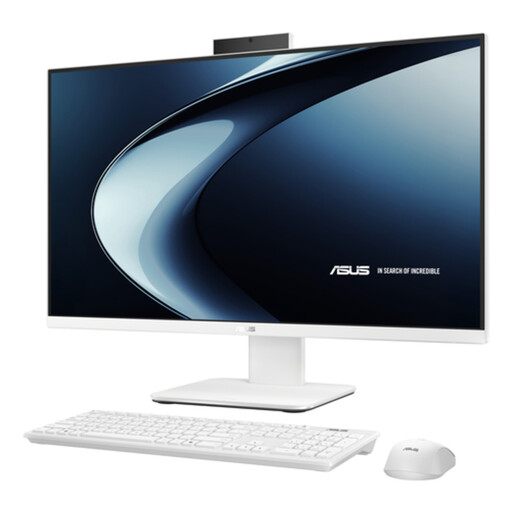 No image available
ASUS V400 AiO V470VAK-WPE032W, 27-inch Full HD, Intel Core i7-13620H, 16GB DDR5 RAM, 512GB SSD, Windows 11 Home, White
Consider an all-in-one if you want the display built into the computer rather than choosing a separate monitor.
This variant lists a 27-inch Full HD display, Intel Core i7-13620H processor, 16GB DDR5 RAM, a 512GB SSD and Windows 11 Home. Check its connections against your drives and photo-import devices, and plan a separate backup.
View on Joybuy
 No image available
Stormforce Defiance, AMD Ryzen 7 5700X, 32GB RAM, 2TB SSD, RTX5070, Windows 11
Consider this Windows desktop if you want a 2TB internal working drive and can accommodate a tower at the shared desk.
The named configuration has an AMD Ryzen 7 5700X processor, 32GB RAM, a 2TB SSD, RTX5070 and Windows 11. Confirm the display and peripheral connections and what accessories come with the exact product; its internal SSD still needs a separate backup.
View on Joybuy
Questions about a shared photo archive
Should everyone using the desk have a separate account?
Separate accounts are a practical choice when several people use the same desktop. Microsoft Support describes individual Windows accounts, and Apple Support recommends an account for each Mac user; keep common photographs in an intentionally shared location rather than giving everyone one administrator sign-in.
Can Windows Photos bring together pictures from different locations?
Microsoft Support says the Photos app can bring together media from a PC, phone, cloud accounts and other devices. Its newer folder-based organisation differs from the older album approach, so check that workflow against your existing archive before moving a carefully organised collection.
Is a 1TB internal SSD enough for an archival photo collection?
That depends on the collection's current size, image formats, working copies and expected growth. Measure what you have before selecting capacity, and arrange a separate backup rather than treating any internal SSD as the only archive copy.
What if an organisation's photo archive contains personal data?
The Information Commissioner's Office says organisations processing personal data under the UK GDPR must use appropriate technical and organisational security measures. Decide who needs access to the photographs and assess suitable accounts, authentication and access restrictions for the risks involved; that guidance does not make one specific account arrangement appropriate for every archive.


