What matters when choosing?
Sort programmes by condition and measure the largest pages first. Those decisions determine which originals can be fed in batches and which need individual or oversized capture.
| Concern |
What to check |
Who this matters to |
| Protecting originals |
Check for a flatbed and a scan area large enough for items that must be handled individually. |
I need to capture stapled or brittle programmes without sending them through rollers; around 36% of consumers put protecting originals first. |
| Loose-sheet batches |
For stable sheets, check the ADF’s supported size, capacity and two-sided colour-scanning options. |
When I have a substantial run of loose pages, handling every side separately slows the work; roughly 29% of consumers prioritise batch throughput. |
| Oversized capture |
Measure covers and inserts, then confirm the maximum scan area rather than relying on the print size. |
I want to capture large covers or fold-outs without cropping or assembling several images; around 21% of consumers place oversized capture first. |
| Printing supplies |
If the printer will also make regular access copies, compare supplies and their stated yields for the exact model. |
I will keep printing colour copies alongside the digitisation work and want manageable supplies; about 14% of consumers make this their primary concern. |
Multifunction printers on Joybuy
These multifunction printers are options to assess for loose-sheet scanning and related printing. Check each model’s scan area and handling options before using it with original programmes.
 No image available
Brother MFC-J6760DW All-in-One Inkjet Printer
Consider this model for stable, loose-sheet scanning alongside printing. Confirm its scan area, flatbed and feeder settings before choosing it for your programmes; keep delicate originals out of the feeder.
View on Joybuy
 No image available
Canon MAXIFY GX6150
If printing will continue alongside digitisation, assess this model against both tasks. Check its flatbed, maximum scan area and colour-scanning options before relying on it for programme originals.
View on Joybuy
 No image available
Epson EcoTank ET-5150 +Ink A4 Multifunction Printer
This A4-labelled model is worth assessing when routine printing accompanies loose-page digitisation. Confirm the maximum scan area separately: the A4 description does not establish whether it can capture an oversized programme.
View on Joybuy
 No image available
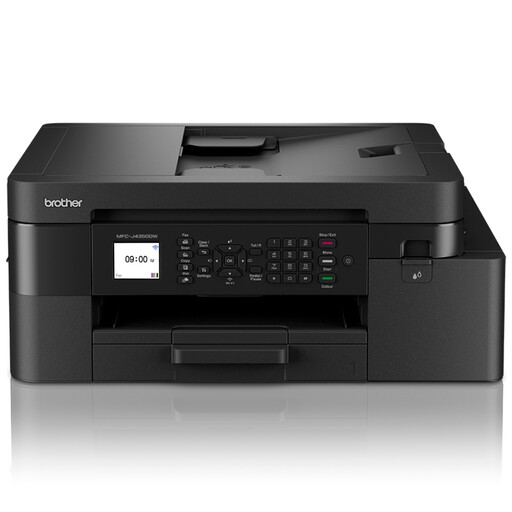
Brother MFC-J4350DW All-in-One Inkjet Printer
For stable, loose sheets, compare its scanning workflow with the size of your batches. Check the flatbed, usable scan area and two-sided feeder options before buying for an archive that also contains delicate items.
View on Joybuy
Frequently asked questions
Can old theatre programmes go through an automatic document feeder?
Use a feeder only for loose, stable sheets that fit its stated limits. The US National Archives warns that fragile, weak, bent or valuable papers can jam and tear in automatic-feed scanners; handle those originals individually on a suitable flatbed or seek specialist imaging.
Do I need an A3 printer for theatre programmes?
Choose A3 scanning if large covers, spreads or inserts regularly need to be captured in one image. Brother describes the MFC-J6960DW as an A3 scanning model, and HP states that the OfficeJet Pro 9730 scans up to A3; check the actual scan area of any model you consider, not just its print size.
Is a multifunction printer enough for a preservation archive?
A multifunction printer can make access scans, but it should not be assumed to meet every preservation need. The US National Archives distinguishes preservation reformatting from convenient access scanning; set requirements for handling, capture checks and file management before deciding whether office equipment is sufficient.
Can a UK theatre group publish digitised programmes online?
Digitising a programme does not automatically permit its online publication. GOV.UK describes copyright exceptions as limited; check ownership, the group’s eligibility for any relevant exception, the proposed use and whether permission is needed before sharing scans publicly.


