
24/7 Customer Support

Free returns

Same-day & Next-day Delivery

Quality Guaranteed

Unlock Your Welcome Offers: FREE Delivery | Up to 80% OFF | Free 30-day JoyPlus trial
Download the APP
Buying area rugs can quickly become more complicated than choosing a colour. A rug may look suitable online but arrive too small for the furniture, prove difficult to clean or move around on a smooth floor. For UK homes, where space, central heating, pets and everyday foot traffic all affect practical use, the right choice depends on more than appearance.
This guide explains the key specifications to check, common marketing pitfalls and our top recommendations for 2026. You can also browse the wider rooms rugs collection when you are ready to compare more designs.
A rug can technically fit a room while still looking undersized. In a living room, placing only the coffee table on a large rug may leave sofas and chairs disconnected. For a large living room rug, measure the intended furniture arrangement first. Ideally, the front legs of larger seating should sit on the rug, provided the dimensions and layout allow it.
For dining areas, the rug should extend beyond the table sufficiently for chairs to remain on the surface when pulled out. Bedrooms may need either a large rug beneath most of the bed or smaller runners positioned beside it.
The term washable area rugs can refer to different constructions and care requirements. Check whether the entire rug is machine washable, whether it needs a specific cycle and whether the washing machine can accommodate its weight when wet. A large 72 x 107.8-inch rug may not be practical for a standard domestic machine, even if the product title includes “washable”.
Look for clear instructions covering temperature, detergent, drying and storage. Rugs should be completely dry before being placed back on the floor, particularly where a backing relies on dryness to maintain grip.
A non-slip indoor carpet or rug may be more stable on smooth flooring, but performance can vary according to the backing, floor finish, dust and moisture. Avoid placing rugs on damp or freshly cleaned floors. For tiled, laminate or wooden flooring, keep the surface clean and consider a compatible rug pad if the manufacturer permits one.
Always check that doors can open freely over the rug and that edges lie flat. Raised corners are a trip hazard, especially in hallways and home offices.
Measure the floor area and mark the proposed rug footprint with masking tape or folded sheets. This shows how much furniture will overlap the rug and whether walkways remain clear.
Common practical choices include:
A round jute rug may work particularly well in a breakfast corner or beside an armchair, while a rectangular rug usually offers more coverage beneath a sofa.
Polyester and chenille can provide a smooth, soft surface and are often chosen for patterned designs. Recycled PET rugs use fibres made from recycled plastic and can offer a practical option for shoppers interested in sustainable home décor. Natural jute has a visibly textured finish and an organic appearance, but it generally requires spot cleaning rather than soaking.
Check the pile height as well as the fibre. A low-pile rug is easier to place beneath furniture and is less likely to catch beneath doors. A deeper pile can feel more comfortable underfoot but may require more frequent vacuuming.
A grey patterned rug can disguise everyday marks more effectively than a plain pale design, while a petrol blue rug introduces colour without requiring a strongly decorative pattern. Vintage floral rugs can provide visual interest, but inspect the scale and contrast of the print against existing curtains, upholstery and flooring.
For busy rooms, prioritise a stated care method, stable construction and a design that will remain practical between cleans. Product labels should also provide relevant warnings and indoor-use guidance. Keep all rugs away from open flames and direct heat sources, and follow the supplied care instructions.
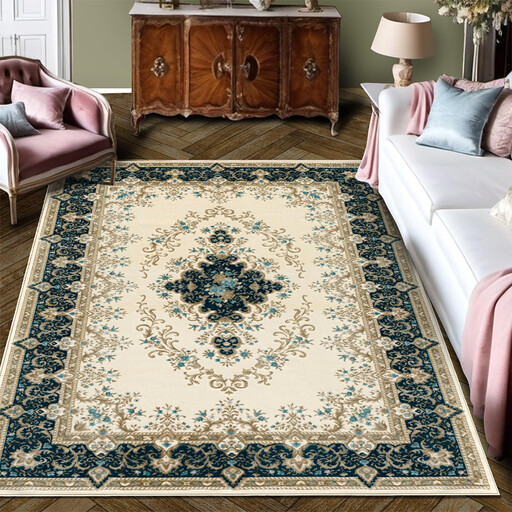
Why This Fits Their Persona: A generous 72 x 107.8-inch format and floral styling suit renters or first-time home furnishers wanting one statement piece for a living room, bedroom or office.
The low-profile format listed in the product title may be easier to position beneath furniture and doors. Confirm the care and backing details before ordering.
Large coverage; traditional floral appearance; listed as washable and suitable for several indoor rooms.
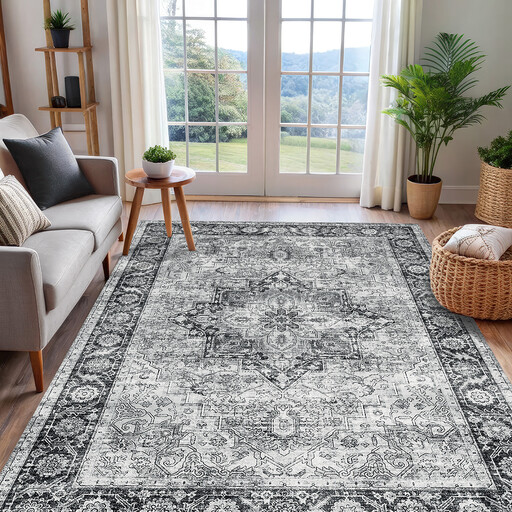
Why This Fits Their Persona: The 160 x 230cm size, grey-and-white Persian-inspired pattern and chenille surface suit homeowners seeking a refined centrepiece for a contemporary or traditional lounge.
Its listed machine-washable construction addresses maintenance concerns, while the integrated backing is specified for stability on smooth surfaces.
Polyester chenille texture; machine-washable design; large rectangular footprint; neutral patterned colourway.
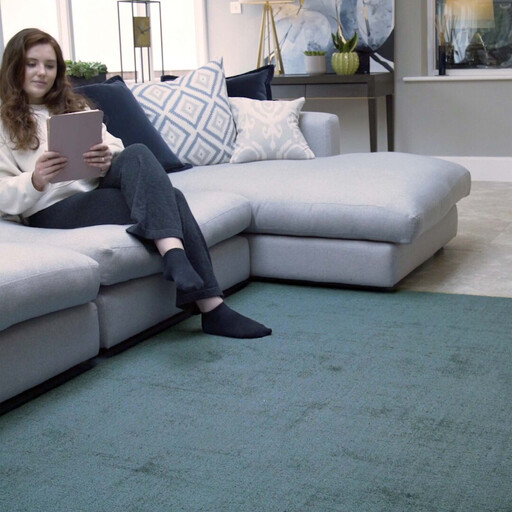
Why This Fits Their Persona: This compact rectangular rug suits a bedroom, office or smaller lounge where a calm colour and straightforward maintenance are more useful than an ornate pattern.
The product specification identifies recycled PET rather than leaving the fibre unspecified. Its easy-care description is useful for regularly used rooms, but follow the supplied label.
100% recycled PET construction as listed; petrol blue plain design; 120 x 170cm dimensions; suitable for living rooms, bedrooms and offices.
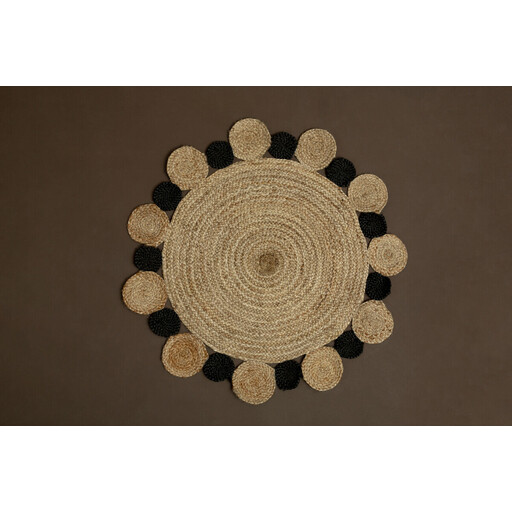
Why This Fits Their Persona: Its 102cm circular format works beneath a small table, beside seating or in a reading corner, adding natural texture to boho, minimalist and modern interiors.
The material and care method are clearly stated: natural and black jute with gentle spot cleaning. This avoids assuming that every sustainable-looking rug is machine washable.
100% jute as listed; hand-woven construction; round 102cm shape; textured natural-and-black design.
We have compiled a complete, real-time list of products that fully satisfy these strict selection criteria and UK safety regulations.
For many UK living rooms, a rug around 160 x 230cm can work when the front legs of the sofa and chairs overlap its edges. Measure the furniture arrangement rather than relying only on the room’s floor area.
They can be practical, but check the actual washing instructions, weight and machine capacity first. A low-pile design is often easier to position under dining furniture, and the rug should extend beyond the table so chairs remain supported when moved.
There is no fixed replacement period. Lifespan depends on fibre, construction, foot traffic, sunlight, cleaning and whether furniture repeatedly presses the same sections. Replace or repair a rug when the backing deteriorates, edges curl persistently or the surface becomes difficult to clean safely.