
24/7 Customer Support

Free returns

Same-day & Next-day Delivery

Quality Guaranteed

Unlock Your Welcome Offers: FREE Delivery | Up to 80% OFF | Free 30-day JoyPlus trial
Download the APP
Buying art and craft markers can seem simple until the ink bleeds through paper, the nib wears down or a supposedly washable colour leaves a stubborn stain. The right choice depends less on the number of colours in a pack and more on the ink formula, surface compatibility and tip design.
Whether you are decorating ceramics, preparing classroom activities, labelling stock or creating detailed illustrations, these checks can help you avoid unsuitable purchases.
Permanent markers are designed to leave lasting marks and may be difficult to remove from clothing, furniture and porous materials. They are useful for labelling or decorating metal, plastic and wood, but unsuitable when you need to update a display.
By contrast, wet-erase chalk markers are intended for non-porous surfaces such as glass, mirrors, whiteboards and slate. They can usually be wiped away with a damp cloth, but may become difficult to remove from porous materials.
A large pack is not automatically practical. Fine-tip markers are useful for lettering and small details, while brush tips support shading, calligraphy and broader strokes. Round or bullet tips are more suitable for general colouring and controlled lines.
For younger children, jumbo washable dot markers can be easier to grip than slim pens. For office use, a clear 1.5mm line from whiteboard markers may be more useful than a broad selection of artistic colours.
Paper, card, glass, metal, fabric, plastic and canvas have different textures and absorption levels. Water-based art markers may blend well on suitable paper, while acrylic paint pens are more appropriate when you need opaque coverage on darker or harder surfaces.
Always check whether the ink is intended for the material you plan to use. Test a small hidden area first, particularly on finished furniture, painted objects or fabric.
“Non-toxic” or “low-odour” descriptions do not mean a product should be used on skin, near food or without following the packaging instructions. Keep markers away from young children where small parts or ink access presents a risk.
A fine-tip marker is useful for outlines, annotations and detailed drawing. Chisel tips can create both broad strokes and narrower edges, while dual-tip art markers provide two functions in one barrel.
For example, the Ohuhu acrylic ranges include a 0.7–2mm fine tip and a 1.7–3mm round tip. The Ohuhu water-based set combines a 0.4mm fineliner with a 1–6mm flexible brush tip, giving more control over lettering and shading.
Choose a pack based on how often each colour will be used. A six- or eight-colour set may be practical for occasional craft work, whereas schools, offices and small businesses may benefit from bulk packs.
Recap every marker firmly after use. Many products recommend horizontal storage to help maintain ink flow. Paint markers also need shaking and tip priming before first use, so allow time for preparation rather than applying them directly to a finished project.
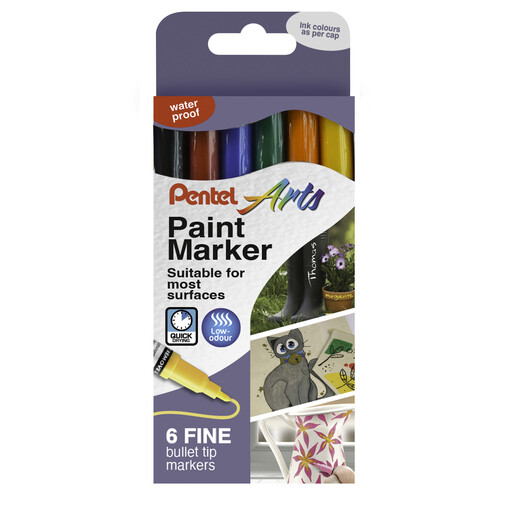
Why This Fits Their Persona: A six-colour set offers a straightforward starting point for craft projects, labels and hobby work without committing to a large colour collection.
The fine 2.9mm bullet tip and pigment-based opaque ink give more control than a general felt-tip, while the stated surface range clarifies where it should be used.
Low-odour formula; aluminium barrel; suitable for thick card, metal, glass, plastic and rubber.
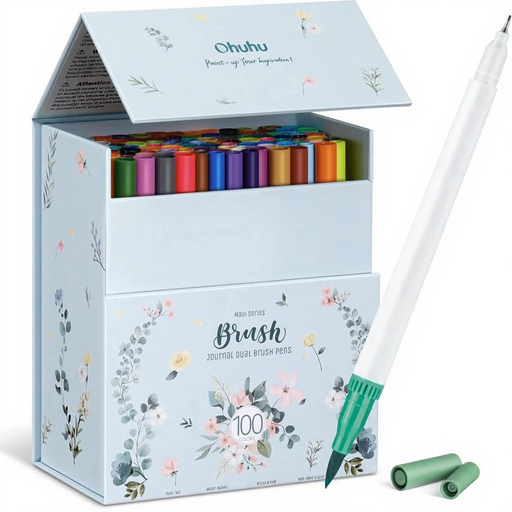
Why This Fits Their Persona: Suitable for adult colouring books, illustration and lettering where a broad palette and two tip styles are more valuable than permanent surface marking.
The product specifies both a 0.4mm fineliner and flexible brush tip, making the choice clearer than buying a large pack with one undifferentiated nib.
100 numbered colours; water-based ink; storage case, swatch card and replacement tips included.
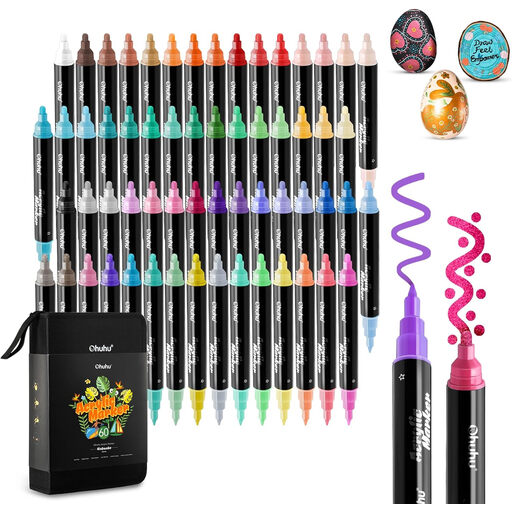
Why This Fits Their Persona: A larger palette suits frequent crafters working across rocks, wood, ceramics, glass, fabric, plastic, paper and canvas.
The listed surface compatibility and dual tips make it more adaptable than a paper-only marker set. It should still be tested on the intended material first.
60 colours; fine and round tips; eight replacement nibs and a carrying case included.
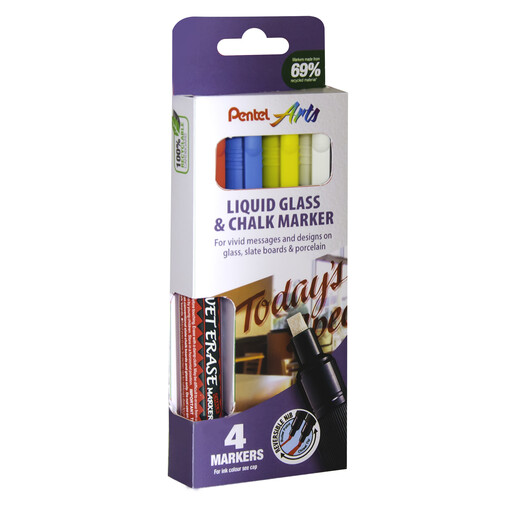
Why This Fits Their Persona: Useful for menus, shop windows, classroom displays and home organisation where bright temporary marks need regular updating.
The product is specifically described for non-porous surfaces and damp-cloth removal, reducing confusion with permanent paint markers.
Four assorted colours; reversible bullet and chisel nib; intended for glass, slate, ceramic, metal and whiteboards.
We have compiled a complete, real-time list of products that fully satisfy these strict selection criteria and UK safety regulations.
Many acrylic paint pens are listed for glass and ceramics, but the finish and durability can depend on the surface preparation and whether the item is handled or washed frequently. Clean and dry the surface, follow the product instructions and test a small area before completing the design.
Lifespan depends on usage, nib pressure, ink capacity and storage. Markers dry out faster when caps are loose or when they are stored in hot, sunny areas. Recapping immediately and following the recommended storage position can help preserve ink flow.
For younger children, look for an age recommendation, secure caps and washable, water-based ink. For whiteboards, choose dry-wipe markers rather than permanent markers. Adult supervision is advisable, and ink should be kept away from eyes, skin and porous furnishings according to the product warnings.