
24/7 Customer Support

Free returns

Same-day & Next-day Delivery

Quality Guaranteed

Unlock Your Welcome Offers: FREE Delivery | Up to 80% OFF | Free 30-day JoyPlus trial
Download the APP
Finding the right set of art marker pens can feel overwhelming. With countless options available, each promising vibrant colours and smooth application, it’s difficult to know which set will truly suit your creative projects. Whether you are meticulously planning your bullet journal, illustrating a new character or crafting handmade cards, the pen you choose makes all the difference.
This guide is designed to cut through the clutter. We will walk you through the key features to consider when selecting your next set of markers and highlight a few standout options for different creative needs. Our goal is to provide clear, practical information to help you make a confident choice.
Before diving into specific products, it’s helpful to understand the main factors that distinguish one marker set from another. Focusing on these three areas will help you narrow down your search.
The ink is the heart of any marker, and its composition determines how it behaves on different surfaces.
The marker tip, or nib, dictates the kind of lines you can create.
Always consider the material you will be working on. While a standard felt tip pens set is great for sketchbooks and colouring books, it won’t perform well on non-porous surfaces like ceramic or plastic. For mixed-media art or DIY projects, a versatile set of paint markers will provide the permanence and opacity you need.
Based on their features and suitability for common creative tasks, here are a few sets worth considering.
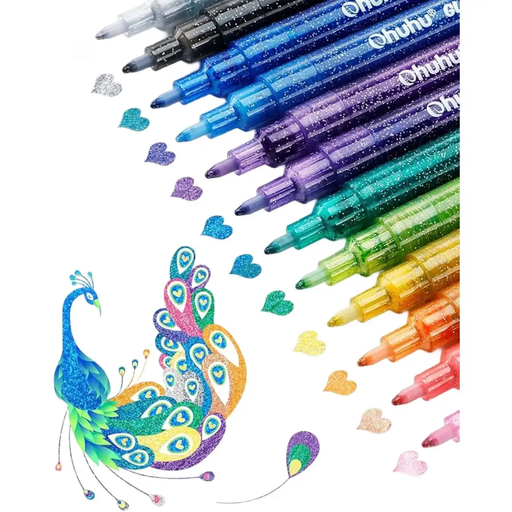
Why It Stands Out: This set is specifically designed for adding vibrant, shimmering detail to projects. The water-based metallic ink is highly opaque, making it exceptionally effective on dark and coloured paper, a task where many standard markers fall short.
Pros:
Who is it for?: Crafters, scrapbookers and artists who want to add eye-catching metallic and glitter effects to their work, especially on materials like black cardstock or kraft paper.
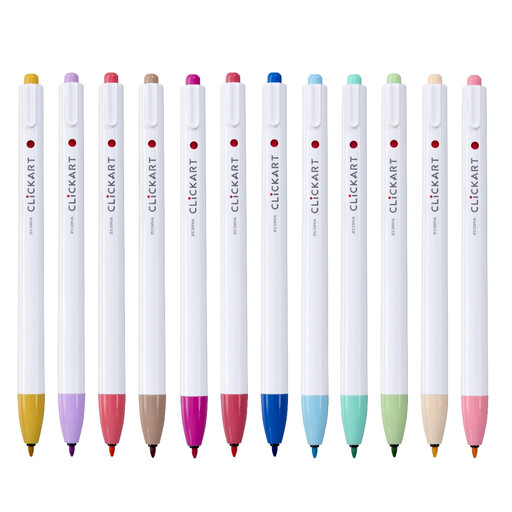
Why It Stands Out: The Zebra CLiCKART series addresses a common frustration: lost caps and dried-out pens. Its retractable, capless design uses a special "Moist Keep Ink" technology that absorbs moisture from the air to keep the tip from drying out.
Pros:
Who is it for?: Bullet journal enthusiasts, students and note-takers who prioritise convenience and organisation. The pastel palette is particularly well-suited for colour-coding and decorative planning.
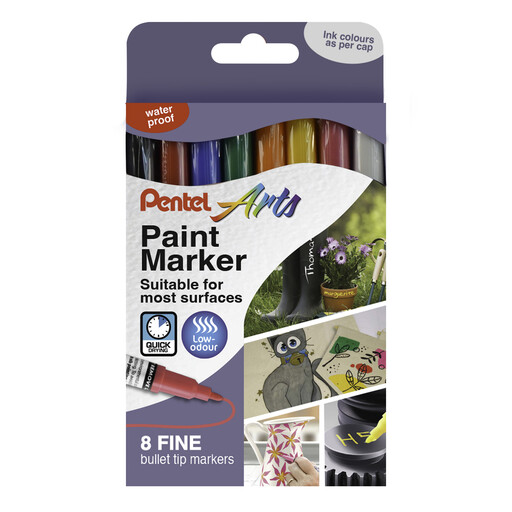
Why It Stands Out: This set offers true versatility for the multi-talented crafter. Its permanent, opaque pigment ink is formulated to work on a huge variety of surfaces beyond paper, including metal, glass, plastic and rubber.
Pros:
Who is it for?: DIY enthusiasts, hobbyists and anyone needing to write or draw on challenging surfaces for creative or industrial purposes.
While these recommendations cover a range of popular uses, your perfect set might require a different colour palette, tip style or ink formulation. If you're searching for a broader selection, we invite you to explore our full collection.
Explore our complete range of felt tip pens to find your ideal set.
1. What is the main difference between alcohol and water-based markers? The primary difference lies in the solvent used for the ink. Water-based markers use water, are generally odourless and won't bleed through most types of paper. Alcohol-based markers use alcohol as a solvent, which evaporates quickly to allow for smooth blending and layering of colours, but they are more likely to bleed through paper and have a distinct smell.
2. How can I prevent my markers from bleeding through the page? First, choose a marker type that is appropriate for your paper thickness; water-based inks are generally safer. Second, use thicker paper or cardstock (often measured in gsm; 120gsm or higher is a good starting point). Finally, always place a protective sheet of scrap paper behind your working page, especially when using alcohol or paint-based markers.
3. Are paint markers permanent? Generally, yes. Most paint markers use a pigment-based ink that is designed to be permanent, waterproof and fade-resistant once dry, especially on porous surfaces like paper, wood and fabric. On non-porous surfaces like glass or plastic, the permanence can vary depending on surface abrasion and exposure to solvents, but they are significantly more durable than standard markers.