
24/7 Customer Support

Free returns

Same-day & Next-day Delivery

Quality Guaranteed

Unlock Your Welcome Offers: FREE Delivery | Up to 80% OFF | Free 30-day JoyPlus trial
Download the APP
Choosing between art markers and paint pens can be surprisingly difficult. Product pages often highlight large colour counts, “waterproof” ink or dual tips without explaining how those features affect everyday use. A marker that works beautifully on paper may bleed through a colouring book, while a permanent paint marker may be unsuitable for a temporary display.
Before buying, focus on the ink, nib and surface rather than the number of pens in the box. The right set should match your project, storage space and expected level of permanence.
Water-resistant or waterproof claims can refer to different conditions. Acrylic paint pens may create durable marks on sealed wood, glass, ceramics or canvas, but the finish and preparation of the surface still matter. On porous materials, ink can absorb unevenly or become difficult to remove.
For temporary signs, washable markers or wet-erase chalk markers are more suitable. Always check whether the product is intended for porous or non-porous surfaces before use.
A large art marker set may include near-identical shades, while omitting useful neutrals, skin tones or strong outlines. A smaller set with practical colour separation can be more useful for beginners, students and occasional crafters.
Also check whether the stated number includes a colourless blender, duplicate shades or replacement nibs. These may be useful additions, but they are not additional colours.
A brush tip is helpful for expressive strokes, but it can become unsuitable for fine detail if pressed too firmly. Fine-tip markers offer control for outlines, lettering and manga illustration, but they are slower for filling large areas.
Paint markers usually require shaking and priming on scrap material before first use. Leaving caps loose or storing markers incorrectly can cause premature drying. Follow the care instructions supplied with the product and keep solvent- or pigment-based markers in a well-ventilated area.
Water-based ink is commonly selected for paper, journals, children’s activities and adult colouring books. It may be easier to blend or wash from most fabrics, although paper quality affects bleeding and feathering.
Acrylic paint pens contain opaque, paint-style ink intended for stronger coverage across materials such as wood, glass, ceramic, plastic and canvas. Many are water-based and low-odour, but “non-toxic” does not mean suitable for skin, food contact or body painting. Use only on surfaces specified by the manufacturer.
Permanent paint markers are designed to leave marks that remain visible once dry. This can be useful for labelling metal, rubber, glass or plastic, but it is a drawback when you need a clean, temporary display.
For controlled outlines, lettering and small illustrations, look for fine-tip markers or a fine bullet nib. A 2.9 mm bullet tip, for example, provides a balance between detail and visible coverage.
Medium bullet tips, such as 4.5 mm, are more efficient for bold labelling and larger craft surfaces. Dual-tip art markers combine two options in one pen, often pairing a fineliner with a brush or broad tip. This reduces the number of pens needed, but check that both caps close securely and that the nibs suit your drawing style.
Check whether the set is made for paper only or for markers for glass and wood, ceramics, fabric and other non-porous surfaces. Permanent marks may need sealing for particular craft projects, while wet-erase ink should generally be kept away from porous materials if easy removal is important.
For UK households, read age guidance, ventilation advice and storage instructions. Products containing small parts should be kept away from young children, and children should use art materials under suitable adult supervision. Product packaging should provide relevant safety and compliance information; do not rely solely on advertising language.
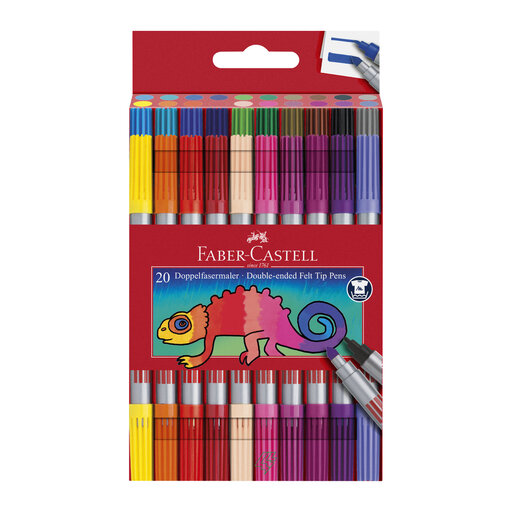
Why This Fits Their Persona: A practical option for students, families and casual illustrators who want fine and broad tips without buying separate pen ranges.
The set identifies its water-based ink and washable-from-most-fabrics design, helping buyers distinguish it from permanent paint markers.
20-piece set; dual fibre tips provide fine and broad line widths; suitable for illustration and colouring books.
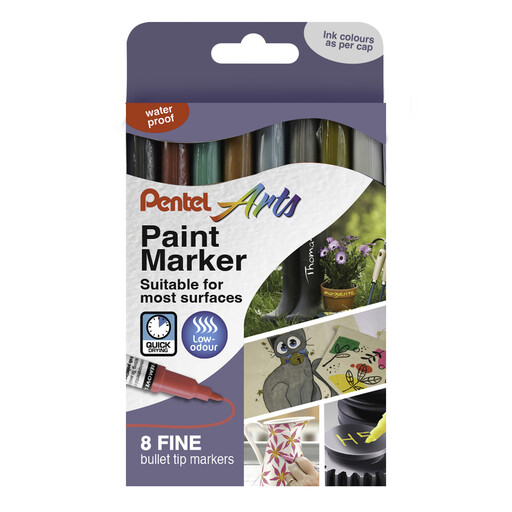
Why This Fits Their Persona: Suits crafters and makers who need controlled metallic detailing on projects around the home or studio.
Its fine 2.9 mm bullet tip and clearly stated permanent pigment-based ink make the intended detail and permanence easier to assess.
Eight metallic colours; aluminium barrel; suitable for thick card, metal, glass, plastic and rubber.

Why This Fits Their Persona: Designed for frequent multi-surface craft work, including rocks, wood, ceramics, glass, plastic, fabric, paper and canvas.
The listing specifies the ink type, tip ranges, surface compatibility and replacement nibs rather than relying only on a colour-count headline.
90 dual-tip acrylic paint pens; 60 regular, 24 metallic and 6 neon shades; eight replacement nibs included.
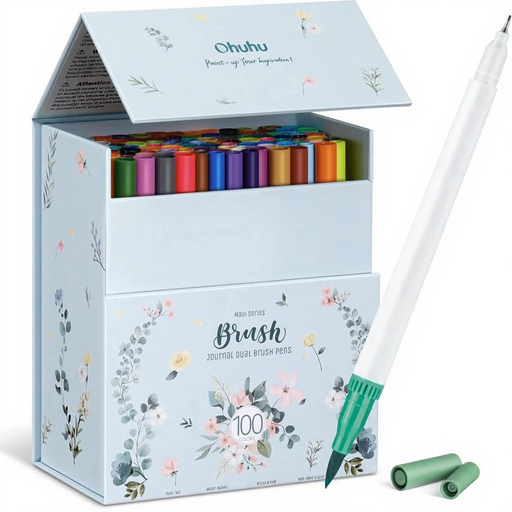
Why This Fits Their Persona: A broad palette for adult colouring, journalling, calligraphy and illustration, particularly where fine details and flexible brush strokes are both needed.
The 0.4 mm fineliner and 1–6 mm brush tip are specified separately, so buyers can judge detail control instead of assuming every dual-tip pen performs alike.
100 numbered water-based colours; five replacement tips; storage case and DIY swatch card included.
We have compiled a complete, real-time list of products that fully satisfy these strict selection criteria and UK safety regulations.
Some are. Acrylic paint pens and permanent paint markers may be designed for glass and wood, but the finish, permanence and preparation requirements differ. Check the product listing and test a small hidden area first. Wet-erase chalk markers are generally more appropriate for non-porous temporary displays than porous wood.
Water-based colouring pens can bleed through thin paper, especially when layered heavily. Use a page protector or place spare paper underneath. Heavier paper is more suitable for brush effects and water-based blending. A fine-tip marker may reduce ink coverage, but it cannot guarantee bleed prevention across every paper type.
Lifespan depends on frequency of use, tip pressure, storage and how quickly caps are replaced. Broad-tip pens used for large areas consume ink faster than fine-tip markers. Replacement nibs can extend the usable life of some acrylic sets, while careful horizontal storage and tightly closed caps help reduce drying.