
24/7 Customer Support

Free returns

Same-day & Next-day Delivery

Quality Guaranteed

Unlock Your Welcome Offers: FREE Delivery | Up to 80% OFF | Free 30-day JoyPlus trial
Download the APP
Buying art paint and brush sets can look straightforward until you compare colour counts, brush types and included accessories. A large box is not automatically practical and a low price may hide missing essentials. Whether you are shopping for a child over three, a student, a hobby artist or an illustrator, the right set depends on how and where it will be used.
This guide explains the main buying pitfalls, the specifications worth checking and our top recommendations for home, classroom, travel and studio use.
A set with 36 or 38 colours may appear better value than a 12-colour kit, but colour count is only one part of the calculation. Check the quantity per colour, paint format and whether the shades are suitable for mixing. A compact set with a mixing palette can be more useful than a larger box with little room to blend.
Also check whether the product includes brushes, paper, a palette or a water container. Some watercolour paint sets include only pans, meaning you will need to buy additional tools before starting.
Watercolour, gouache and acrylic paints have different working characteristics. Fine round brushes can support detail work, while wash and flat brushes are more suitable for backgrounds and broad coverage. Water brush sets are convenient for travel, but they may not provide the same range of shapes as a traditional watercolour brush set.
For acrylic projects, select brushes that can be cleaned promptly after use. Acrylic paint becomes water-resistant once dry, so leaving residue on bristles can affect their shape.
A non-toxic description does not mean paints are edible, suitable for face painting or appropriate for very young children. Check the product warning, age guidance and small-part information before buying. The sets featured here are not suitable for children under three and children aged three to eight should be supervised according to the supplied product guidance.
For school or nursery use, also consider washable surfaces, secure storage and whether small pans, caps or brush components could be misplaced.
Do not select a medium solely because its colour appears brighter in product imagery. Consider whether you need transparent washes, opaque coverage or a paint that works across multiple surfaces.
Compare both the number of colours and the amount supplied. For example, a 24-colour acrylic set contains 24 tubes of 12 ml, while the HIMI Twin Cup Gouache Set includes 36 cups of 30 g each. Larger quantities may suit repeated classroom or studio work, but a smaller kit can be easier to store.
For beginners, 12 to 24 colours can provide enough variety to practise colour mixing without making the palette difficult to manage. Experienced artists may prefer a wider selection for illustration, mixed media art supplies or larger projects.
Look for a combination of fine, medium and broad shapes if you want one set for varied techniques. A five-piece multi-medium brush set may be suitable for watercolour, gouache and acrylic craft painting, whereas a dedicated ten-piece watercolour brush set offers more shape variety.
For travel, consider a case, built-in palette and water brush. A self-contained water brush reservoir reduces the need for a separate water pot, but it still needs rinsing and drying after use to help prevent paint residue from clogging the tip.
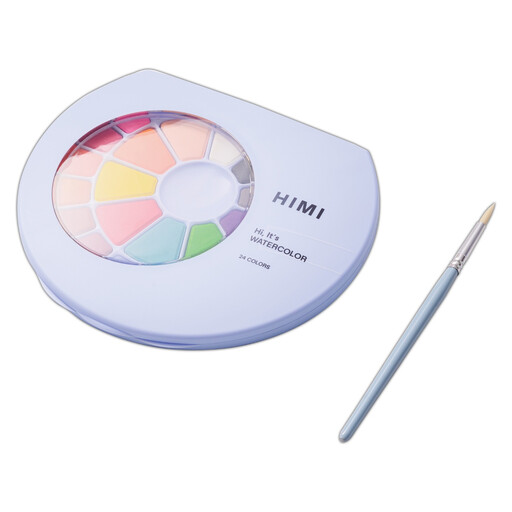
Why This Fits Their Persona: A straightforward starter kit for beginners, students and family painting sessions at home or school, with 24 solid pans and one round synthetic brush.
The product specification clearly identifies the 24-pan format and included brush, helping buyers avoid an incomplete starter purchase.
Firm pressed pans; case lid doubles as a mixing palette; compact blue case.
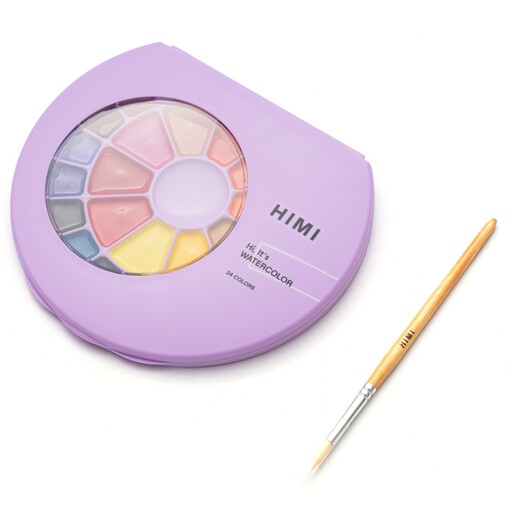
Why This Fits Their Persona: Suits hobby artists and illustrators who want an organised palette for colour studies, sketching and portable painting.
The semi-moist pan format, 24-colour count and included synthetic brush are stated clearly rather than relying on the case appearance alone.
Ring-shaped layout; lid provides a mixing palette; compact purple case.
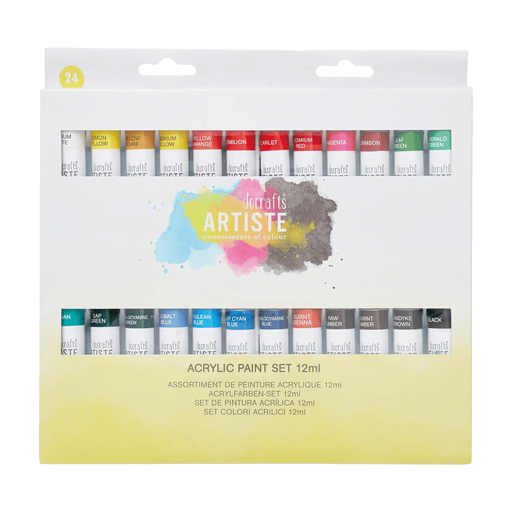
Why This Fits Their Persona: Appropriate for crafters, students and artists working across canvas, card, wood and other listed surfaces in home or classroom projects.
The set specifies 24 separate 12 ml tubes and a water-based acrylic formula, so buyers can assess volume and clean-up requirements.
Mixable colours; quick-drying formulation; supplied in 24 x 12 ml tubes.
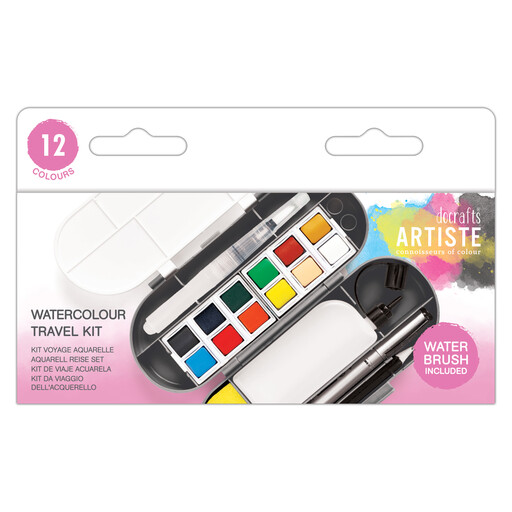
Why This Fits Their Persona: A practical option for sketchbook users, commuters, travelling artists and anyone who prefers a compact kit for outdoor or mobile painting.
Its listed accessories make the contents clear: 12 pans, water brush, palette, hand water bottle, sponges, needle point pen and pencil.
Compact travel format; built-in mixing palette; self-contained water brush and drawing tools.
Clean brushes immediately after use, particularly when working with acrylics. Rinse watercolour and gouache brushes thoroughly, reshape the bristles and let them dry before storage. Keep paint lids and caps closed to reduce drying and allow damp pans or palettes to air-dry before placing them in a sealed case.
Store art supplies for beginners, student art sets and children’s art supplies away from food, pets and direct heat. Use a table cover or apron where pigments may stain clothing or household surfaces.
We have compiled a complete, real-time list of products that fully satisfy these strict selection criteria and UK safety regulations.
Yes, water brush sets can simplify setup because the barrel holds water and removes the need for a separate water pot. They are particularly useful for travel, journalling and classroom activities. Beginners should still practise controlling water flow and clean the brush tip between colours.
Lifespan depends on paint quantity, frequency of use, storage and whether brushes are cleaned correctly. Sealed acrylic tubes and gouache cups generally keep better when closed promptly. Watercolour pans can last through many sessions, although frequently used colours may need replacing sooner.
Not always. A multi-medium brush set can cover basic watercolour, gouache and acrylic work. However, dedicated watercolour brush sets may offer more suitable shapes for washes and fine details, while acrylic users should prioritise prompt cleaning because dried acrylic can be difficult to remove from bristles.