
24/7 Customer Support

Free returns

Same-day & Next-day Delivery

Quality Guaranteed

Unlock Your Welcome Offers: FREE Delivery | Up to 80% OFF | Free 30-day JoyPlus trial
Download the APP
Buying art painting supplies can appear straightforward until you compare paint types, brush shapes, paper, palettes and accessories. A low-priced set may contain many pieces but lack the tools you actually need, while a compact kit may be convenient but offer limited scope for larger projects.
For UK beginners, students, hobby artists and classroom users, the sensible approach is to match the materials to the way you plan to paint. These checks can help you avoid common buying mistakes and choose a set that is practical for home, studio, school or travel use.
A larger number of colours does not automatically mean a more useful set. Check the quantity per colour, whether the paints can be mixed and whether the selection includes practical shades for your projects. Small pans or tubes may be suitable for occasional sketching but become inconvenient for frequent use.
For example, a 24-colour acrylic paint set with 12 ml tubes offers more individual colours than a 12-colour starter kit, while the smaller kit may include brushes, boards and a palette. The right choice depends on whether you need paint variety or a complete setup.
Acrylic, gouache and watercolour are all water-based paints, but their working properties differ:
Choosing an acrylic paint set for a watercolour-style project, or using ordinary paper with heavily diluted paint, can lead to disappointing results.
Fast-drying paint can damage brushes if it is left in the bristles. Likewise, gouache cups and palettes may dry out when left uncovered. Look for supplies that are easy to clean, close securely or can be reactivated where appropriate. This is particularly important for students, shared classrooms and artists who pack their materials away after each session.
Check the number of tubes or pans, the quantity in each container and whether the paint is ready to use or requires substantial preparation. Acrylic tubes are convenient for controlled dispensing and colour mixing. Gouache cups provide direct access to colour, while gouache tubes can be preferable when you want to measure out smaller amounts.
A water-based formulation generally allows tools to be cleaned with water, but always follow the product instructions. Acrylic paint should be cleaned from brushes promptly because it can become water-resistant once dry.
Your chosen surface should suit the paint. Acrylics can be used for canvas, paper, card, wood and mixed-media projects. Watercolour is usually more manageable on paper designed for wet media, particularly when creating washes. Gouache can work well for illustration, studies and craft projects, but the surface should be strong enough to handle added water.
Do not assume that a product intended for art use is suitable for skin, food contact or children of every age. Paints are not for consumption, and products containing small parts should be kept away from children under three. Children aged three to eight should use these materials with adult supervision.
A basic selection of paint brushes should include at least one broad brush for backgrounds, a medium brush for general work and a fine brush for outlines and detail. Water brushes are useful for portable art supplies because their internal reservoirs reduce the need for a separate water pot.
A paint palette should have enough mixing space and, where relevant, wells to keep colours separate. Check dimensions if desk space or portability matters. A foldable palette measuring 200 x 150 mm is easier to pack, while a 220 x 220 mm round palette offers a larger layout for studio or classroom use.
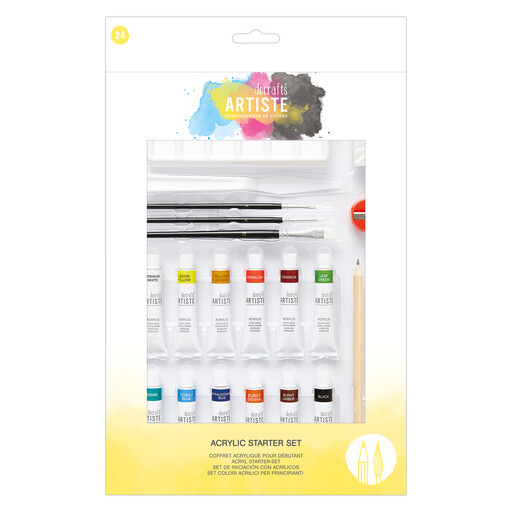
Why This Fits Their Persona: This all-in-one kit suits a beginner setting up at home, a student starting a project or a family looking for painting supplies for beginners without buying each item separately.
It makes the contents clear: 12 x 12 ml acrylic tubes, three brushes, a palette, palette knife, pencils, drawing tools and three A4 painting boards.
Includes a practical range of tools and water-based acrylic paints for colour mixing, base layers and smaller artwork.
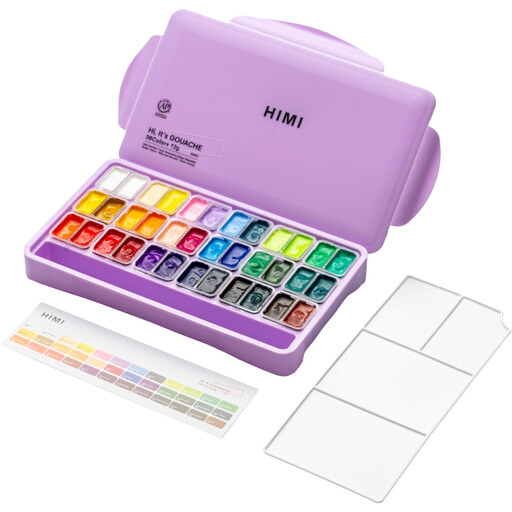
Why This Fits Their Persona: Artists who value an organised, broad palette for illustration, colour studies or classroom work may appreciate the 36-colour format and compact case.
The twin-cup layout keeps colours separated, while dried paint can be reactivated with a small amount of water.
Provides 36 x 30 g gouache cups in a portable case, with an opaque matte finish suited to bold illustration and craft work.
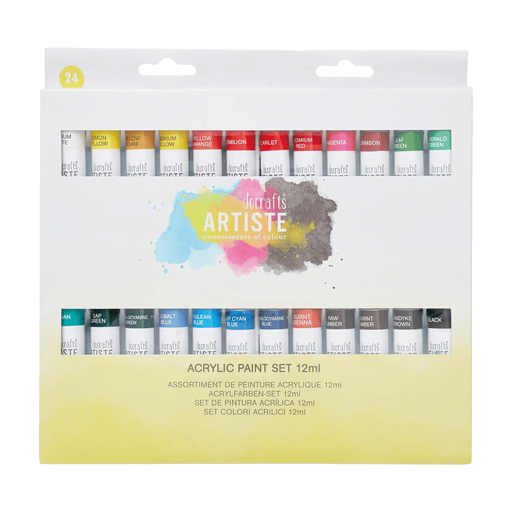
Why This Fits Their Persona: Frequent crafters, workshop users and artists working across canvas, card, wood or mixed media can use the larger colour selection for repeated projects.
The 24 x 12 ml format gives a clearer quantity comparison than sets that rely mainly on a high item count.
The water-based acrylics are mixable and suitable for brush painting, decorative techniques and mixed-media projects.
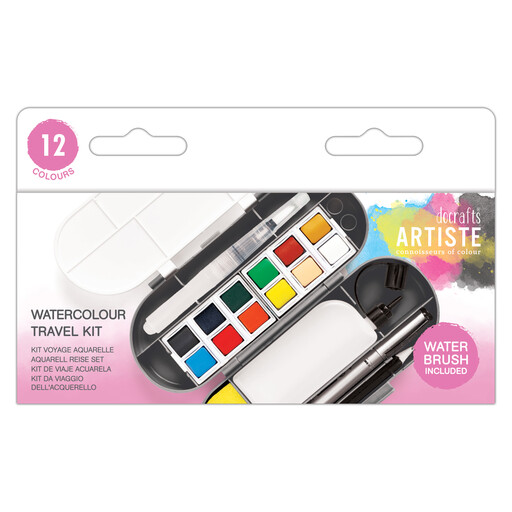
Why This Fits Their Persona: Sketchbook users, commuters, travellers and outdoor painters can carry a compact set for journalling, classes or painting away from a fixed workspace.
It lists the supporting accessories rather than presenting a paint-only kit as a complete setup.
Includes 12 watercolour pans, a water brush, palette, hand water bottle, sponges, pencil and needle point pen.
We have compiled a complete, real-time list of products that fully satisfy these strict selection criteria and UK safety regulations.
A few carefully chosen accessories can improve convenience without creating unnecessary clutter:
A practical beginner setup usually includes one paint type, several paint brushes, a palette or mixing surface, suitable paper or boards and a water container. An art starter set can reduce the risk of buying incompatible items, while a paint-only set gives you more freedom to choose specialist brushes and surfaces.
Water-based paints can generally be cleaned from tools with water, particularly before they dry. Acrylic paint should be washed from brushes immediately because dried acrylic becomes water-resistant. Gouache and watercolour can usually be reworked with water, but cleaning and storage instructions still matter.
Seal tubes and paint cases after use, store them away from direct sunlight and clean brushes promptly. Reshape brush bristles after washing and allow them to dry fully before storage. For palettes, remove residue and ensure the surface is dry before folding or closing it. These simple habits can reduce waste and help preserve your painting supplies for longer.