
24/7 Customer Support

Free returns

Same-day & Next-day Delivery

Quality Guaranteed

Unlock Your Welcome Offers: FREE Delivery | Up to 80% OFF | Free 30-day JoyPlus trial
Download the APP
Choosing art pencils can seem straightforward until you compare graphite grades, colour counts, core types and accessories. A large tin is not automatically suitable for your project, while a low-priced set may lack the control or durability needed for regular use.
Whether you are an illustrator, student, hobbyist, parent, teacher or designer, the right choice depends on how you plan to work. Use this guide to compare art pencils, coloured pencils, graphite pencils and specialist formats before you buy.
A 72-colour set gives you more shades to explore, but it may include colours you rarely use. Beginners may benefit more from a compact colouring pencil set with essential tones, while illustrators and adult colouring enthusiasts may appreciate a broader palette for layering and blending.
Check whether the set includes a useful mix of warm, cool, neutral and skin-tone colours rather than focusing only on the number printed on the packaging.
Graphite pencils are designed for line work, tonal studies and technical drawing. They are not a substitute for coloured pencils or watercolour pencils. Pastel pencils create a dry, dusty mark and require different paper and sharpening care.
Likewise, water-soluble coloured pencils can create wash effects, but they do not behave exactly like traditional watercolour paints. Match the pencil type to the effect you want before paying for features you may not use.
A pencil that feels uncomfortable can become tiring during long drawing sessions. Thin barrels may suit precise adult work, whereas triangular or thick-bodied pencils can be easier for younger children to control.
Core protection also matters. Look for product information describing a break-resistant lead or bonded core, but remember that excessive pressure, poor sharpening and unsuitable sharpeners can still cause breakage. A tin or case helps protect pencils and makes it easier to keep colours organised.
Graphite pencils are graded from harder, lighter leads to softer, darker ones. H grades generally produce paler, finer marks, while B grades create deeper tones and are often preferred for expressive sketching and shading. HB sits around the middle for general writing and drawing.
A drawing pencil set with several grades is more versatile than a single HB pencil. For technical drawing, architecture and controlled outlines, a range of harder grades can be useful. For portraits, comic shading and tonal studies, softer grades are usually more suitable.
For coloured pencils, assess the stated lead diameter, pigment description and recommended surfaces. A thicker core can cover larger areas more quickly, while a fine point supports detail. Look for information about layering, blending, water resistance or lightfastness if you are creating artwork for display.
Pastel pencils are suited to dry blending and textured effects. They may also be partially water-soluble, but pastel dust requires sensible handling and ventilation. Watercolour pencils should be used with paper designed to tolerate moisture, particularly when adding several wet layers.
For children’s colouring pencils, consider barrel shape, lead thickness and the manufacturer’s warnings. Younger users should be supervised, especially when pencils, sharpeners or small accessories are included. Products labelled as not toys should not be treated as playthings.
For adults and students, a set containing an eraser, sharpener, wiper or case can reduce the need to purchase extras separately. An acrylic art starter set may also include sketching pencils, brushes, boards and a palette, making it more suitable for mixed-media work than a pencil-only pack.
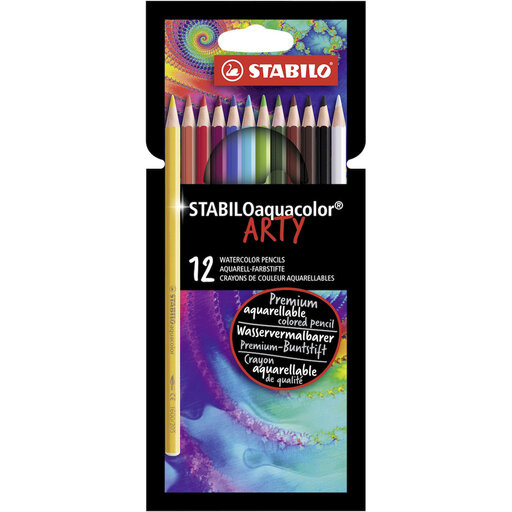
Why This Fits Their Persona: A compact option for UK students, casual hobbyists and beginners who want to try both dry colouring and simple watercolour effects without buying separate painting materials.
The 12-colour format avoids paying for a large palette before you know which techniques you prefer. Its water-soluble design is clearly suited to wet and dry use.
Includes a 2.8mm water-soluble lead and can be used with a brush on dry or damp paper.
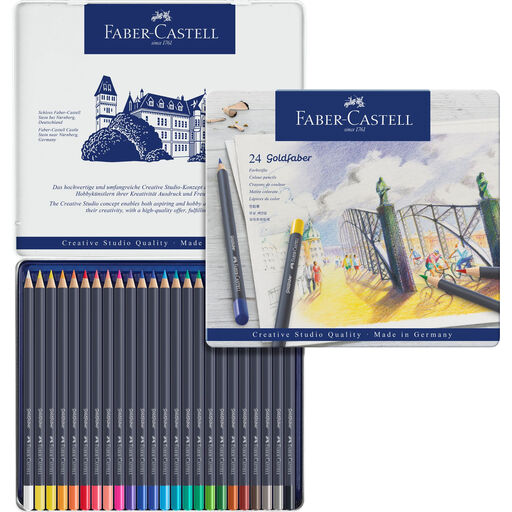
Why This Fits Their Persona: Suitable for illustrators, designers and hobby artists who want a practical set for regular drawing, layering and finished pieces.
The product information specifies a 3.3mm lead and resistance to smudging and water, helping buyers assess construction rather than relying on colour-count marketing.
The 24-colour tin supports layering and hatching, with a stated 3.3mm core and lightfastness information for display-oriented work.
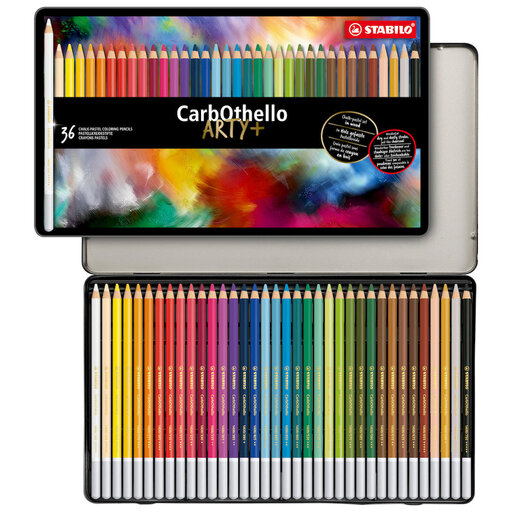
Why This Fits Their Persona: Designed for artists, portrait drawers and illustrators who specifically want pastel-style marks, fine details and a broader colour selection.
It is clearly a chalk-pastel pencil rather than a conventional colouring pencil, so buyers can choose it for its intended dry, dusty stroke instead of an unsuitable generic set.
The 36-colour tin offers blendable, partially water-soluble pastel cores that can be sharpened to a fine point.
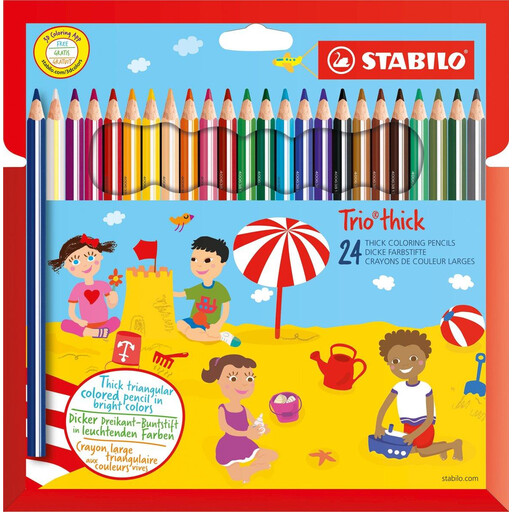
Why This Fits Their Persona: A practical match for primary-age children, classrooms and parents seeking a comfortable shape for drawing and colouring at home or school.
The triangular barrel and 4.2mm lead address grip and breakage concerns more directly than a standard slim pencil.
Includes 24 assorted colours, a thick 4.2mm lead and an ergonomic triangular design.
We have compiled a complete, real-time list of products that fully satisfy these strict selection criteria and UK safety regulations.
Yes, but the most suitable set depends on the activity. A 12-colour set is manageable for learning basic blending, while graphite drawing pencil sets are useful for practising tone and form. Beginners interested in painting may prefer an acrylic art starter set containing pencils, brushes, paints and surfaces.
Lifespan varies according to core softness, sharpening frequency, pressure and storage. Hard graphite pencils generally lose material slowly, while soft graphite, pastel and heavily used coloured pencils require more frequent sharpening. A break-resistant core can help reduce waste, but careful handling remains important.
Specialist paper is recommended. Watercolour pencils work more predictably on paper designed to handle moisture without excessive buckling. Pastel pencils usually perform better on textured or pastel-friendly surfaces, which help hold dry pigment. For graphite pencils, choose paper according to the level of detail and shading you want to achieve.