
24/7 Customer Support

Free returns

Same-day & Next-day Delivery

Quality Guaranteed

Unlock Your Welcome Offers: FREE Delivery | Up to 80% OFF | Free 30-day JoyPlus trial
Download the APP
Choosing art pencils can look straightforward until you compare lead hardness, pigment performance, surface compatibility and set contents. A low-priced box may contain many colours but offer limited shading control, while a specialist pencil may be unsuitable for children or everyday classroom use.
This guide from the Joybuy Product Recommendation Officer explains what to check before buying, common marketing pitfalls and which types of art supplies suit different creative projects in the UK.
A 36- or 72-colour set can appear economical, but unused shades may increase the cost per usable pencil. Beginners often need a practical selection of primary, secondary, neutral and skin-tone colours rather than a large collection of near-identical shades.
Check whether the set supports your intended techniques, such as layering, blending, hatching or colour mixing. A smaller set with a durable core may be more useful than a larger set that breaks easily during sharpening.
Standard coloured pencils do not automatically produce watercolour effects. For wet techniques, look for terms such as water-soluble, aquarellable or watercolour pencil. These leads are designed to release pigment when activated with a damp brush.
However, water-soluble pencils still require suitable paper. Thin printer paper can buckle or pill when wet, so use watercolour paper or a mixed-media pad when applying several washes.
The lead diameter affects both durability and control. A thin lead can create precise details, while a thicker or chunky core is better for broad areas and may be more comfortable for younger users. Barrel shape also matters: triangular designs and grip features can help with handling during longer drawing sessions.
Marketing descriptions may use phrases such as “unbreakable” or “professional quality”. Treat these cautiously. Look instead for specific information, including lead size, hardness range, bonding method, wood source and intended surface.
For graphite pencils, grades usually run from harder H pencils to softer B pencils, with HB sitting around the middle. Harder grades create lighter, finer marks suitable for technical drawing and initial outlines. Softer grades produce darker tones and are useful for expressive sketching and shading.
A mixed artist pencil set with several grades is more versatile than a box containing only HB pencils. For children and general school use, HB drawing pencils are usually practical because they provide balanced lines without requiring specialist technique.
For coloured pencils, examine the core diameter and formulation. A 3.3 mm lead, for example, can provide a balance between detail and smooth colour laydown. Chunkier wax-based pencils are suitable for covering large areas, craft paper and some non-paper surfaces, but they may offer less fine-line control.
If you want colouring pencils for illustration, check whether they are described as water-resistant, smudge-resistant or water-soluble. These are different properties:
Do not assume that a highly pigmented pencil is automatically lightfast. If artwork is intended for display, check whether the manufacturer provides lightfastness information.
UK shoppers buying art supplies for children should check the recommended age, small-part warnings and supervision requirements. Pencils, sharpeners and accessories can present choking or handling risks for young children.
Store pencils in a dry place away from excessive heat. Pastel and graphite dust should not be intentionally inhaled, and hands should be washed after using pigment-heavy materials. For acrylic painting sets, clean brushes and palettes promptly because dried acrylic paint becomes water-resistant.
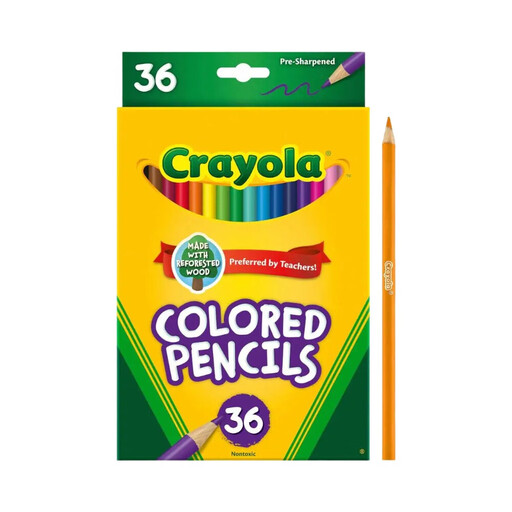
Why This Fits Their Persona: A broad colour selection suits home colouring, school projects and beginners building an art supplies collection.
The set lists thick cores designed to resist breaking and wood made from reforested materials, rather than relying only on a high colour count.
36 colours; pre-sharpened pencils; suitable for layering and blending; recommended for children aged five and over.
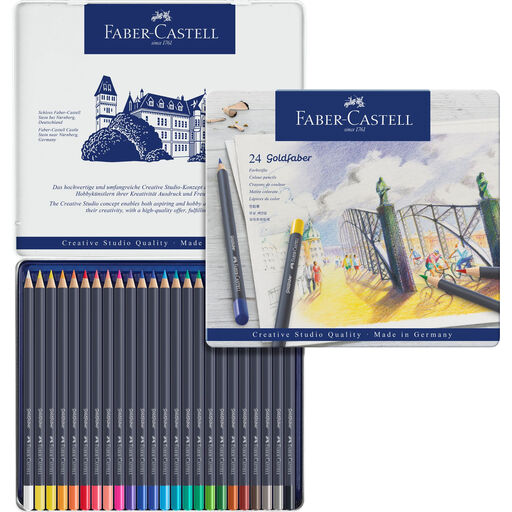
Why This Fits Their Persona: Illustrators and hobbyists who value controlled colour work can use this set for detailed drawing, sketching and finished pieces.
Its stated 3.3 mm lead and break-resistant construction give buyers measurable details to compare instead of vague durability language.
24 colours; described as smudge-resistant and water-resistant; supports layering, hatching and blending.
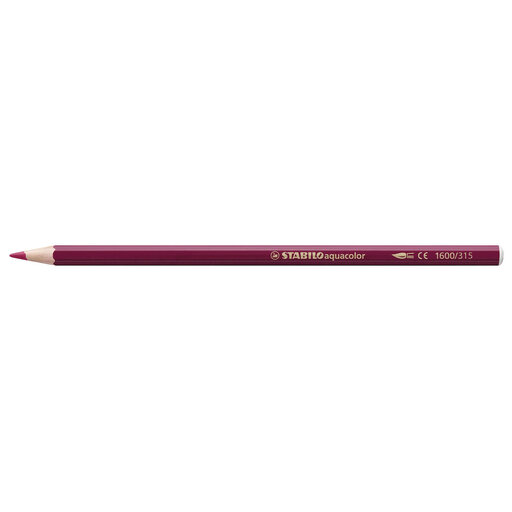
Why This Fits Their Persona: Students, journalers and hobby artists can switch between dry colouring and brush-activated effects without buying separate watercolour sets.
The water-soluble specification clearly identifies its wet-use function, reducing the risk of buying ordinary colouring pencils for watercolour work.
36 colours; 2.8 mm lead; usable dry or wet on dry or damp paper; pigment can also be lifted directly from the lead with a brush.
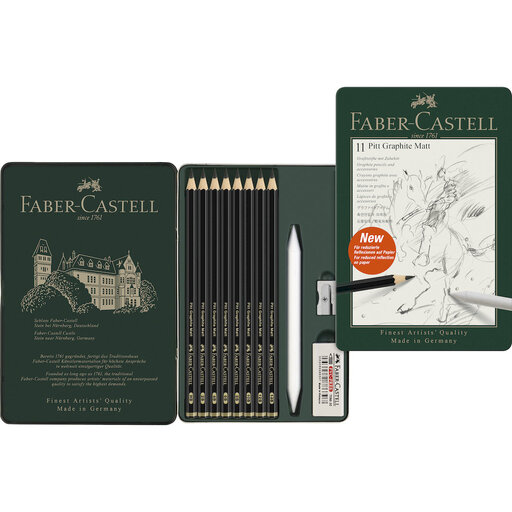
Why This Fits Their Persona: Portrait artists, illustrators and frequent sketchers can work across fine lines, tonal studies and deep shading.
The stated HB-to-14B range provides a clear tonal specification, avoiding the uncertainty of a graphite set with unspecified grades.
Includes graphite pencils, wiper, eraser and sharpener in a storage tin; described as ultra-matt with reduced reflection.
Some projects need a wider selection of art supplies. An acrylic painting set can provide paint, brushes, palette tools and boards for beginners who want to move beyond drawing. The Artiste Acrylic Starter Set includes 12 acrylic paint tubes, sketching pencils, brushes, an eraser, sharpener, palette, palette knife and three A4 painting boards.
For portable painting, a watercolour set with pans, a water brush and mixing palette may be more convenient than carrying separate equipment. Always check the surface recommendations, cleaning instructions and age warnings before use.
We have compiled a complete, real-time list of products that fully satisfy these strict selection criteria and UK safety regulations.
Yes, but the right type depends on the project. HB graphite pencils are suitable for basic drawing and sketching, while coloured pencils support colouring and illustration. Watercolour pencils are useful if you want to combine pencil marks with washes. Beginners should prioritise a manageable colour range, clear specifications and a comfortable barrel.
Lifespan depends on how frequently they are used, sharpening style and pressure applied. A break-resistant core can reduce wastage, but no pencil is immune to damage. Use a sharpener suitable for the pencil type and avoid twisting the barrel aggressively. Store pencils in a dry case to protect the wood and lead.
Graphite pencils work on most drawing paper, although textured paper can create different shading effects. Coloured pencils generally perform well on smooth or lightly textured paper. Watercolour pencils require paper that can tolerate moisture, such as watercolour or mixed-media paper. For acrylic painting, use a compatible board, canvas or other recommended surface.