
24/7 全天候客户支持

免费退货

当日/次日达

品质保障

开启新人专享福利: 全场免邮 | 低至 2 折 | 免费试用 30 天 JoyPlus 会员
下载 Joybuy
Buying art pens can seem straightforward until ink feathers through your notebook, nibs lose their shape or a supposedly versatile marker works only on one type of surface. For UK artists, students, crafters and journal users, the right choice depends less on the colour count and more on how the pen behaves with your paper, project and storage habits.
This guide explains the specifications worth checking before you buy, highlights common marketing pitfalls and matches several options to distinct creative needs.
A large set of coloured pens may look attractive, but a broad palette does not guarantee useful performance. Check whether the set includes the nib styles you actually need, such as a fine point for outlines, a brush tip for lettering or a round tip for filling.
A smaller set with dependable line control may be more useful for everyday sketching than a large collection with duplicated shades.
Ink performance depends on the surface and the medium used over it. A pigment ink may resist water on suitable paper, while water-based felt tip pens can blend or feather when exposed to moisture. Acrylic paint pens may be waterproof once dry, but they still need suitable preparation and curing time on materials such as glass, wood or ceramic.
Always check the manufacturer’s listed surfaces and test a spare area first.
Fine tips can become blunt if pressed too firmly, while brush nibs may split when used on rough paper. Some paint markers require shaking and priming before use, whereas fineliners are ready to write immediately.
Replacing caps securely is essential. Storing pens horizontally is also recommended for several ink types, particularly paint markers and certain felt tip pens.
The nib determines the type of mark you can make:
If you use rulers or stencils, a metal-cased or metal-framed tip can help protect the fibre point from side pressure.
Pigment ink is generally selected for strong line definition and resistance to fading or water, but the exact result depends on the paper and conditions. Dye-based ink often provides vivid colour but may behave differently when wet.
For notebooks and planners, look for wording such as smudge-resistant, quick-drying or designed to reduce bleed-through. This is particularly important for left-handed writers and thin UK exercise-book or Bible-style paper.
Acrylic paint pens use opaque paint-like ink rather than conventional writing ink. They normally require shaking, pressing the nib to start flow and replacing the cap immediately after use.
Before purchasing, decide where the pens will be used:
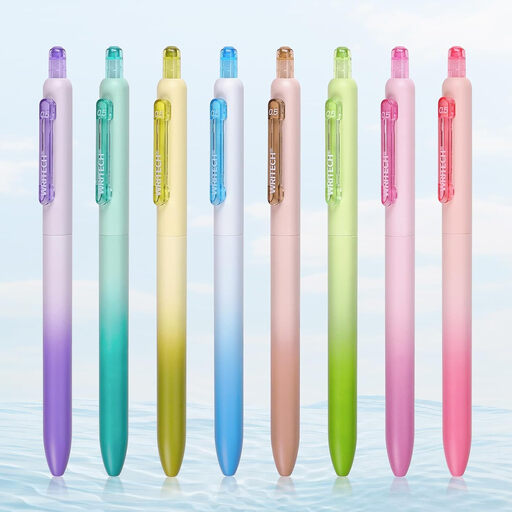
Why This Fits Their Persona: The eight-colour retractable set covers note-taking, colour-coding and casual drawing without requiring several different pen types. It suits students, new journal users and home planners.
Its listed 0.5mm point, quick-dry ink and retractable design make the everyday use case clear rather than relying only on a large colour count.
Eight assorted colours, silent click mechanism, ribbed matte barrel and fine twin-ball tip.
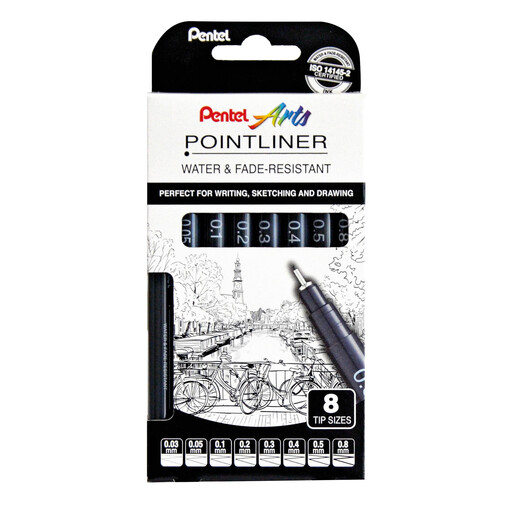
Why This Fits Their Persona: Illustrators, designers and serious sketching enthusiasts can select from 11 tip sizes for outlines, shading and fine detail.
The specification identifies ISO 14145-2 certified water- and fade-resistant pigment ink, while the robust tip is designed to retain its shape.
Eight black fineliners, multiple tip-size options and compatibility with watercolour or dye-ink work.
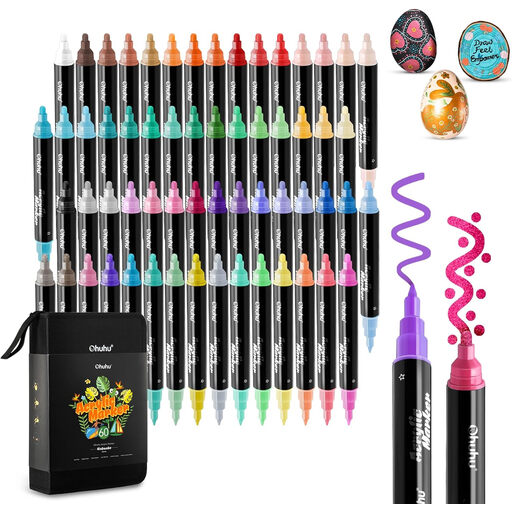
Why This Fits Their Persona: Crafters working across rocks, wood, fabric, ceramic, glass, plastic, paper and canvas receive separate fine and round tips for detail and coverage.
The surface list and preparation instructions are stated clearly; the markers also include replacement tips rather than treating disposability as the only option.
60 colours, including metallic and neon shades, dual tips and water-based high-opacity ink.
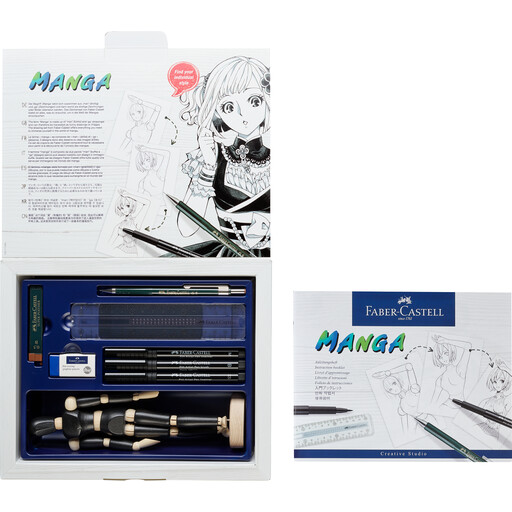
Why This Fits Their Persona: Manga creators and illustrators can work with six nib varieties for line variation, character details and expressive outlines.
The set specifies pigmented, waterproof, acid-free and pH-neutral ink, giving buyers clearer information than an unqualified “permanent” label.
Six nib varieties and fade-resistant pigmented ink listed for manga and illustration work.
We have compiled a complete, real-time list of products that fully satisfy these strict selection criteria and UK safety regulations.
Many art pens work well in notebooks, but paper quality varies. Fineliners and gel pens with controlled ink flow are usually practical for writing and light drawing. Test coloured pens on a back page first to check show-through, feathering and drying time.
Lifespan depends on ink capacity, frequency of use, pressure and whether the caps are replaced correctly. A fineliner used for occasional journaling may last considerably longer than one used for dense colouring. Paint markers also need correct priming and storage to help maintain ink flow.
Do not assume they are washable once dry. Acrylic paint pens are intended to create durable marks on listed surfaces, and ink may stain fabric or other materials. Use protective covering, follow the product instructions and test before starting a finished project.