
24/7 Customer Support

Free returns

Same-day & Next-day Delivery

Quality Guaranteed

Unlock Your Welcome Offers: FREE Delivery | Up to 80% OFF | Free 30-day JoyPlus trial
Download the APP
Choosing art pens and colouring pencils can seem straightforward until ink bleeds through a notebook, a marker dries after a few uses or a child struggles to hold a pencil comfortably. Product descriptions often focus on colour counts and attractive packaging, but these details do not always indicate whether a set suits your actual project.
This guide filters the useful specifications from the marketing noise, helping parents, students, journalers, crafters and artists choose pens and pencils with fewer costly mistakes.
A 100-colour stationery set may look economical, but it can be wasteful if most shades are rarely used. Check whether the set includes practical basics, replacement nibs, a storage case or a swatch card. For children and beginners, a smaller set with comfortable tools may be more useful than a large collection that is difficult to organise.
Paper markers, acrylic paint pens, chalk markers and glass markers are designed for different materials. Water-based dual-tip art markers are generally suited to paper, while acrylic markers may be intended for glass, wood, ceramics, fabric and other craft surfaces. Wet-erase chalk markers should be used on compatible non-porous surfaces, not porous painted boards or untreated wood.
Always check the product instructions before writing on a shop sign, window, ceramic item or school display. Test a small, hidden area first, particularly when removal matters.
Many pens dry out because their caps are not secured or they are stored incorrectly. Some markers should be stored horizontally, while retractable gel pens need their tips protected when not in use. A set with replacement nibs can be more practical for frequent crafters, but it still requires correct storage and regular recapping.
The nib determines how a pen behaves. A 0.4mm or 0.5mm fine tip is suitable for journaling, annotations and detailed manga drawing pens. A brush tip offers varied line width for lettering, shading and colouring books. Chisel tips are useful for headings and signage because they can produce broad coverage and narrower edges.
Dual-tip art markers combine two functions in one barrel, but they may be longer and require more space in a pencil case. For schoolwork or travel, compact felt-tip pens or gel pens may be easier to carry.
Ink characteristics should match the intended use:
Descriptions such as “waterproof”, “lightfast” or “non-toxic” should be read alongside the full usage and safety instructions. These terms do not mean every pen is suitable for children, skin contact, food-contact surfaces or all outdoor conditions.
A thick triangular barrel can help younger children maintain a stable grip. Jumbo coloured pencils are also less fiddly for filling large areas. For older students and illustrators, a slimmer barrel may provide more control for fine lines.
Pay attention to small-parts warnings, recommended ages and supervision advice. The UK product listing and packaging should take priority over general assumptions, especially for stationery sets containing caps, replacement nibs or decorative components.
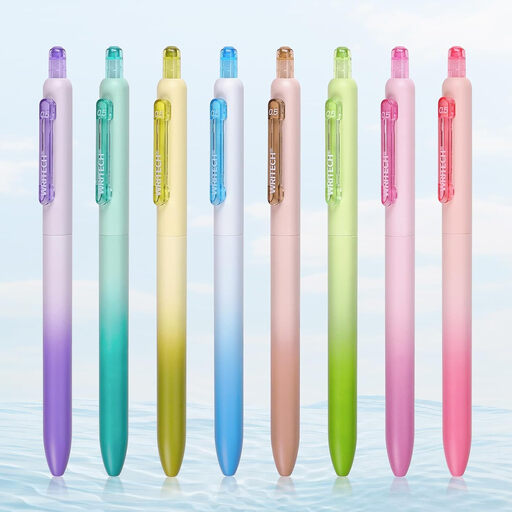
Why This Fits Their Persona: An accessible option for students, journalers and anyone starting a colour-coded note-taking system without buying a large art collection.
The 0.5mm fine point and eight-colour selection keep the set focused, while quick-dry ink is specified to reduce smears during note-taking.
Retractable silent-click design, 0.5mm tips and a ribbed matte barrel for everyday writing.
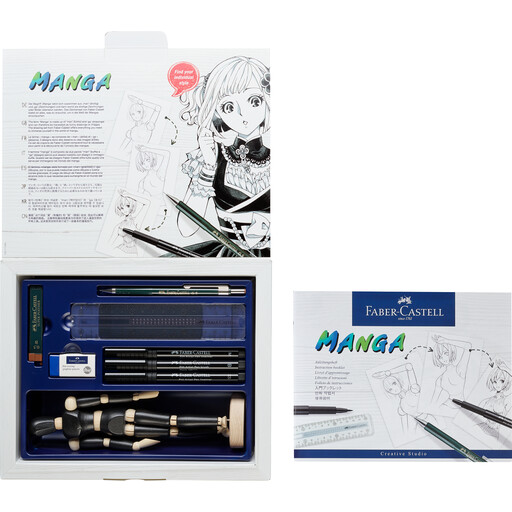
Why This Fits Their Persona: Suits illustrators and manga enthusiasts who need varied line control for outlines, facial details and expressive drawing.
The set provides six nib varieties, avoiding the limitation of buying a single-width drawing pen for every line.
Pigmented waterproof ink is specified, with acid-free and pH-neutral ink details for illustration work.
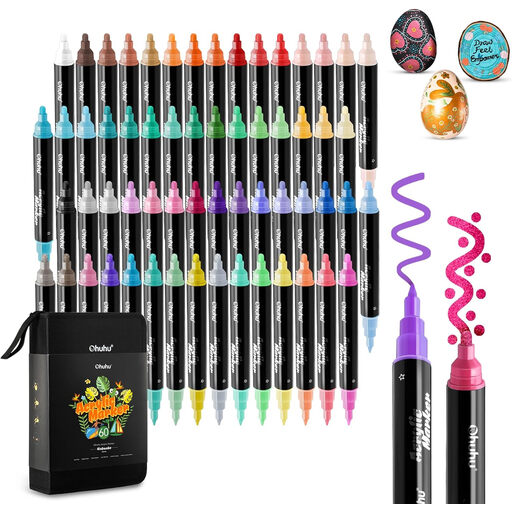
Why This Fits Their Persona: A practical match for regular crafters, small business owners making displays and hobby artists working across multiple surfaces.
The dual tips reduce the need to buy separate fine and broad markers, while replacement tips address ordinary nib wear.
Sixty colours, fine and round tips, and stated suitability for wood, fabric, ceramic, glass, plastic, paper and canvas.
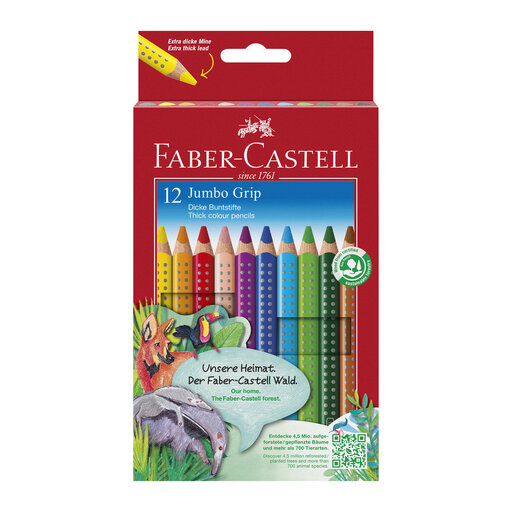
Why This Fits Their Persona: Designed around handling comfort, making it suitable for younger children, classroom activities and early drawing practice.
The jumbo triangular barrel and soft-grip zone address the common problem of small hands finding slim pencils difficult to control.
Water-soluble pigments can be brushed with water, and the extra-thick lead is specified as break-resistant through SV bonding.
We have compiled a complete, real-time list of products that fully satisfy these strict selection criteria and UK safety regulations.
Suitability depends on the specific product, age guidance and components. Look for clearly stated age recommendations and small-parts warnings. Children should use products according to the packaging instructions, with adult supervision where advised. Do not assume that a “non-toxic” description makes a product suitable for every age or use.
Replace caps firmly immediately after use and store markers as instructed. Keep dual-tip art markers and felt-tip pens away from direct heat and sunlight. For paint markers, shake and prime the nib only as directed. Retractable gel pens should be clicked closed after writing, while products with replacement nibs should be kept in their case.