Finding the perfect set of art pens can feel like a daunting task. The market is filled with countless options, each promising different results for sketching, lettering or illustrating. Whether you are a professional artist preparing a detailed commission or a hobbyist starting a new journal, the right pen is crucial. This guide is designed to cut through the clutter, helping you understand the key features to look for and providing clear, practical recommendations to suit your creative projects.
We will explore the different types of drawing pens available, from precise fineliners to expressive brush pens, so you can make an informed choice without the marketing hype.
How to Select the Right Art Pens for Your Project
Before diving into specific products, it’s helpful to understand what distinguishes one pen from another. Considering these factors will help you narrow down your options and find the ideal tool for your needs.
1. Understand the Tip Type
The tip of the pen dictates the kind of line you can create. Different projects call for different tips:
- Fineliner Pens: These have a fine, needle-point tip, usually encased in metal for durability. They are ideal for detailed work, technical drawings and creating crisp outlines. Their consistent line width makes them a staple for architects, illustrators and anyone needing precision.
- Brush Pens: Featuring a flexible, brush-like nib, these pens allow for a variation in line width based on the pressure you apply. This makes brush pens for lettering and modern calligraphy a popular choice. They can create both thick, bold strokes and delicate, thin lines in a single movement.
- Marker and Metallic Pens: These often have felt or plastic nibs and come in a wide range of colours and finishes. Metallic marker pens are particularly useful for adding decorative accents, working on dark-coloured paper or bringing a unique shimmer to craft projects and illustrations.
2. Consider the Ink Properties
The ink is just as important as the tip. The main types you will encounter are:
- Pigment-Based Ink: This ink contains solid pigment particles suspended in a liquid. It is known for being archival, meaning it is lightfast (resistant to fading) and permanent once dry. Waterproof ink pens typically use pigment-based ink, making them perfect for artists who use watercolour washes over their line work.
- Dye-Based Ink: This ink consists of colourants dissolved in a liquid. It often produces very vibrant colours but can be less permanent and more prone to fading over time compared to pigment ink. Many water-based brush pens use dye-based inks, which are excellent for blending.
- Water-Based vs. Alcohol-Based Ink: Water-based inks are odourless and easy to blend with water, but they can sometimes cause paper to buckle. Alcohol-based inks, common in graphic markers, dry very quickly and are waterproof, allowing for smooth layering without damaging the paper surface.
Top Art Pen Recommendations
Here are a few standout options that cater to a range of artistic applications, from technical sketching to creative lettering.
Faber-Castell Ecco Pigment Fineliner, Black, Wallet of 4
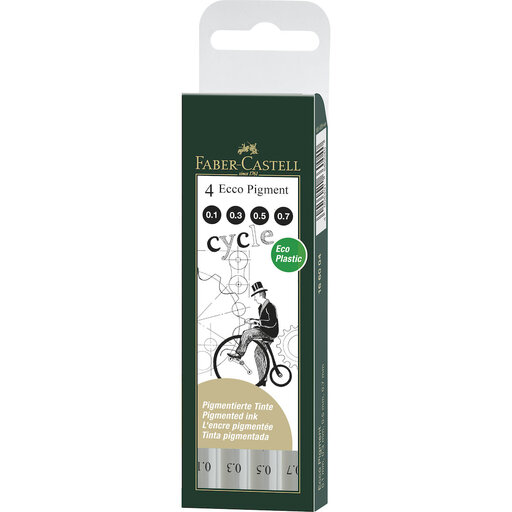
- Why It Stands Out: This set is a workhorse for anyone who needs reliable, precise lines. The special pigmented ink is both waterproof and lightfast, ensuring your work remains sharp and won't fade. The long, metal-clad tips are specifically designed for accuracy when working with rulers and stencils, making them excellent pens for sketching and technical work.
- Pros:
- Set includes four essential line widths: 0.1mm, 0.3mm, 0.5mm and 0.7mm.
- Waterproof and lightfast ink is suitable for archival purposes.
- Durable metal-clad tips prevent breakage and ensure consistent ink flow.
- Barrels are made from recycled plastic.
- Who is it for: Professional artists, illustrators, architects and designers who require high-precision fineliner pens for detailed drawings and outlines.
Ohuhu 12 Colour Glitter Metallic Shimmer Marker Pens
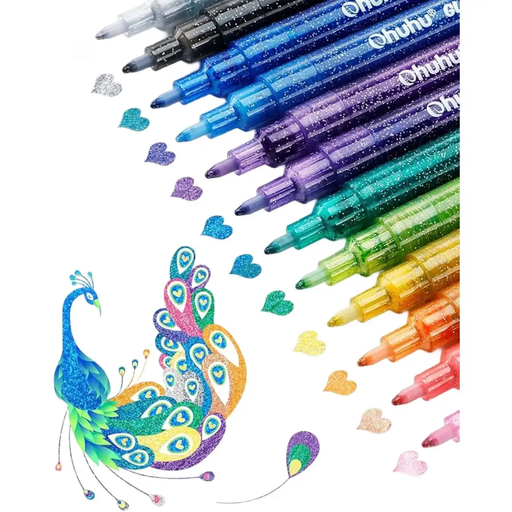
- Why It Stands Out: These metallic marker pens offer a brilliant shimmer and high opacity, making them particularly effective on dark or coloured paper. The extra-fine 0.8mm tip allows for detailed work, while the water-based ink is quick-drying and waterproof. The ink is also non-toxic and acid-free, making it a safe choice for crafters of all ages.
- Pros:
- Vibrant set of 12 metallic colours.
- Fine tip is ideal for intricate details and highlights.
- Waterproof, quick-drying ink with high opacity.
- Non-toxic and acid-free, conforming to ASTM-4236 safety standards.
- Who is it for: Hobbyists, crafters and students engaged in scrapbooking, card making and journaling. They are also great for artists wanting to add a decorative, metallic finish to their projects.
WRITECH Arts Sign Brush Pen 12 Assorted Multi Colours
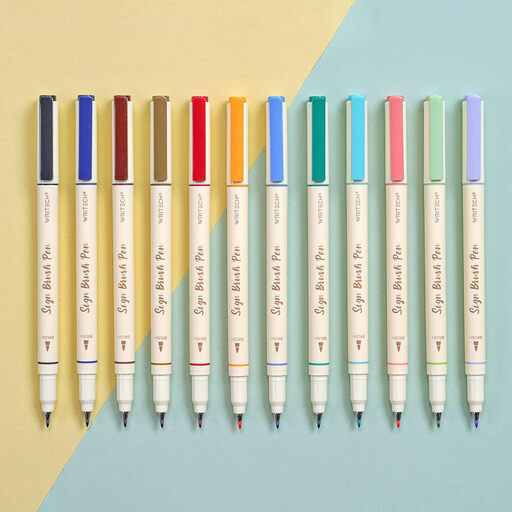
- Why It Stands Out: These pens feature a flexible, pressure-sensitive soft brush tip that gives you excellent control over line variation. This makes them a versatile tool for everything from hand lettering and calligraphy pens to doodling and sketching. The 12 pastel-coloured, water-based inks are blendable, allowing you to create beautiful gradients and watercolour-like effects.
- Pros:
- Flexible felt brush tip for variable line weights.
- Comes in 12 richly saturated pastel colours.
- Water-based ink can be blended with water for shading effects.
- User-friendly design is well-suited for beginners in brush lettering.
- Who is it for: Aspiring calligraphers, journal keepers and illustrators who want the expressive qualities of a brush in a convenient pen format.
Looking for More Options?
If your work requires the permanence and fade-resistance of pigment-based inks, there are many other choices available. To discover a wider variety of artist pens with archival qualities, browse our full range of pigment pens to find the perfect match for your needs.
Frequently Asked Questions
What is the difference between drawing pens and regular pens?
The main differences lie in the ink and tip. Drawing pens typically use archival-quality ink, such as pigment-based ink, which is waterproof, lightfast and acid-free to ensure the longevity of artwork. They also come in a much wider variety of tip sizes and types (e.g., fineliner, brush, chisel) to accommodate different artistic techniques, unlike standard ballpoint or gel pens designed for writing.
Can you use art pens for calligraphy?
Yes, certain types of art pens are specifically designed for this. Brush pens for lettering are the most popular choice for modern calligraphy due to their flexible nibs that create varying line widths with pressure. Some artists also use broad-edged or chisel-tip markers for more traditional calligraphic styles.
How do I stop my fineliner pens from drying out?
To prolong the life of your fineliner pens, always replace the cap firmly and immediately after use to create an airtight seal. Storing them horizontally is generally recommended as it helps keep the ink evenly distributed and ready to flow to the tip. Avoid leaving them in direct sunlight or high temperatures, which can cause the ink to dry out more quickly.


