
24/7 Customer Support

Free returns

Same-day & Next-day Delivery

Quality Guaranteed

Unlock Your Welcome Offers: FREE Delivery | Up to 80% OFF | Free 30-day JoyPlus trial
Download the APP
Buying art pens and stationery can quickly become confusing. Colouring pens, brush pens and fineliners may look similar online, yet their tips, ink and paper compatibility can produce very different results. A large set is not automatically useful if the colours are difficult to organise, the nibs do not suit your technique or the ink bleeds through your notebook.
This guide explains the practical checks that matter before buying, followed by product recommendations matched to different creative routines.
A set with dozens of shades may appear good value, but colour variety does not compensate for unsuitable nibs. A fine point is useful for outlines and note-taking, while a brush tip is more suitable for expressive lettering and variable-width strokes. For large areas, a fibre-tip pen with a broader nib may be more efficient.
Consider the type of work you do most often before paying for a large collection of colouring pens.
Water-based ink can be useful for blending and watercolour-style effects, but the result depends on the paper. Thin notebook pages may show bleed-through, feathering or surface fluffing when repeatedly layered with wet ink.
For watercolour effects, use suitable watercolour paper. For everyday journalling, choose smoother paper and test a colour on a back page before starting a finished layout.
Fibre-tip pens, brush pens and drawing pens can dry out if caps are not replaced securely. Sets without a case may also become difficult to organise, causing frequently used colours to be lost or damaged. Retractable gel pens reduce the need for separate caps, while boxed or cased sets are more practical for students, travelling artists and shared craft spaces.
Match the nib to the intended task:
Check whether the ink is water-based, waterproof, quick-drying, blendable or acid-free. Water-based ink may be better for blending with water, while waterproof ink is more suitable when you need lines to remain stable under washes. However, waterproof does not mean the pen will work equally well on every surface.
If you are buying calligraphy pens or journalling pens, consider drying time and smudge resistance, particularly if you write with your left hand.
A5 notebooks with 80g paper can be convenient for school, office notes and light journalling, but heavier wet applications may require thicker paper. Watercolour travel kits should be paired with watercolour pads or paper designed for washes. For manga art pens and drawing pens, smooth paper can help preserve fine nibs and produce cleaner lines.
Also check safety information. Keep pens and paints away from children under three where small parts create a choking risk, and follow any manufacturer instructions regarding ink contact, ingestion and storage.
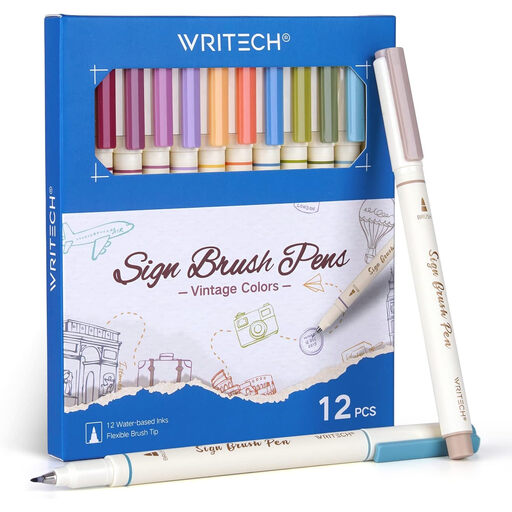
Why This Fits Their Persona: A 12-colour set offers a manageable starting point for beginners learning brush lettering, journalling or casual sketching without storing a very large collection.
The flexible felt brush tip provides variable line width, while water-based ink can be diluted with water for blending and shading.
12 assorted vintage colours; pressure-sensitive brush tip; suitable for calligraphy, doodling and journalling.
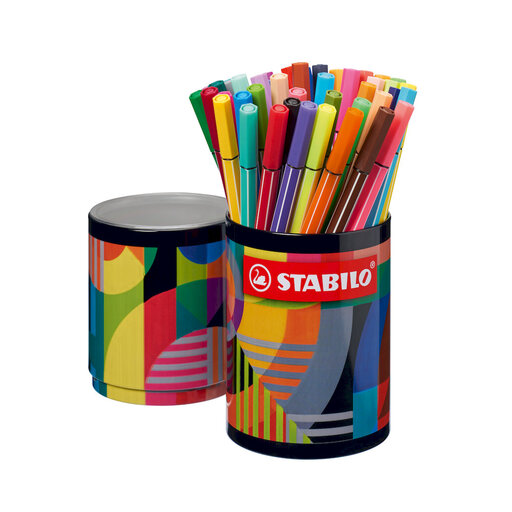
Why This Fits Their Persona: This larger tin suits artists and crafters who want a broad colour selection, including neon and pastel shades, for regular colouring and illustration projects.
The product specifies a robust approximately 1mm M-tip and water-based ink, so buyers can assess its intended uses rather than relying only on colour count.
45 assorted colours; approximately 1mm fibre tip; watercolour-style effects can be created with a brush, water and suitable paper.
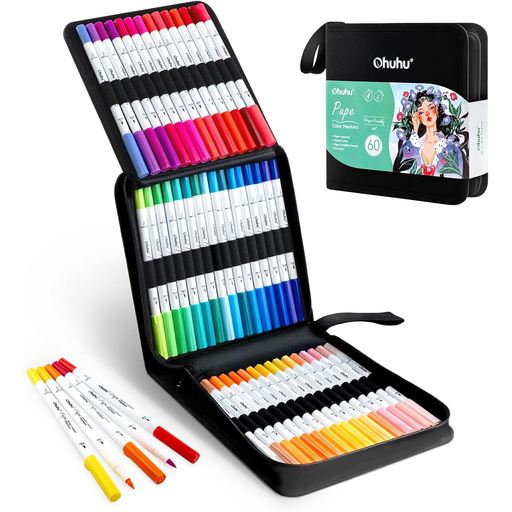
Why This Fits Their Persona: This set is aimed at users combining detailed line work with broad colouring, including adult colouring enthusiasts, journallers and illustrators.
The dual-tip format avoids buying separate fineliners and brush pens, while the product description specifies paper-friendly water-based ink.
59 colours plus one blender; 0.4mm fineliner and 1–5mm brush tips; supplied with a storage case.
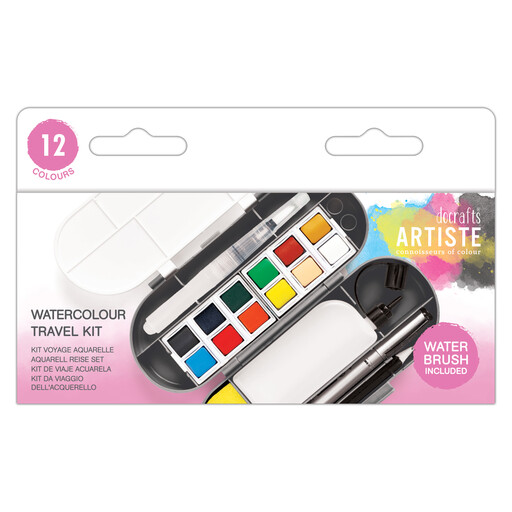
Why This Fits Their Persona: Its compact format suits sketching outdoors, creative journalling, art classes and anyone who wants several painting accessories in one portable kit.
It lists the accessories included, reducing the risk of buying a travel palette and then needing to source a brush, palette and water container separately.
12 watercolour pans; water brush, mixing palette, bottle, sponges, pencil and needle-point pen included.
We have compiled a complete, real-time list of products that fully satisfy these strict selection criteria and UK safety regulations.
Pens work more effectively when paired with suitable paper and storage. A pack of A5 notebooks can support school notes, office lists and journalling, while stitch binding allows the pages to lie flatter during use. For wet media, keep a separate watercolour pad to reduce show-through and buckling.
For manga illustrations, consider combining waterproof or water-resistant line work with a compatible wash medium. For calligraphy beginners, practise on smooth paper and use light pressure until the brush tip becomes easier to control.
A small brush pen set or a dual-tip set can be practical because it allows beginners to practise both fine lines and broader strokes. Fibre-tip pens are also straightforward for colouring and basic drawing. Choose a set with clearly stated tip sizes and replace caps securely after use.
Yes, but check the paper weight and ink behaviour first. Light water-based applications may work on standard notebook paper, while repeated layering can cause bleed-through or paper damage. Test the pen on a spare page before using it on a finished spread.
Keep pens capped, store them away from direct sunlight and follow the product instructions regarding horizontal or case storage. Watercolour pans should be allowed to dry before the palette is closed. Notebooks should be kept away from moisture to protect the paper and binding.