
24/7 Customer Support

Free returns

Same-day & Next-day Delivery

Quality Guaranteed

Unlock Your Welcome Offers: FREE Delivery | Up to 80% OFF | Free 30-day JoyPlus trial
Download the APP
Navigating the world of art pens can feel overwhelming. With endless options promising vibrant colours and perfect lines, it is easy to end up with a set that disappoints. As the Joybuy Product Recommendation Officer, my role is to help you sidestep common purchasing mistakes and find the right tools for your creative projects. Many pens look great on the shelf but fail in practice, leading to wasted money and frustration. Let's look at the key pitfalls to avoid.
Before you add any pens to your basket, be aware of these frequent issues that often aren't mentioned in the marketing material:
To avoid these traps, you need to look beyond the colour chart. Understanding a few core parameters will ensure you select pens for artists and hobbyists that are fit for purpose.
The ink is the most critical component. The main types you will encounter are water-based, alcohol-based and acrylic.
The tip, or nib, determines the kind of mark you can make. The shape and durability are crucial for your intended use.
Instead of providing a generic list, we have matched specific art pens to different creative needs, ensuring they address the common pitfalls.
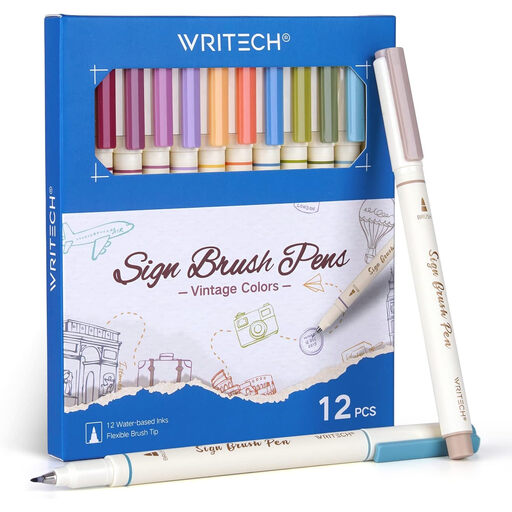
Why This Fits Their Persona: Perfect for those starting their journey in hand lettering or journaling in the UK. The vintage colour palette is on-trend for scrapbooking and bullet journals, while the pen's design is forgiving for beginners learning pressure control.
The water-based ink is less prone to bleeding through typical journal paper. Its flexible, wear-resistant felt tip avoids the inconsistency of cheaper brush pens, providing a smooth flow for practice.
Features a pressure-sensitive soft brush tip for variable line widths. The ink is blendable with water, allowing for a wide range of shades from a single pen.
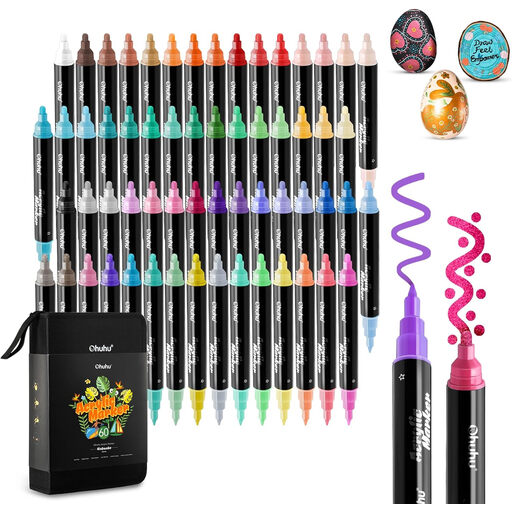
Why This Fits Their Persona: For the UK crafter who loves personalising everything from pebbles found on a beach walk to ceramic mugs and wooden signs. This set provides the versatility and permanence needed for diverse DIY projects.
The high-opacity acrylic ink provides excellent, non-streaky coverage, directly countering the inconsistent flow of cheaper paint pens. The ink is also waterproof and lightfast, ensuring creations last.
Features a dual-tip design (fine and round) for both detail and coverage. The extensive 60-colour set includes regular, metallic and neon shades, offering huge creative scope from one box.
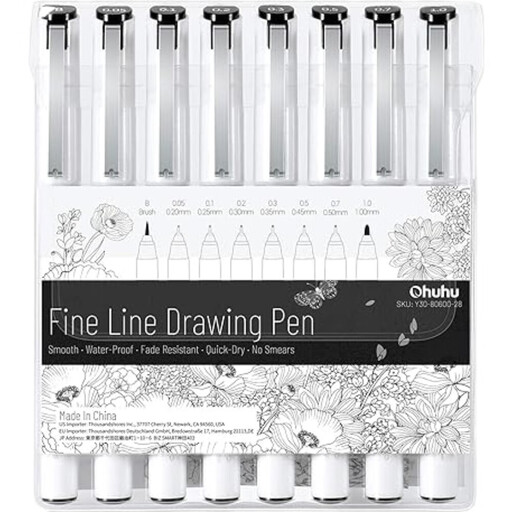
Why This Fits Their Persona: An essential toolkit for illustrators, architects or manga artists who rely on crisp, clean black lines. This set provides a full range of tip sizes for any level of detail, from broad strokes to micro-fine hatching.
The quick-drying, water-resistant black ink prevents smudging when colouring over the lines with other media like watercolour or alcohol markers. The well-made tips ensure a consistent, reliable ink flow without skipping.
Includes 7 different fineliner tip sizes (0.05mm to 1.0mm) plus a versatile brush pen. The ink is fade-proof and sunproof, ensuring artwork remains sharp and archival-quality.
We have compiled a complete, real-time list of products that fully satisfy these strict selection criteria and UK safety regulations.
The best practice is to always replace the cap securely and immediately after use, ensuring you hear a 'click'. For dual-tip pens, make sure both ends are capped tightly. Storing pens horizontally is also recommended, as it helps keep the ink evenly distributed and prevents it from pooling at one end, which can cause one tip to dry out.
The main difference is the finish and the surfaces they work on. Water-based pens are like traditional ink; they soak into paper and are great for blending and colouring. Acrylic pens dispense liquid paint that sits on top of a surface and dries into a solid, opaque layer. This makes acrylics suitable for non-porous surfaces like glass, plastic and rocks, whereas water-based inks would simply wipe off.
Yes, but you must use the right type. Acrylic paint pens are often suitable for fabric. After the ink has fully dried, you typically need to heat-set the design by ironing it (with a protective cloth between the iron and the fabric) to make it permanent and washable. Always check the manufacturer's instructions, as not all acrylic inks are formulated for textiles.