
24/7 全天候客户支持

免费退货

当日/次日达

品质保障

开启新人专享福利: 全场免邮 | 低至 2 折 | 免费试用 30 天 JoyPlus 会员
下载 Joybuy
Choosing art and stationery pens can be surprisingly difficult. Product pages often focus on colour counts and creative possibilities, while leaving out details that affect everyday use. A large set is not automatically suitable for your paper, surface or drawing style.
Before buying, watch for three common traps:
The right choice depends on tip design, ink behaviour, surface compatibility and pack size, rather than the number of colours alone.
For precise writing, hatching and small illustrations, look for fineliner pens with a stated line width. A 0.4mm tip is a practical middle ground for notes, rulers, templates and detailed sketching. Manga drawing pens may offer several nib sizes so you can vary line weight between outlines, facial details and shading.
Felt-tip pens and medium-point colouring pens create more noticeable lines, making them suitable for headings, children’s artwork, journalling and bold illustrations. For filling areas or calligraphy-style lettering, a brush tip or chisel tip provides more variation than a fixed fine nib.
Water-based markers are generally suited to paper and can be easier to clean than solvent-based alternatives. However, “washable” does not mean that ink will never transfer or stain. Test a colour on spare paper before using it in a finished journal or school project.
For notebooks, check whether the product specifies smudge resistance or reduced bleed-through. Thin paper may still show colour on the reverse, especially with repeated layering. Heavyweight mixed-media or watercolour paper is more appropriate when blending water-based ink.
If you need durable lines, waterproof markers or pigment fineliners may be more suitable. Allow the ink to dry fully before adding watercolour or another wet medium, and follow the product guidance rather than assuming every waterproof pen is compatible with every surface.
Acrylic paint pens are designed for projects involving materials such as wood, rocks, glass, ceramics, plastic, paper and canvas. Their opaque coverage can be useful on darker backgrounds. Many require shaking and pressing the nib several times on scrap material to start ink flow.
For windows, mirrors and menu boards, chalk markers can create bright lines while allowing wet removal from suitable non-porous surfaces. Always check the surface first. Porous materials can absorb the ink, making clean-up difficult even when the marker is described as wet-erase.
Also consider storage. Replace caps immediately, keep pens away from excessive heat and store them as directed. Some products recommend horizontal storage, while paint markers should be kept tightly capped to reduce drying.
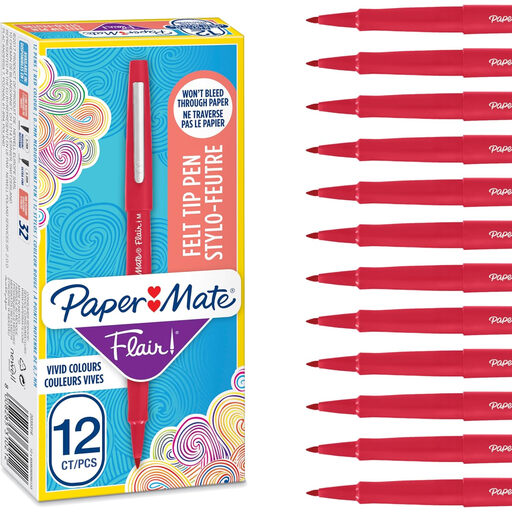
Why This Fits Their Persona: A straightforward option for students, planners and casual creative work on paper, particularly when bold lines are more useful than technical precision.
The medium felt tip is clearly specified, so it is not being positioned as a fine-detail pen. Its intended paper-based use helps avoid choosing it for hard, non-porous surfaces.
Medium point, smudge-resistant ink and a design intended to reduce bleed-through on paper.
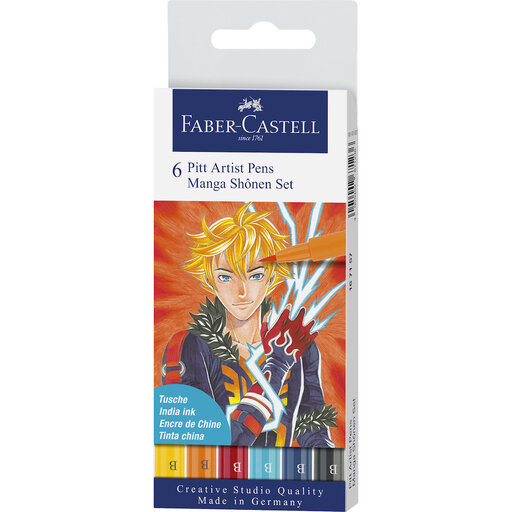
Why This Fits Their Persona: A compact choice for illustrators and manga enthusiasts who prefer pigment-based lines and several nib formats rather than a large general-purpose colour set.
The set states its waterproof, acid-free and pH-neutral ink properties, helping buyers distinguish line-work pens from ordinary colouring pens.
Six nib varieties and pigmented, waterproof ink specified for manga projects and detailed drawing.

Why This Fits Their Persona: Suitable for crafters working across rocks, wood, ceramic, glass, plastic, fabric, paper and canvas who need a broad palette for repeated projects.
The listing identifies both tip ranges and the surfaces for which the markers are intended, rather than presenting colour quantity as the only benefit.
90 pens with regular, metallic and neon shades, plus fine and round tips and replacement nibs.
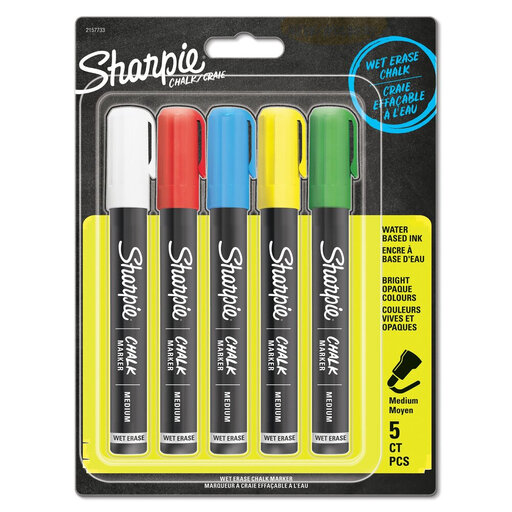
Why This Fits Their Persona: A practical fit for teachers, cafés, home organisers and families creating temporary messages or artwork on suitable smooth surfaces.
The wet-erase format is paired with clear guidance to use a damp cloth and avoid porous surfaces, reducing the risk of permanent marks.
Five assorted bright colours, suitable for glass, windows, boards and other stated smooth surfaces; wipes away with a damp cloth.
We have compiled a complete, real-time list of products that fully satisfy these strict selection criteria and UK safety regulations.
A practical collection does not need to contain every type of pen. Consider combining:
When buying for children, check the age guidance, supervise younger users and keep pens away from eyes and mouths. Ink may stain skin or clothing even when a product is described as washable.
Yes, but choose the paper and nib carefully. Medium felt-tip or journalling pens are suitable for bold headings and decoration, while 0.4mm fineliners are more appropriate for small writing and fine borders. Test both sides of the page first to check for show-through.
Acrylic paint pens contain opaque paint-style ink designed for a wider selection of surfaces. Ordinary colouring pens are usually intended for paper and provide a more transparent or ink-like finish. Acrylic markers often need shaking and priming before use, and the finished piece may require additional protection depending on the surface and project.
Replace the cap immediately after use and ensure it clicks or screws on securely. Store markers in the position recommended on the packaging, keep them away from heat and avoid leaving them uncapped while working. For dual-tip or paint markers, periodic colour swatching also helps identify drying or inconsistent ink flow before a larger project.