
24/7 Customer Support

Free returns

Same-day & Next-day Delivery

Quality Guaranteed

Unlock Your Welcome Offers: FREE Delivery | Up to 80% OFF | Free 30-day JoyPlus trial
Download the APP
Buying art and stationery supplies can seem straightforward until a product arrives with the wrong nib, insufficient colour range or a surface that is difficult to clean. Whether you are preparing a classroom, setting up a home craft area, organising an office or developing a professional art practice, the right choice depends on how and where the product will be used.
A 60-colour pack may look attractive, but the useful question is whether it includes the tools you need. For example, an acrylic paint starter set should be checked for paint volume, brushes, a palette and a suitable painting surface. A marker set should state its nib types and intended surfaces clearly.
These ink types are designed for different jobs:
Using the wrong formula can leave stains, ghosting or writing that disappears too easily.
Liquid chalk and chalkboard markers are usually intended for non-porous surfaces, such as glass, slate, ceramic or suitable coated boards. They may not remove cleanly from porous wood, vinyl or painted MDF. Always check the product instructions and test a small area before creating a permanent display.
For painting supplies, water-based acrylics are convenient for everyday projects because they can be diluted with water and dry relatively quickly. Once dry, acrylic paint can become water-resistant, so brushes, palettes and palette knives should be cleaned promptly.
For writing tools, check whether the ink is water-based, alcohol-based, pigment-based or acrylic. This affects drying time, opacity, odour, permanence and surface compatibility. If products will be used in a classroom or shared office, also review age guidance, ventilation advice and handling warnings.
Nib design affects control more than colour count alone:
Dual-tip brush pens and acrylic paint pens can be flexible choices, but check the stated millimetre range to ensure the nib suits your project.
Paper-friendly colouring pens may be more suitable for journals and colouring books than high-opacity acrylic paint pens, which are intended for a wider selection of hard surfaces. For marker longevity, replace caps firmly and follow the recommended storage position. Some products should be stored horizontally, while others may need specific handling to maintain ink flow.
Large classroom or office stationery items also require practical planning. A 1200 x 1800 mm whiteboard needs a structurally sound wall, appropriate fixings and, because of its size, installation by two people.
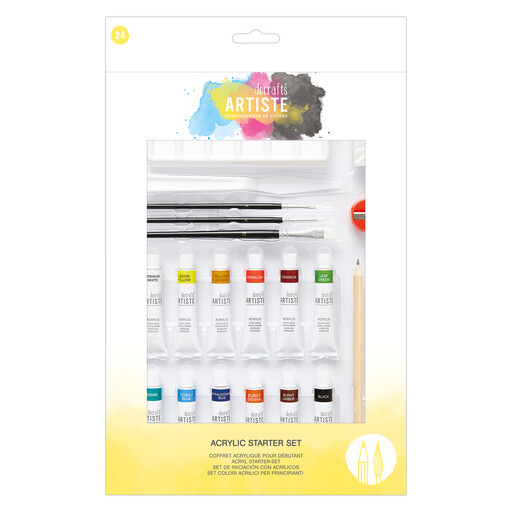
Why This Fits Their Persona: This all-in-one kit gives beginners, students and home users a selection of painting and sketching tools without requiring separate purchases for basic setup.
The contents are listed clearly: 12 x 12 ml acrylic paint tubes, three brushes, sketching pencils, eraser, sharpener, palette, palette knife and three A4 painting boards.
Water-based acrylic paint, mixing accessories and ready-to-use boards support school projects, craft work and small paintings.
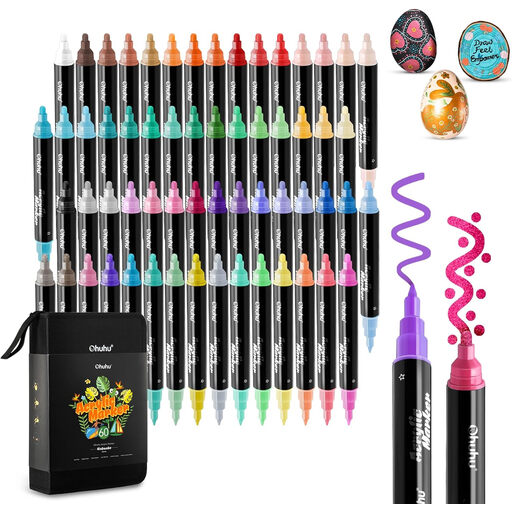
Why This Fits Their Persona: Hobby artists and crafters wanting detailed decoration on rocks, wood, ceramic, glass, plastic, fabric, paper or canvas may value the broad colour selection.
The dual tips are specified as a fine 0.7–2 mm tip and a 1.7–3 mm round tip, rather than relying on colour count alone.
The set includes 45 regular, nine metallic and six neon shades, plus replacement tips and a carrying case.
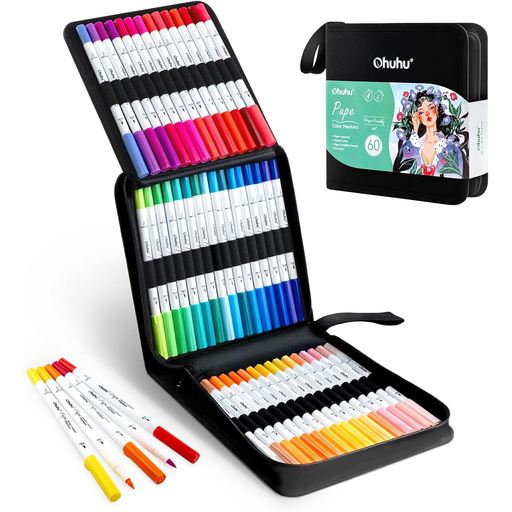
Why This Fits Their Persona: These colouring pens suit adult colouring books, journaling, illustration and lettering where a fine line and flexible stroke are both useful.
The specification identifies both the 0.4 mm fineliner and 1–5 mm brush tip, helping buyers match the pen to detailed and broad work.
The set contains 59 colours and one colourless blender in water-based ink, supplied in a protective storage case.
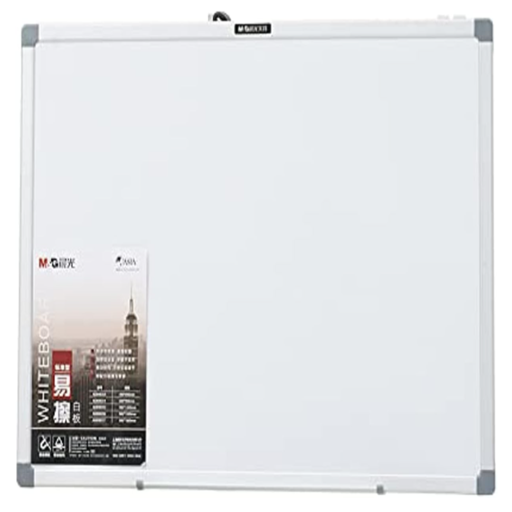
Why This Fits Their Persona: The large magnetic board is suited to lecture rooms, meeting spaces, training areas and shared home offices requiring high-visibility communication.
Its dimensions and wall-mounted design are stated upfront, while the supplied dry-erase markers, eraser and magnetic buttons reduce extra setup purchases.
The magnetic steel writing surface supports notes and documents, with a 1200 x 1800 mm format for group viewing.
For shop windows, menus, events and creative signage, compare chalk markers, wet-erase markers and permanent options according to the required lifespan. A damp-cloth formula is practical for changeable messages on glass or slate, while permanent markers are more appropriate for parcels, warehouse labels and durable craft work.
The Sharpie Chalk Markers Wet Erase Assorted Colours pack contains five vibrant colours and is designed for blackboards, light boards, whiteboards, windows and glass. For reversible nib control, the Pentel Semi-Permanent Wet-Erase Liquid Glass & Chalkboard Marker set has four colours and a nib that can be used in bullet or chisel orientations.
For larger signs, the Pentel Jumbo Semi-Permanent Wet-Erase set includes seven assorted colours and a 10–15 mm chisel tip. Always check the surface instructions before use. For routine office writing, the BIC Ecolutions Velleda 1701 pack supplies 12 red whiteboard markers with bullet tips and water-based ink.
If your priority is long-lasting labelling, the assorted permanent marker with a 1.5–5 mm chisel tip is designed for paper, cardboard, plastic, glass and metal. Use permanent ink in a ventilated area and keep it away from children and heat sources.
We have compiled a complete, real-time list of products that fully satisfy these strict selection criteria and UK safety regulations.
An acrylic paint starter set is a practical starting point when it includes paint, brushes, a palette and a surface. For drawing and craft supplies, dual-tip colouring pens provide both fine lines and broader strokes without requiring several separate pen types.
Replace the cap immediately after use and store markers horizontally where the product instructions recommend it. Use only dry-erase markers on a whiteboard, clean the surface regularly and avoid abrasive pads or unsuitable solvents that may damage the coating.
Many wet-erase and liquid chalk markers are made for non-porous surfaces such as glass, slate, ceramic and metal. They usually require a damp cloth for removal. Test the marker first, especially on coated or unfamiliar surfaces, and avoid porous boards unless the instructions specifically allow them.