
24/7 Customer Support

Free returns

Same-day & Next-day Delivery

Quality Guaranteed

Unlock Your Welcome Offers: FREE Delivery | Up to 80% OFF | Free 30-day JoyPlus trial
Download the APP
Navigating the world of art supplies can feel overwhelming. Shelves are packed with vibrant sets and promising tools, but not all are created equal. As a Product Recommendation Officer at Joybuy, I see firsthand how easy it is for shoppers to fall into common traps, ending up with supplies that disappoint. Before you add anything to your basket, let’s look at the pitfalls that can lead to wasted money and creative frustration.
The most frequent issues we see are:
By understanding what to look for, you can choose supplies that are a pleasure to use and offer genuine value.
To avoid the pitfalls, focus on a few key technical specifications. These are the non-negotiable features that separate reliable tools from the ones that will let you down.
The physical design of a pen or pencil is crucial, especially for colouring pencils for children or for anyone using them for extended periods.
The core of any colouring tool is its pigment. High-quality pigments deliver vibrant, lasting colour.
For pens, the tip and ink system determine performance and lifespan.
Based on these practical criteria, here are a few recommendations matched to different user needs.
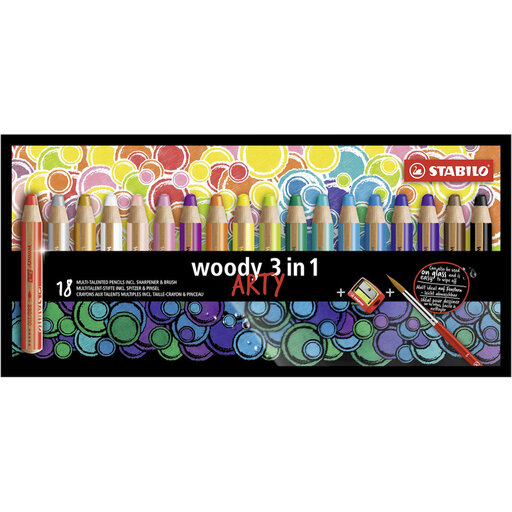
Why This Fits Their Persona: This multi-talented tool is ideal for children in the UK who love to experiment. Its chunky barrel is perfect for small hands to grip, and its versatility means less clutter in the craft box. It even works on surfaces like glass and can be easily wiped away.
It directly counters the "child-friendly" ergonomic flaw. The thick, chunky shape is genuinely easy for children to hold, and the robust XXL lead resists the breakage common in standard pencils.
Its 3-in-1 function as a coloured pencil, watercolour and wax crayon offers excellent value and encourages creative exploration without needing to buy three separate products.
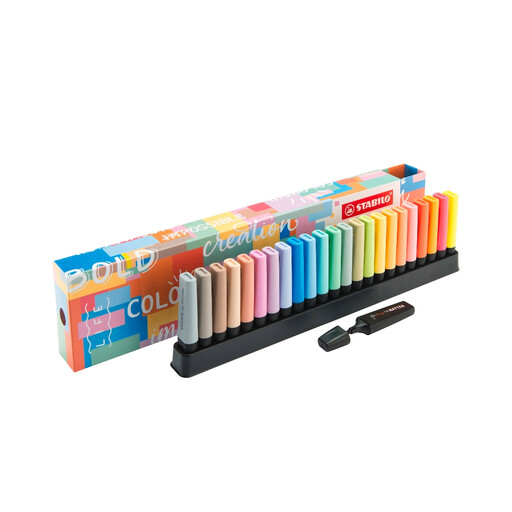
Why This Fits Their Persona: For students from secondary school to university, a reliable highlighter is essential. This deskset provides a wide range of colours for organised note-taking, and its flat shape prevents it from rolling off a crowded desk during a late-night study session.
It solves the rapid dry-out problem. The Anti-Dry-Out Technology allows it to be left uncapped for up to 4 hours, a practical feature for anyone juggling textbooks, notes and multiple pens.
The chisel tip offers two line widths (2mm and 5mm) for versatile highlighting and underlining. The neon shades are also refillable, making it a more economical and sustainable choice over time.
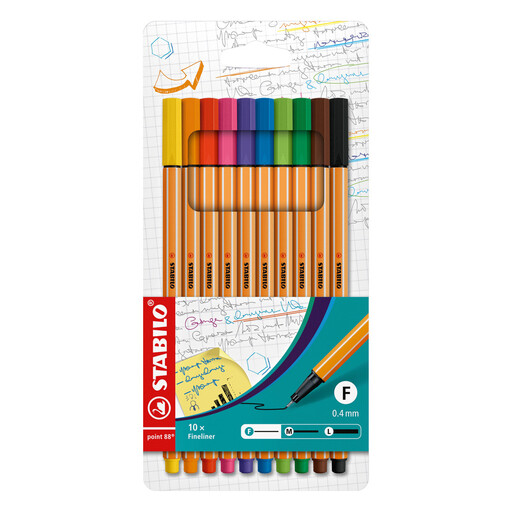
Why This Fits Their Persona: For hobbyists who enjoy journaling, sketching or adult colouring books, precision is key. This fineliner is a staple for creating clean, detailed lines. Its hexagonal barrel provides comfort during long creative sessions.
The metal-encased tip prevents the common fineliner problem of the tip fraying or splitting under pressure. This ensures a long service life and consistent line quality for all your drawing and sketching supplies.
The 0.4mm line width is ideal for intricate work, and its suitability for use with rulers and stencils makes it a highly versatile tool for both creative and organisational tasks.
We have compiled a complete, real-time list of products that fully satisfy these strict selection criteria and UK safety regulations.
Breakage is often a sign of a soft core or poor bonding between the lead and the wood casing. Look for pencils that specify break-resistant leads or a "secural bonding process (SV)". Also, teaching children to apply less pressure and using a quality sharpener designed for colouring pencils can make a significant difference. Choosing a thicker, jumbo-sized pencil can also help as they are inherently more robust.
Yes, they are an excellent choice. Watercolour pencils offer a low-mess entry into painting. A beginner can start by using them as regular coloured pencils to get comfortable with drawing and shading. Then, by simply introducing a wet paintbrush, they can begin to explore blending and watercolour techniques without the need for separate paints and palettes. This versatility makes them a great value and a fun way to build artistic confidence.
The choice comes down to personal preference and study style. Fluorescent highlighters are bright and high-contrast, making them effective for drawing immediate attention to critical information. Pastel highlighters, on the other hand, offer a softer, more subtle way to organise notes. Many students find them less jarring on the eyes during long study sessions and use different pastel shades to colour-code topics without overwhelming the page.