
24/7 Customer Support

Free returns

Same-day & Next-day Delivery

Quality Guaranteed

Unlock Your Welcome Offers: FREE Delivery | Up to 80% OFF | Free 30-day JoyPlus trial
Download the APP
Buying art supplies can quickly become expensive when product descriptions focus on colour counts and attractive packaging rather than practical performance. A 24-colour set may offer limited usable shades, while an inexpensive marker can dry out quickly if its cap or tip design is unsuitable for regular use.
Whether you are shopping for drawing supplies, kids’ painting supplies, journalling tools or professional materials, three common pitfalls deserve attention:
For traditional drawing, coloured pencils should have a core that produces consistent colour without excessive breakage. A 3.3 mm lead, for example, can offer a useful balance between detailed lines and broader shading. Pigment-based cores are suitable for layering and blending, but check whether the pencils are water-resistant, smudge-resistant or lightfast if you are creating work for display.
For painting, compare the characteristics of each medium:
Tip design matters for both precision and comfort. Dual-tip products can reduce the need to buy separate pens:
Consider the intended user. A student annotating notes may prefer highlighters with a clip or anti-roll shape, while a lettering enthusiast may prioritise a flexible brush tip.
For children’s products, read the age recommendation, small-parts warning and supervision guidance. Terms such as “washable” should not be treated as a guarantee that every mark will disappear from every surface. Test a small area first and clean spills while they are fresh.
Parents and teachers should also check:
For products sold in the UK, check the packaging and listing for relevant manufacturer safety information and applicable conformity marking. Art materials are not automatically toys simply because children use them.
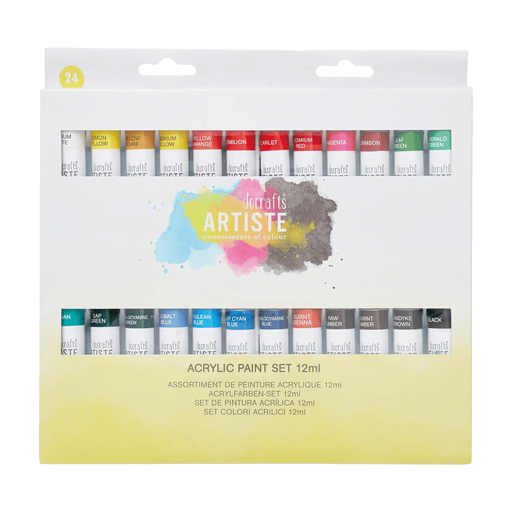
Why This Fits Their Persona: A broad 24-colour selection gives beginners, students and family crafters room to practise colour mixing without buying several separate bottles.
The set states its water-based formulation and lists use on paper, card, wood, glass, metal and ceramic, helping buyers choose for a defined range of projects.
24 mixable 12 ml paints; suitable for brush painting, school projects and mixed-media crafts.
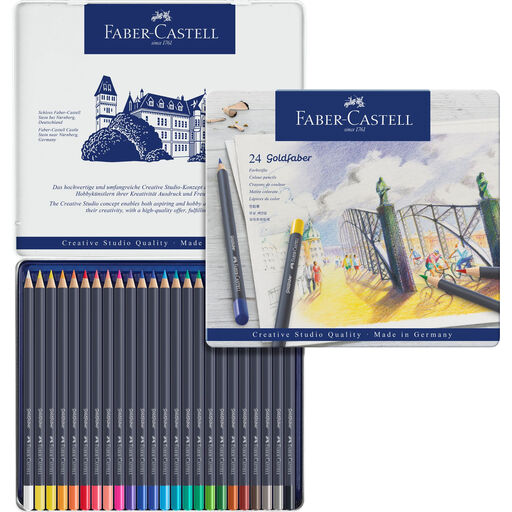
Why This Fits Their Persona: Suitable for illustrators, hobbyists and students who want a compact pencil set for detailed drawing, layering and finished pieces.
Its stated 3.3 mm lead size, break-resistant construction and water-resistant, smudge-resistant characteristics give buyers more useful information than colour count alone.
Tin storage; designed for shading, hatching, blending and expressive sketching.
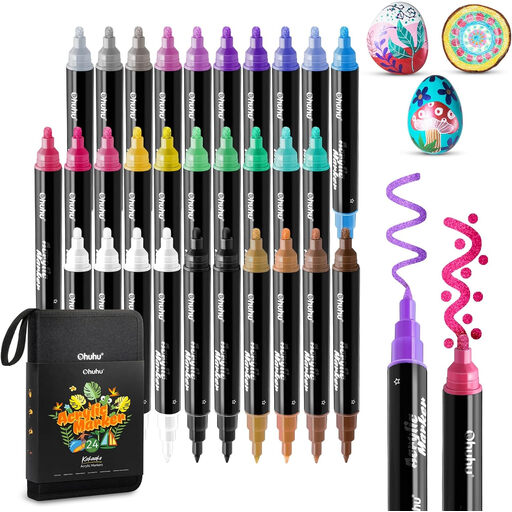
Why This Fits Their Persona: Makers decorating rocks, wood, ceramics, glass, canvas or other craft surfaces may value the dual-tip format and wide metallic palette.
The listing specifies fine and round tips, replacement nibs and the surfaces for which the pens are intended, rather than presenting them as a paper-only marker.
30 markers; 24 metallic shades plus white and black; eight replacement nibs included.
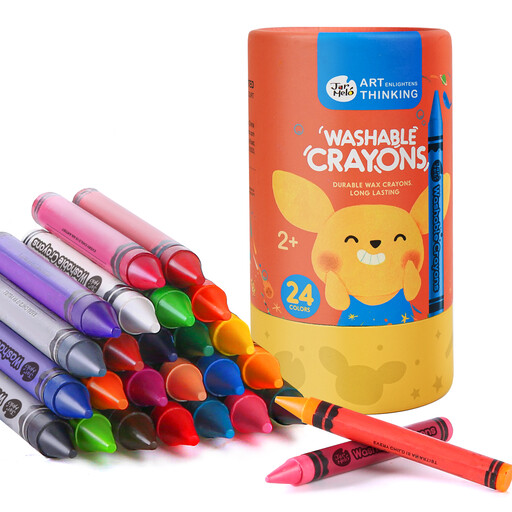
Why This Fits Their Persona: The chunky format is designed for small hands, making this a practical option for supervised toddler activities, home crafting and classroom use.
The product description identifies a jumbo shape and washable, non-toxic materials, while its safety guidance should still be followed and marks tested before use.
24 colours; chunky easy-grip design; intended to wash from skin and most fabrics.
Recap markers and pens firmly after use, especially brush pens and paint pens. Store paints away from direct sunlight and close acrylic tubes immediately because dried paint can block the nozzle. Gouache can often be reactivated with a small amount of water, but follow the product instructions and avoid adding unapproved solvents.
Keep coloured pencils in a tin or case so the cores are less likely to break in a school bag. Sharpen gradually rather than applying excessive pressure. For children’s products, remove packaging before use and store small components away from children below the stated age.
A practical starter selection might include coloured pencils, a graphite pencil, an eraser, suitable paper and either a small acrylic paint set or washable crayons. Add specialist tools such as brush pens, art markers or paint pens once you know which projects you enjoy.
No. “Washable” normally refers to easier removal from specified surfaces, skin or fabrics, not guaranteed removal in every situation. Check the product instructions, protect furniture and clean marks promptly.
Some may be suitable for supervised older children, but age restrictions vary. Check the packaging for small-parts warnings, avoid ingestion and eye contact, and do not use art paint as face or body paint unless it is specifically labelled for that purpose.