
24/7 Customer Support

Free returns

Same-day & Next-day Delivery

Quality Guaranteed

Unlock Your Welcome Offers: FREE Delivery | Up to 80% OFF | Free 30-day JoyPlus trial
Download the APP
Starting a creative project should not require a cupboard full of unused materials. Yet many UK shoppers buy art supplies based on colour count, attractive packaging or broad claims such as “all-in-one”, only to find that the paper curls, the brushes are unsuitable or the paint dries before it can be cleaned.
This guide explains what to check before buying watercolour paint sets, acrylic paint sets, gouache paint sets, painting brushes and complete art starter kits. The aim is practical selection: match the materials to your surface, technique, storage space and experience level.
More colours do not automatically make a set more useful. A 38-colour watercolour kit may offer variety, but a beginner might benefit more from 12 well-organised colours, a mixing palette and suitable paper. Also check whether paints are supplied in pans, cups or tubes, as each format behaves differently.
Some art starter kits contain paints and brushes but no paper, board or canvas. Others include lightweight paper that may buckle when wet. Always check the paper weight, sheet count and intended media before adding a set to your basket.
Acrylic paint may be suitable for paper, card, wood, glass, metal or ceramic, but the finish and adhesion can vary by surface preparation. Watercolour is designed primarily for absorbent paper, whilst gouache generally performs better on a suitable multimedia or watercolour surface. Product versatility is useful, but it does not remove the need to choose the right material.
The medium should match the result you want:
Do not buy solely by pigment or colour claims. Check the volume or weight per colour and whether the set includes the tools needed for your intended technique.
Paper weight is measured in gsm, or grams per square metre. In practical terms, a higher gsm sheet is generally more suitable for wet media, although paper texture and construction also matter.
Spiral or wiro binding allows a pad to lie flat, while removable sheets can be useful when presenting or storing completed work.
A small selection of different brush shapes is usually more practical than several brushes that perform the same task. Round brushes support lines and details, wash brushes cover larger areas, and flat or fan brushes can help with blending and broad strokes.
Water brushes have a built-in reservoir, which can be useful for UK commuters, classroom work and outdoor sketching where carrying a separate water pot is inconvenient. For acrylics, clean brushes immediately after use because dried paint can become difficult to remove.
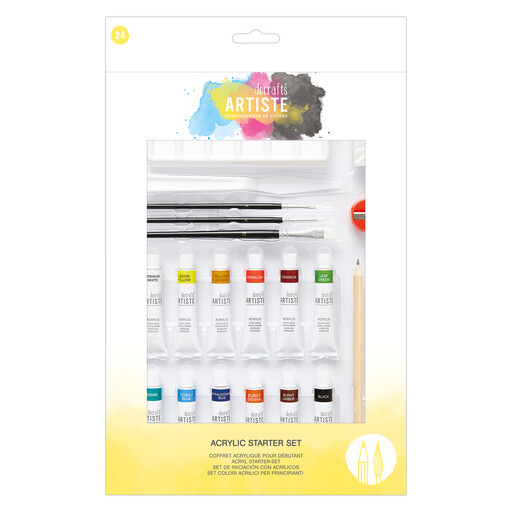
Why This Fits Their Persona: It combines paint, tools and three A4 painting boards, reducing the need to purchase separate accessories for a first acrylic project at home, school or a hobby workspace.
The contents are clearly listed: 12 x 12ml acrylic tubes, three brushes, pencils, palette, palette knife and boards, so buyers can assess what is actually included.
Water-based acrylic paint; includes 24 listed components and 190gsm painting boards.
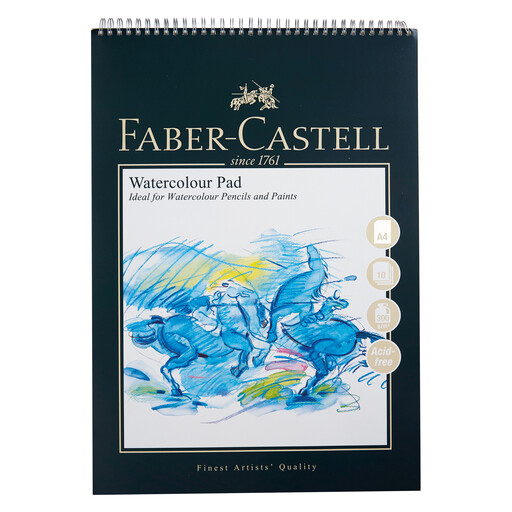
Why This Fits Their Persona: A4 300gsm paper gives illustrators, students and hobbyists a larger working format for watercolour, gouache and mixed media projects where lighter paper may curl.
Its 300gsm specification is stated clearly, helping buyers avoid selecting a thin sketchbook for heavy washes.
10 acid-free sheets; wiro binding; compatible with watercolour, gouache, acrylics, inks and dry media.
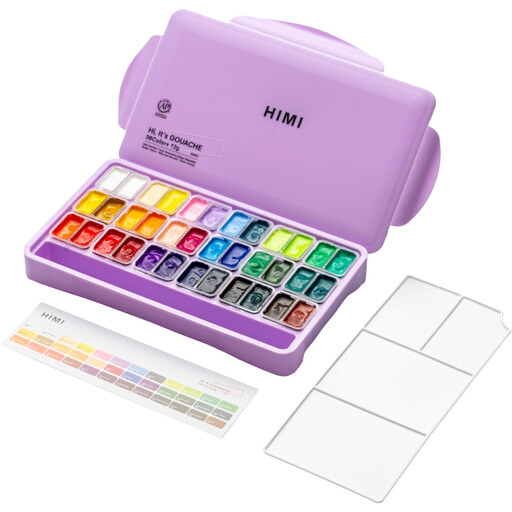
Why This Fits Their Persona: The 36-colour format suits illustrators, design students and crafters who regularly mix shades and want a broad palette for repeated sessions.
The product states both the colour count and 30g capacity per colour, rather than relying on colour variety alone.
36 x 30g gouache cups; twin-cup layout; paint can be reactivated with a small amount of water.
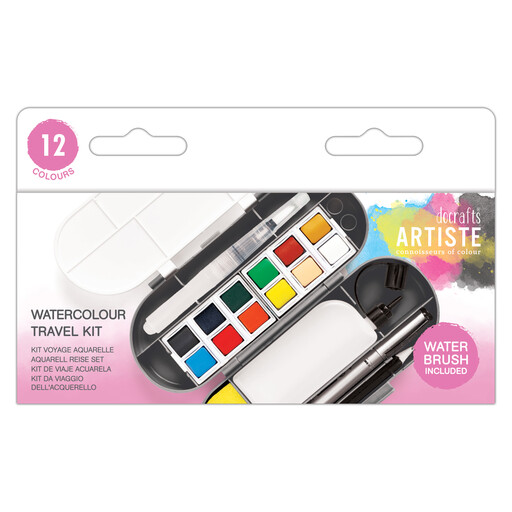
Why This Fits Their Persona: The compact format is suited to sketching on train journeys, outdoor walks, art classes and creative journalling where space and water access are limited.
The listed accessories make the kit’s portability practical: it includes 12 pans, a water brush, palette, bottle, sponges, pencil and needle point pen.
Built-in mixing palette; self-contained water brush; compact 12-colour travel format.
We have compiled a complete, real-time list of products that fully satisfy these strict selection criteria and UK safety regulations.
A practical starter selection includes one paint medium, suitable paper, two or three brush sizes, a palette and clean water. An acrylic starter set or portable watercolour kit can reduce compatibility mistakes by supplying several matching components together.
Yes, 190gsm paper can suit light washes, watercolour pencils and mixed media practice. For repeated or heavier washes, 300gsm paper is a more suitable option because it is heavier and designed to resist buckling more effectively.
Use small amounts of paint, seal tubes immediately after use and clean brushes and palettes while the paint is still wet. Once acrylic dries, it becomes water-resistant, so delayed cleaning can shorten the useful life of brushes and mixing tools.