
24/7 Customer Support

Free returns

Same-day & Next-day Delivery

Quality Guaranteed

Unlock Your Welcome Offers: FREE Delivery | Up to 80% OFF | Free 30-day JoyPlus trial
Download the APP
Buying art supplies can quickly become expensive, especially when a large set appears to offer excellent value. However, more colours do not always mean better results. The right choice depends on your surface, technique, storage needs and how often you expect to use each item.
The Joybuy Product Recommendation Officer’s approach is simple: look past impressive colour counts and focus on practical specifications that affect everyday use.
A 100-colour marker set may look attractive, but unused shades can take up space and dry out. Beginners and students may get more value from a smaller art set containing essential colours, replacement nibs and useful accessories.
Not every pen or paint works on every material. Water-based brush pens are generally intended for paper, while acrylic paint pens may work on surfaces such as wood, ceramic, glass, fabric and canvas. Chalk markers may wipe from glass but can be difficult to remove from porous boards.
Always check the manufacturer’s surface guidance before purchasing drawing supplies or painting supplies.
Markers need their caps replaced tightly. Some should be stored horizontally, while watercolour pans should be allowed to dry before the case is closed. Pencils need protection from excessive moisture, and acrylic brushes should be cleaned promptly because dried acrylic can become water-resistant.
A low-priced product that dries out quickly may cost more than a smaller, well-maintained set over time.
For detailed drawing, lettering and journalling, check the nib size. A 0.4mm fineliner is suited to small details, while a 1–6mm brush tip can create narrow or broad strokes depending on pressure. Dual-tip colouring pens are useful when you want one tool for outlining and filling.
Acrylic paint pens with fine and round tips offer a similar advantage: the finer tip supports outlines and detail, while the round tip covers larger areas.
Water-based ink is commonly used for colouring, schoolwork and paper crafts. It may blend with water on suitable paper, but thin paper can buckle or show through. For watercolour sets, heavier paper is preferable for washes and layering.
Acrylic paint markers are more suitable when you need opaque colour on darker or non-paper surfaces. Check whether the ink is described as waterproof or lightfast, and remember that “waterproof” does not mean every surface is permanently stain-proof.
For chalk markers, look for wet-erase or semi-permanent guidance. Test a small hidden area first, particularly on painted boards, vinyl or other porous materials.
Graphite pencils use hardness grades to provide different marks. Harder grades are useful for light construction lines and technical drawing, while softer grades create darker shading. A set containing several grades gives more control than relying on one HB pencil.
Also check the lead-bonding method and barrel design. A securely bonded lead can be more resistant to breakage during sharpening and regular use. For younger children, triangular barrels, jumbo leads and non-slip grip zones can make coloured pencils easier to control.
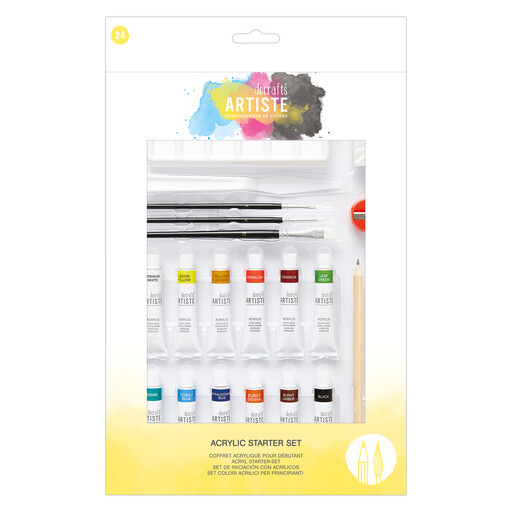
Why This Fits Their Persona: A practical option for UK beginners, students and home crafters who want to start painting without buying each tool separately.
It avoids the hidden-accessory cost of paint-only purchases by including brushes, a palette, palette knife, sketching pencils, eraser, sharpener and three A4 painting boards.
Includes 12 x 12ml water-based acrylic paints and materials for canvas, card, wood and mixed-media projects.
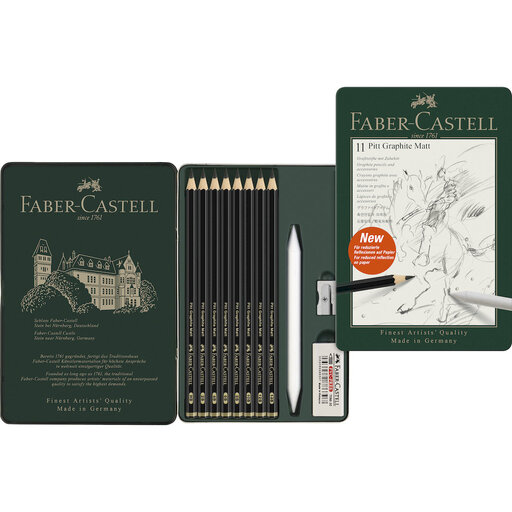
Why This Fits Their Persona: Suitable for illustrators, architecture students and artists who need controlled tonal work in a portable format.
The range from HB to 14B makes it less reliant on one general-purpose pencil for both light lines and deep shading.
Ultra-matt graphite laydown, plus a wiper, eraser and sharpener in a protective tin.
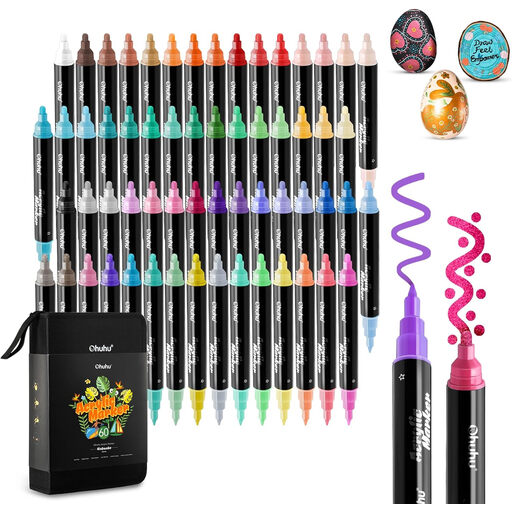
Why This Fits Their Persona: Designed for frequent mixed-surface projects, including rock painting, decorative glass, canvas and craft work.
It provides clear tip specifications and replacement tips, rather than offering colour variety without a maintenance option.
60 colours include regular, metallic and neon shades; dual 0.7–2mm fine and 1.7–3mm round tips support detail and coverage.
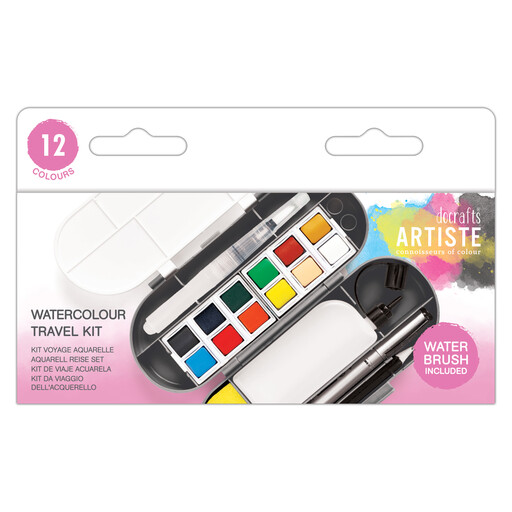
Why This Fits Their Persona: A compact choice for sketchbook users, commuters, art-class learners and journalling enthusiasts who paint away from home.
It avoids the need to buy separate travel accessories by including a water brush, palette, hand water bottle, sponges, pencil and needle point pen.
The 12-pan format fits into bags and supports washes, blending, wet-on-wet and dry-brush techniques.
We have compiled a complete, real-time list of products that fully satisfy these strict selection criteria and UK safety regulations.
Start with one graphite pencil set, an eraser, sharpener, sketchbook and a small selection of coloured pencils or brush pens. If painting interests you, choose either an acrylic starter set or watercolour kit with basic accessories. A complete art set can reduce duplicate purchases while you learn which techniques you use most.
Lifespan depends on frequency, pressure, storage and whether caps are replaced correctly. Graphite pencils can last for a long time when stored dry. Markers usually require more care because their ink can evaporate or dry at the nib. Replacement tips, refill options and secure cases can improve practical value.
Not necessarily. Students and beginners should prioritise suitable materials, comfortable handling and the correct surface compatibility. More specialised supplies become worthwhile when you need a wider graphite range, opaque colour on dark materials, precise brush tips or portable watercolour accessories.