
24/7 Customer Support

Free returns

Same-day & Next-day Delivery

Quality Guaranteed

Unlock Your Welcome Offers: FREE Delivery | Up to 80% OFF | Free 30-day JoyPlus trial
Download the APP
Choosing art supplies and painting sets can seem straightforward until you compare paint formats, brush quality and included accessories. A colourful box may look generous, but it may not suit your surface, preferred technique or storage needs.
This guide from the Joybuy Product Recommendation Officer focuses on practical details rather than marketing language, helping beginners, students, crafters and experienced artists choose more confidently.
A large colour count is not automatically useful. A 36-colour set may offer more variety, but a beginner could benefit more from a smaller palette with space for mixing. Consider whether you need ready-made shades for illustration or a compact selection for learning colour theory.
Watercolour brushes, acrylic brushes and gouache brushes have different practical demands. Soft, pointed brushes can work well for washes and detail, while acrylic painting often benefits from firmer bristles. Check the stated compatibility before buying a mixed paint brush set.
Acrylic paint dries quickly and becomes water-resistant once dry, so brushes and palettes need prompt cleaning. Gouache can reactivate with water, but it still requires a sealed case or covered container between sessions. For children, check age guidance carefully: many sets contain small pans, caps, ferrules or palette accessories and require adult supervision.
Do not assume that “all-purpose” means every surface will produce the same result. Paper absorbency, surface preparation and paint thickness affect coverage and drying.
Look beyond the headline item count. A 24-piece kit might include 12 paint tubes plus pencils, boards, a palette and brushes. This can be useful for someone starting from scratch, but it may provide less paint than a 24-colour paint-only set.
Check:
For portable work, a case with an integrated palette can reduce the number of separate items you need to carry.
A rounded brush that forms a point is useful for lines and details. Wash and flat brushes cover larger areas, while fan brushes can assist with blending and textured marks. Natural hair and synthetic bristles feel different during use; synthetic brushes are often a straightforward option for mixed media and easier cleaning.
Water brushes have a refillable reservoir in the handle. They can be convenient for travel, journalling and classrooms because they reduce the need for a separate water pot. Empty and rinse the reservoir after use, and clean the tip between colour changes to reduce clogging.
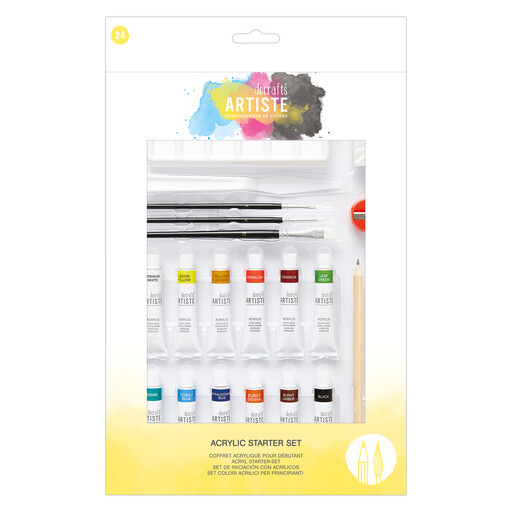
Why This Fits Their Persona: It combines paint, brushes, drawing tools, a palette, palette knife and three A4 painting boards, which can reduce the need to purchase separate essentials for home or school projects.
The contents are itemised, so shoppers can judge the actual balance between paint and accessories instead of relying only on the “24-piece” description.
Includes 12 x 12 ml acrylic tubes, three brushes and three 190 gsm A4 boards; suitable for card, wood, canvas and mixed media work.
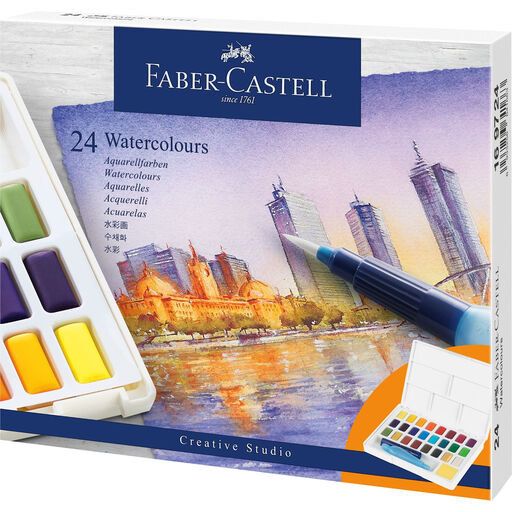
Why This Fits Their Persona: Artists who value portability and organised equipment may appreciate the detachable palette, integrated grip ring and included refillable water brush for painting away from a desk.
The specification identifies the palette, water brush and 24-pan format, making the travel features tangible rather than purely promotional.
Fully water-soluble pans; detachable mixing palette and water brush are included.
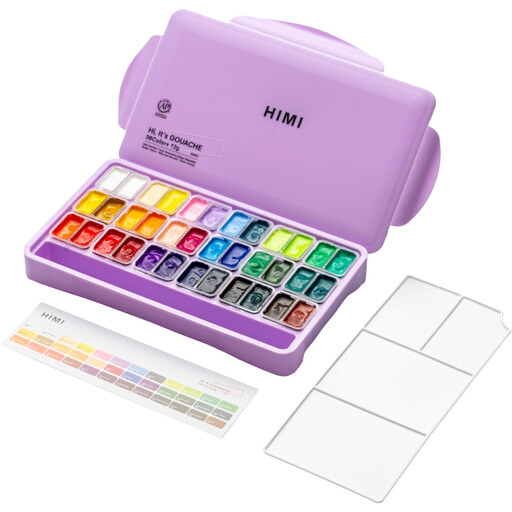
Why This Fits Their Persona: Illustrators, classroom groups and frequent painters may want a broad ready-made palette with substantial 30 g cups for repeated colour studies and craft projects.
The individual cup size and colour count are clearly stated, while the case keeps shades organised and dried paint can be reactivated with a small amount of water.
36 x 30 g gouache cups; compact case and water-reactivatable formulation.
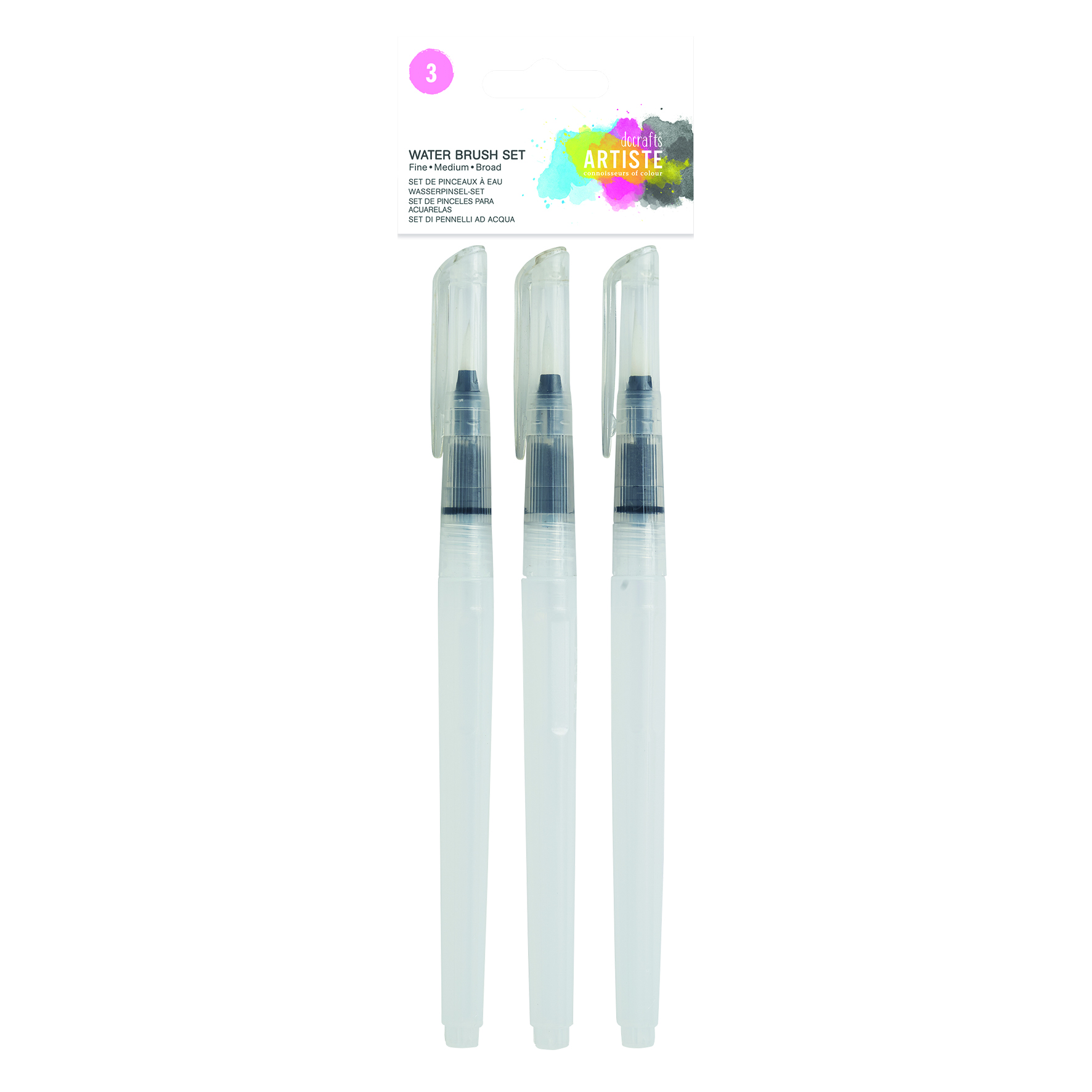
Why This Fits Their Persona: Sketchers, students and commuters who paint in cafés, libraries or outdoors can carry three brushes without a separate water pot.
The set provides fine, medium and broad sizes, rather than one generic tip, and each brush has a refillable reservoir with a protective lid.
Three assorted tip sizes; self-contained water reservoirs and protective lids.
We have compiled a complete, real-time list of products that fully satisfy these strict selection criteria and UK safety regulations.
Use a suitable work surface and protect tables, clothing and flooring from staining. For acrylic paints, clean tools promptly with warm soapy water before the paint dries. For watercolour and gouache, rinse brushes thoroughly and reshape the bristles before storage.
Keep paint away from food, pets and young children. “Non-toxic” does not mean edible, and art materials should not be used as cosmetics or face paint. Products containing small components are generally unsuitable for children under three; children aged three to eight should use them with adult supervision, following the product warning.
A practical art starter kit should include paint, several brush shapes, a mixing palette and a suitable surface such as paper or painting boards. Pencil and eraser accessories can also help with planning artwork. If portability matters, choose a case with an integrated palette or add water brushes.
Many acrylic paints for crafts are water-based and can be used on paper, card, wood and other stated surfaces. Check the product instructions for preparation and drying. Acrylic paint should not be allowed to dry on brushes, as it becomes water-resistant once dry.
Seal paint tubes and gouache cases after use, avoid leaving watercolour brushes soaking, and clean tools immediately. Store paints in a cool, dry place away from direct sunlight. Using only the amount needed also helps reduce waste and keeps palettes easier to manage.