
24/7 Customer Support

Free returns

Same-day & Next-day Delivery

Quality Guaranteed

Unlock Your Welcome Offers: FREE Delivery | Up to 80% OFF | Free 30-day JoyPlus trial
Download the APP
Buying art supplies can look straightforward until you compare paper weights, pencil types, age guidance and set contents. A low-priced pack may contain many colours but offer limited control, while a creative kit may look comprehensive yet provide little material for repeat use.
This guide from the Joybuy Product Recommendation Officer focuses on practical selection rather than promotional language. Whether you need drawing supplies for school, materials for an illustration project or children’s art kits for rainy-day activities, the following checks can help you spend more carefully.
A box with 50 or 100 pieces is not automatically more useful than a smaller, better-matched set. Children may need chunky, easy-grip tools, whereas an aspiring illustrator may prioritise graded graphite, reliable coloured pencils and suitable paper. Check what is actually included and whether the materials match the intended technique.
Paper affects the result as much as the drawing tool. Lightweight printer paper can buckle with water, tear after repeated erasing or allow ink to show through. Likewise, oil pastels and soft pastels need a surface that can accept layering and blending. Buying attractive pencils without checking the paper is a common source of disappointing results.
Some children’s art products include small parts, marker caps, styluses or loose accessories. Always read the stated age recommendation and warnings. Washable crayons may be more practical for toddlers, while blow pens require direct adult supervision and a suitable protected workspace. “Mess-free” systems can also work only on their supplied paper, so check whether replacement sheets are available.
For general sketching, 160 gsm paper offers a more substantial surface than standard copy paper. It is suitable for graphite, colouring pencils, charcoal and light washes, but it is not designed for heavily saturated marker or watercolour work unless the product specifically states this.
Choose the format according to how the pad will be used:
For younger users, triangular or chunky pencils can make holding and controlling the tool easier. The STABILO Trio range, for example, uses a triangular design and a 4.2 mm lead, while jumbo crayons are shaped for smaller hands.
For more detailed work, look at the lead or pastel format rather than just the colour count. A 3.3 mm coloured pencil lead may offer a balance between detail and durability, while oil pastels and soft pastels are selected for their blending and coverage characteristics.
Match the tool to the intended surface:
For products intended for children, check the age label, small-parts warnings and supervision advice. Product descriptions should not replace the instructions or safety information supplied with the item.
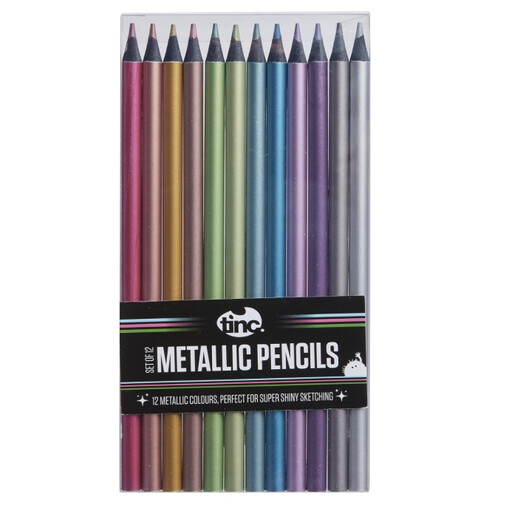
Why This Fits Their Persona: A compact 12-colour option for children, students or casual users who want a small creative stationery addition for schoolwork, notes and colouring at home.
The colour count is clearly stated, so buyers can judge whether 12 pencils are sufficient instead of paying for an oversized set with unused shades.
Includes 12 metallic coloured pencils with a sparkling finish; compact dimensions of H18 × W9 × D0.8 cm and a listed weight of 79 g.
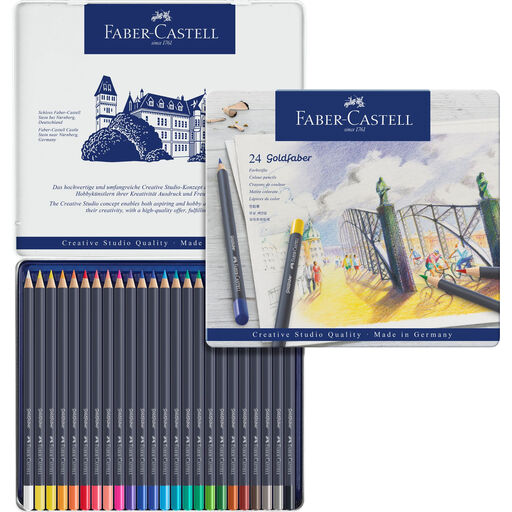
Why This Fits Their Persona: Suitable for hobby artists, students and illustrators who want a structured set for regular drawing, layering and detailed colouring.
The listed 3.3 mm lead, tin format and water-resistant, smudge-resistant specification give more useful buying information than colour count alone.
Contains 24 pencils; the product information identifies a highly pigmented core and suitability for layering, hatching and blending.
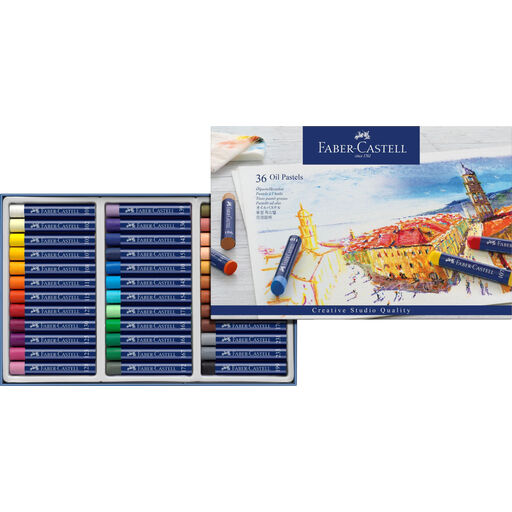
Why This Fits Their Persona: A practical choice for creative adults, art students and hobby artists exploring bold marks, blending and mixed-media effects.
The product description identifies the medium as oil pastel and explains its waxy, blendable texture, helping prevent confusion with soft pastels or ordinary crayons.
Provides 36 colours in a cardboard wallet; colours can be layered, smudged and blended for expressive artwork.
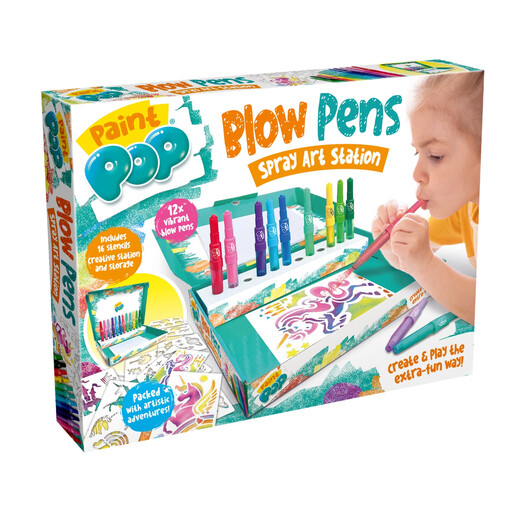
Why This Fits Their Persona: Designed for supervised creative play at home, during school activities or on rainy afternoons when children want a process-led craft project.
The set specifies its contents and age guidance, including 12 pens, 16 blank papers and 16 stencils, so buyers can assess the activity before purchasing.
Includes A5 and A4 stencils, quick-drying paint and a pen tray; listed as suitable from age four with direct adult supervision.
We have compiled a complete, real-time list of products that fully satisfy these strict selection criteria and UK safety regulations.
Your choice may differ according to the project:
Start with a suitable sketch pad, graphite or coloured pencils, an eraser and a sharpener. Add oil pastels, soft pastels or a charcoal sketch set once the user has a clear interest in those techniques. For younger children, choose age-appropriate chunky crayons or washable materials.
It can handle light washes, particularly when used carefully, but it is not the same as heavier watercolour paper. Test a spare sheet first and avoid excessive saturation, as moisture may cause warping or bleed-through.
Keep paper flat or upright in a dry place away from direct sunlight. Store pencils and pastels away from excessive heat, and keep washable crayons clean and dry. Children’s kits containing small parts should remain out of reach when not supervised.