
24/7 Customer Support

Free returns

Same-day & Next-day Delivery

Quality Guaranteed

Unlock Your Welcome Offers: FREE Delivery | Up to 80% OFF | Free 30-day JoyPlus trial
Download the APP
Artificial flowers can create a dependable display for a wedding, home, office or seasonal event without watering, trimming or replacing wilting stems. However, product listings often use similar phrases for very different materials, quantities and sizes. A low-priced bouquet may look full in a photograph but contain only a few stems, while an outdoor-style arrangement may not be suitable for prolonged exposure to rain or strong sunlight.
This guide explains what to check before buying artificial flowers, including silk flowers, faux flowers, fake flowers and pre-arranged bouquets.
A listing may show a large arrangement but provide only one stem or one small bunch. Always check the number of stems, flower heads and bunches, rather than relying on the image. For example, a 48cm rose arrangement may contain one main stem with 10 flower heads, whereas a 12-piece rose set provides separate stems for a fuller DIY arrangement.
“Realistic” is a visual description, not a technical standard. Look for details such as silk or fabric petals, plastic foliage, flexible stems, wire cores and flower-head dimensions. Close-up photographs can also reveal whether the petals have layered shaping and whether the stems can be adjusted to suit your vase.
Silk and standard plastic flowers are generally more appropriate for indoor decoration, covered displays or short-term events. Products specifically described as weather-resistant plastic may be more suitable for a garden, balcony or grave decoration, but buyers should still check the care instructions. Direct sunlight, wind and rain can affect colour and shape over time.
Artificial flowers are also not automatically fire-safe. Keep silk, plastic and wire-stem products away from candles, heaters, fireplaces and other open flames.
For indoor home decoration flowers, silk or fabric petals can provide a softer appearance, while plastic petals and leaves are usually easier to wipe clean. Some artificial roses and artificial peonies include plastic-coated or wire-reinforced stems, allowing you to bend them for a vase, bridal bouquet or DIY floral arrangement.
Do not assume that “silk” means natural silk. Product listings may use the term for a fabric finish. Check the stated material composition if this matters to you, particularly when buying several arrangements for an event.
Measure your vase, table and display area before ordering. Common useful measurements include:
For wedding table centrepieces, ensure the finished arrangement does not obstruct guests’ sightlines. Flexible stems can be bent or trimmed, but wire may have sharp edges after cutting and should be handled carefully.
A small bunch may work as an accent, gift or single-vase display. For a fuller look, select multiple bunches or a set with several stems, buds, berries and leaves. Artificial flower bouquets containing separate stems are useful for DIY floral arrangements because they can be divided between vases, wreaths and table displays.
For larger events, calculate the number of tables, vases and arrangements first. This avoids ordering an attractive but insufficient quantity.
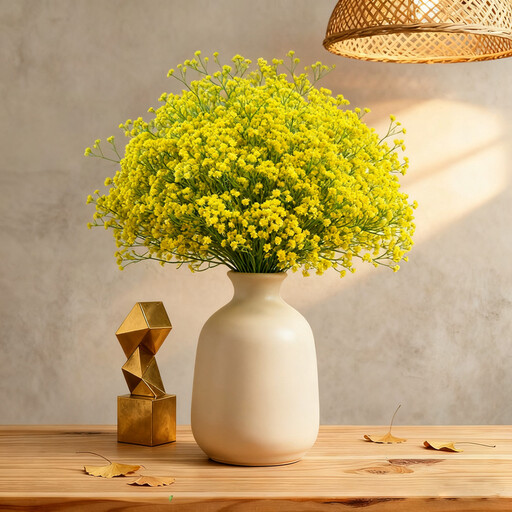
Why This Fits Their Persona: A five-piece gypsophila set gives renters, students and first-time decorators a straightforward way to add colour to a small vase or shelf without committing to a large arrangement.
The listing states the quantity clearly as five pieces and identifies silk and plastic materials, helping shoppers assess the display before buying.
Five compact bunches; suitable for wedding decoration, table centrepieces and indoor ornamentation.

Why This Fits Their Persona: The taller white and champagne rose arrangement suits shoppers planning bridal, anniversary or formal home displays where height and coordinated colour are important.
The listing specifies 10 pieces, a 51cm length and silk with plastic construction, rather than relying only on appearance-based wording.
Ten long stems; white and champagne colour mix; suitable for bridal bouquets, centrepieces and wreath projects.
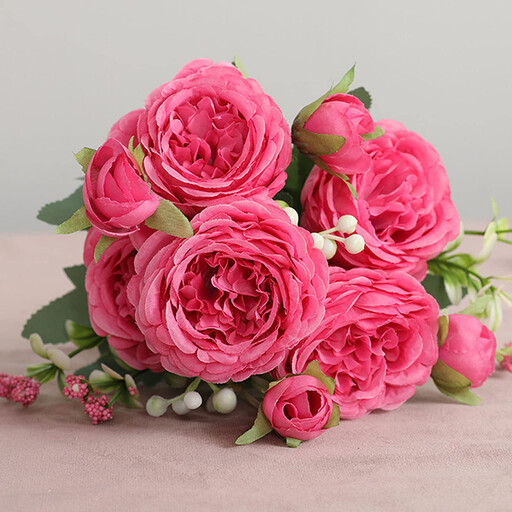
Why This Fits Their Persona: Two structured bouquets with large peonies, buds, berries and leaves are practical for couples, florists and crafters creating fuller wedding table centrepieces or seasonal displays.
Each bouquet’s stated contents include five branches, five large flowers, four small buds, berries and leaves, making the volume easier to judge.
Two pre-assembled bouquets; no water or sunlight required; stems and foliage can be reshaped after delivery.
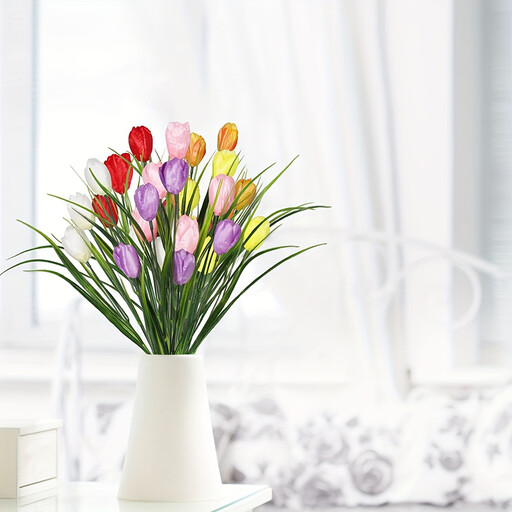
Why This Fits Their Persona: Event decorators, office managers and garden-display shoppers may value the larger pack and the listing’s stated weather-resistant plastic construction for varied indoor or outdoor arrangements.
The product description states 12 bunches, 60 stems in total and suitability for outdoor use, giving clearer guidance than a generic “fake flowers” title.
60 stems; approximately 38cm per stem; can be arranged in vases, pots, hanging baskets and wreaths.
Remove each bouquet from its packaging and gently separate compressed petals, leaves and branches. Flexible stems can be bent to match the vase height. For more control, use floral foam, a weighted vase or decorative stones to keep an arrangement stable.
Dust indoor artificial flowers with a soft cloth or cool air from a hairdryer. Avoid soaking silk and plastic arrangements unless the product instructions specifically permit rinsing. Store spare flowers in a dry, ventilated place and avoid placing them beside radiators or in direct sunlight for extended periods.
For weddings, assemble bouquets and table centrepieces before the event so you can check height, balance and colour under the venue’s lighting. Keep all products away from flames and supervise children around small detachable parts and wire stems.
We have compiled a complete, real-time list of products that fully satisfy these strict selection criteria and UK safety regulations.
Their usable display life depends on material, handling, sunlight, moisture and storage. Indoor silk flowers kept dry and dust-free can remain suitable for repeated seasonal use. Outdoor plastic flowers may tolerate more exposure, but colour and shape can still change over time. Check the individual care and placement guidance before purchasing.
Yes. Choose arrangements that match the table size and do not block guests’ views. Shorter gypsophila, peony or hydrangea-style bouquets suit dining tables, while taller rose arrangements may work better in larger floor or entrance displays. Buying separate stems also allows you to create coordinated DIY floral arrangements.
Artificial flowers do not require water, flower food, refrigeration or regular replacement, so their ongoing care is limited mainly to dusting and suitable storage. The initial price may be higher than a single bunch of fresh flowers, but reusable arrangements can be practical for recurring parties, office displays and seasonal home decoration.