
24/7 Customer Support

Free returns

Same-day & Next-day Delivery

Quality Guaranteed

Unlock Your Welcome Offers: FREE Delivery | Up to 80% OFF | Free 30-day JoyPlus trial
Download the APP
Bringing a touch of green into your home or office can instantly lift a space, but not everyone has the time, patience or ideal lighting for real plants. This is where artificial plants come in, offering lasting beauty without the upkeep. However, the market is flooded with options, and it is easy to end up with a purchase that looks cheap or falls apart.
As a Joybuy Product Recommendation Officer, my role is to help you navigate the choices and avoid common buyer's remorse. Before you buy, be aware of these frequent pitfalls:
To ensure you choose high-quality faux plants that enhance your space, focus on a few non-negotiable details. These specifications separate the great from the regrettable.
The realism of an artificial plant comes down to its material. Most are made from plastic, silk or a combination.
A good rule of thumb is to look for products described with terms like "realistic texture" or "matte finish" and to scrutinise product photos for any unnatural plastic shine.
The pot is not just a container; it is the foundation of the plant. For any indoor plants, especially taller ones, stability is paramount.
Always check the dimensions before adding a plant to your basket. Consider both the height and width of the plant and pot. A small 8cm succulent is perfect as a desk plant or for a narrow shelf, while an 85cm monstera is designed to be a floor-standing feature in a living room or office corner. Measure your intended space to ensure a perfect fit and avoid the "scale mismatch" pitfall.
To help you find the right fit, we have matched some options to common UK lifestyles and spaces.
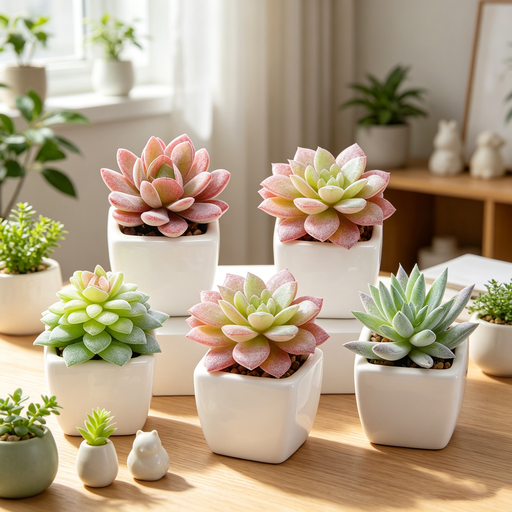
Why This Fits Their Persona: Perfect for those in flats or with limited surface area. This set of five small artificial plants can be placed on a home office desk, a narrow bookshelf or a bathroom plants windowsill to add greenery without clutter.
The detailed PE plastic moulding and varied shapes of these artificial succulents avoid the shiny, cheap look. The simple white pots are sturdy enough for their size and offer a clean, neutral aesthetic.
A cost-effective set that provides five individual pieces, allowing for flexible decoration across multiple small spaces. Zero maintenance required.
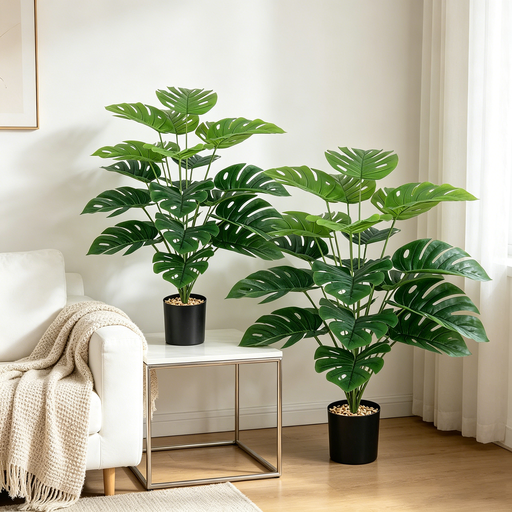
Why This Fits Their Persona: For anyone needing to fill an empty corner or create a strong visual focal point. This large fake plant is ideal for a living room, hallway or spacious office plant setting, delivering impact without maintenance.
This directly solves the "scale mismatch" by being explicitly designed for floor placement. The pot is filled with pebbles for a weighted base, preventing the tipping issue common with tall, top-heavy plants.
The 85cm height provides significant presence. Its leaves and stems are adjustable, allowing you to shape the plant for a more natural, less uniform appearance.
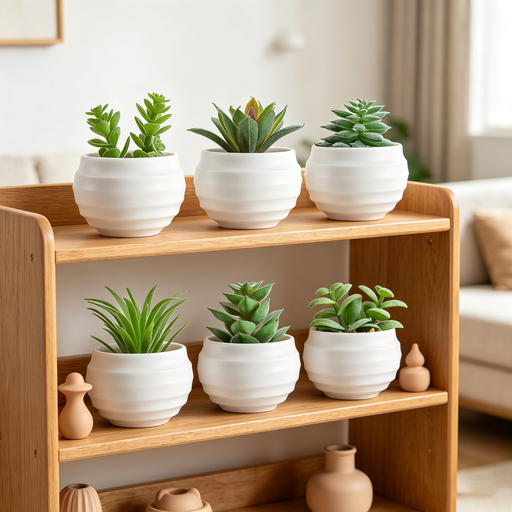
Why This Fits Their Persona: An excellent starting point for anyone wanting to add greenery to multiple rooms on a budget. This six-piece set offers maximum value and versatility for decorating a bedroom, office and living room shelf.
Despite the accessible price, these faux plants feature good textural detail and colour variation, avoiding the flat, plastic look. The pots are simple but provide a stable base for their compact size.
This set offers outstanding value, providing six distinct plants to start a collection or spread throughout a home. They are durable and require no care.
We have compiled a complete, real-time list of products that fully satisfy these strict selection criteria and UK safety regulations.
For most plastic or silk plants, a gentle dusting with a microfibre cloth or a soft paintbrush every few weeks is sufficient. For a deeper clean, you can wipe the leaves with a damp cloth. Avoid using harsh chemical cleaners, as they can damage the colour and finish.
They certainly can, but it all comes down to quality. Modern, high-quality artificial plants are made with remarkable attention to detail, using moulds from real plants and advanced colouring techniques. By avoiding options with a high-gloss plastic finish and choosing those with realistic textures and stable pots, you can achieve an elegant and stylish look that is anything but tacky.
While a high-quality artificial plant can have a higher initial purchase price than a small real plant, it is a one-time investment. Real plants require ongoing costs for soil, fertiliser and potentially replacement if they do not survive. With fake plants, there are no recurring costs for water, food or care, making them a more cost-effective choice over time.